Aditya • • 4 min read • 23 views
The Arctic Under Siege: Ice Loss and the Dislocation of the Polar Bear
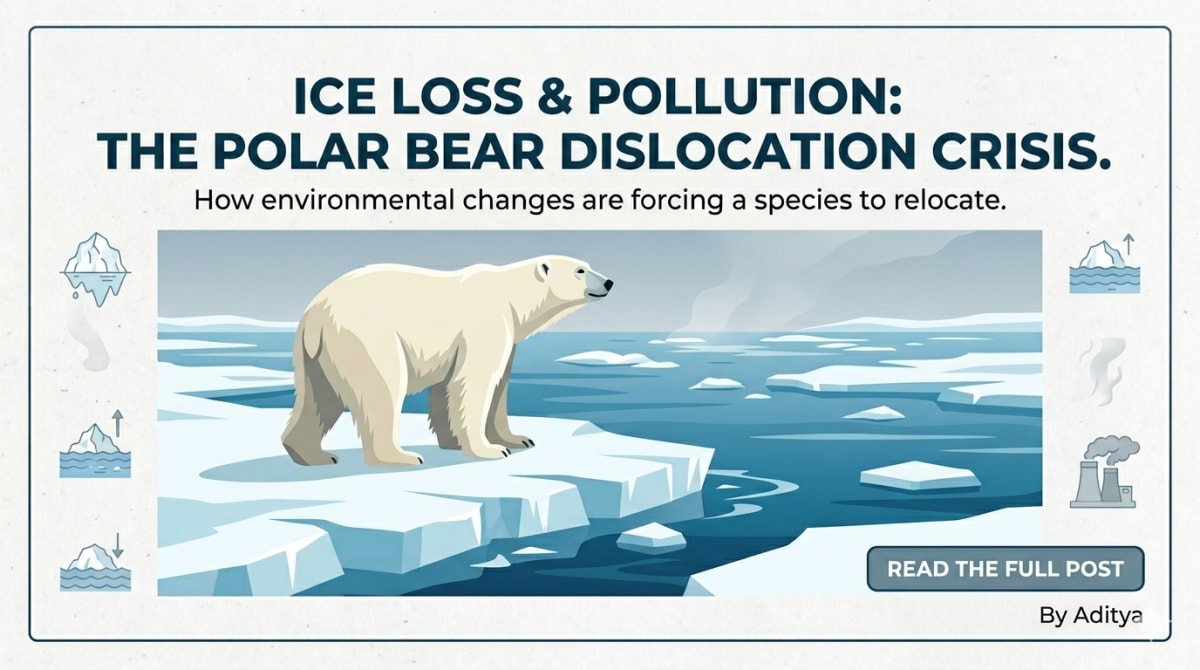
The Arctic, once a pristine wilderness of endless white and blue, is rapidly changing. It’s no secret that the planet is warming, but the pace of change in the highest latitudes is alarming. While the abstract concept of climate change can feel distant for many, its consequences are vividly real for one of Earth’s most iconic creatures: the polar bear. Driven by a combination of melting sea ice and increasing levels of pollution, polar bears are facing a dislocation crisis that threatens their survival. This is not just about a change of scenery; it's a fundamental threat to their way of life, forcing them to adapt in ways they were never meant to.
A Habitat on Thin Ice
Sea ice is the cornerstone of the polar bear's existence. They use it as a platform for hunting their primary prey, ringed seals. But the Arctic is warming at more than twice the global average, leading to a dramatic reduction in the extent and duration of sea ice. This phenomenon, often referred to as "the great melt," has devastating consequences. As the ice disappears earlier in the spring and freezes later in the autumn, the ice-free season grows longer. This forces polar bears to spend more time on land, away from their main food source. Without access to the ice and the seals, many bears are left stranded, with nothing to eat but scarce berries, bird eggs, and vegetation – insufficient resources to sustain a creature of their size and caloric needs. In many cases, this leads to starvation, affecting cub survival rates and the overall health of the population.
The Double Whammy: Pollution
While the loss of sea ice is a highly visible threat, a more insidious enemy is at work: pollution. Persistent organic pollutants (POPs), heavy metals (like mercury), and microplastics, carried northward by ocean currents and winds, accumulate in the Arctic. These toxic chemicals magnify as they move up the food chain. Seals, the primary food source for polar bears, have high concentrations of these toxins. When a bear eats a seal, it receives a mega-dose of these pollutants. Over time, this "toxic soup" can cause a range of serious health problems. Studies have linked high levels of POPs to reproductive issues, immune system suppression, and even brain damage in polar bears. A weakened immune system makes them more susceptible to disease and less able to cope with environmental stresses, like prolonged fasting.
A Species Dislocated and Pushed to the Brink
The combination of a melting habitat and a polluted food web is a one-two punch that is pushing polar bears to the brink. They are being dislocated, not only physically, but also biologically and socially. As their home territory disappears, they are forced to travel vast distances to find suitable ice or land. This uses valuable energy reserves and separates family groups. In their search for food, some bears are venturing into human settlements, increasing the risk of conflicts with people. The dislocation is evident in their changing behavior. They are being forced into areas they’ve never inhabited before, competing for different types of food, and interacting in new ways. The stress of this forced relocation is immense.
The Human Connection: What’s Next?
The plight of the polar bear is a stark and powerful indicator of the health of our planet. Their dislocation is a call to action, a warning sign we cannot afford to ignore. What can be done? The solutions are as complex as the problems. Addressing climate change requires global action to reduce greenhouse gas emissions. Combating pollution means implementing stricter regulations on toxic chemicals and reducing our reliance on single-use plastics. The fate of the polar bear is intertwined with our own. A melting Arctic not only disrupts the life of this magnificent animal but also accelerates global warming, affects weather patterns across the Northern Hemisphere, and contributes to sea-level rise. The time to act is now. We have the opportunity and the responsibility to protect the Arctic and all its inhabitants. If we fail, the image of a lonely polar bear on a shrinking piece of ice will not just be a heartbreaking visual, but a premonition of our shared future.
Discussion (1)
Sign in to join the discussion.
Really insightful post, it clearly shows how climate change is affecting polar bears and their habitat. Sad but important to understand.