Umang Sisodia • • 3 min read • 8 views

BRICS Foreign Ministers’ Meet Fuels Hope for a Groundbreaking Summit
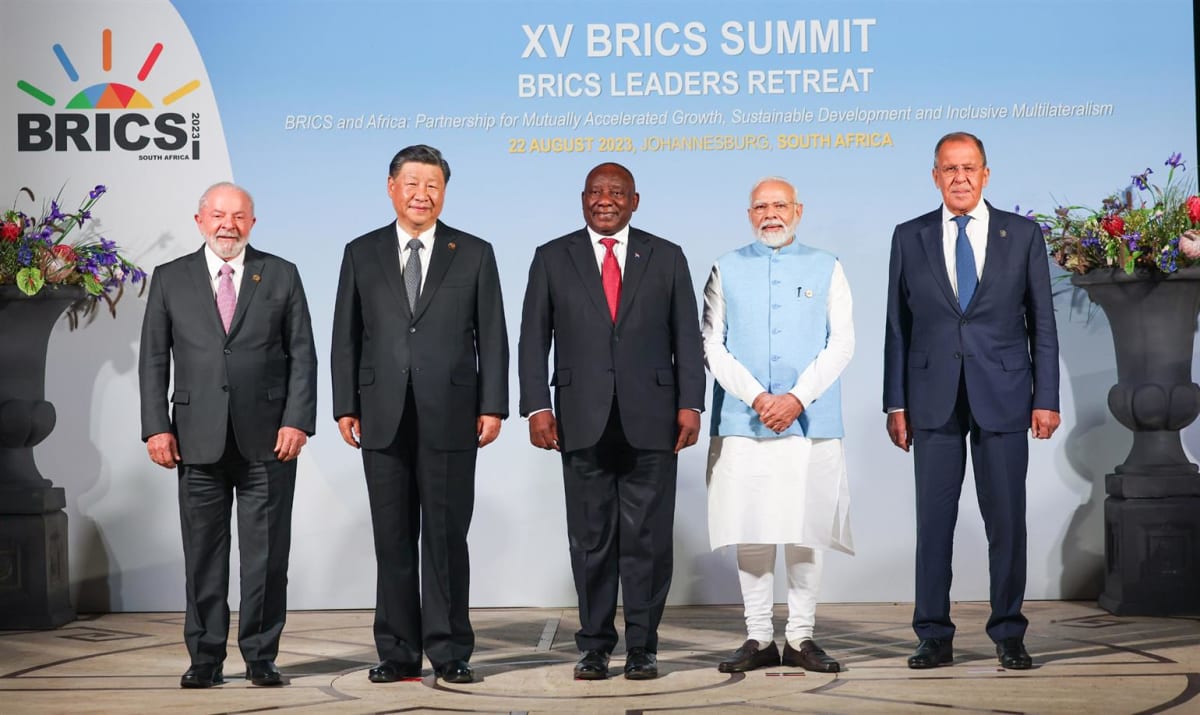
BRICS Foreign Ministers’ Meet Fuels Hope for a Groundbreaking Summit

Introduction

The recent gathering of BRICS foreign ministers in New Delhi has ignited a wave of optimism across diplomatic corridors. While the summit itself is still months away, the tone set by the ministers—Brazil, Russia, India, China and South Africa—suggests a renewed commitment to deepen economic, political, and security cooperation. This editorial dissects the key take‑aways, places them in the broader geopolitical canvas, and examines what a productive BRICS summit could mean for the global order.

Key Outcomes of the Ministers’ Dialogue

  • Economic coordination: The ministers underscored the need to accelerate the New Development Bank’s (NDB) financing pipeline, especially for green infrastructure projects in member states. A consensus emerged on creating a joint "BRICS Trade Facilitation Desk" to streamline customs procedures and reduce transaction costs.
  • Currency resilience: Building on previous discussions about a BRICS payment system, the group pledged to explore a digital currency framework that could mitigate reliance on the U.S. dollar for intra‑BRICS trade.
  • Security collaboration: A joint statement highlighted cooperation on counter‑terrorism, cyber‑threats, and maritime security, with a particular focus on the Indian Ocean Region where China, India and South Africa have overlapping interests.
  • Political solidarity: The ministers reiterated support for a multipolar world, condemning unilateral sanctions and advocating for reforms in global governance institutions such as the United Nations and the World Trade Organization.

Geopolitical Implications

The optimism emanating from the meeting arrives at a moment when the West’s economic sanctions on Russia and the strategic rivalry between the United States and China are reshaping alliances. A cohesive BRICS bloc could:

  1. Offer an alternative development financing model that challenges the dominance of the World Bank and IMF, especially for emerging economies seeking sovereign financing.
  2. Shift trade dynamics by encouraging member states to source critical commodities—like lithium, rare earths, and agricultural products—from within the bloc, thereby reducing exposure to Western supply chain disruptions.
  3. Bolster diplomatic leverage in multilateral forums, presenting a united front on issues ranging from climate change to digital governance.

Looking Ahead to the Summit

The forthcoming BRICS summit, slated for later this year, will be a litmus test for the promises made in Delhi. Observers will watch for:

  • Concrete policy proposals on a BRICS digital currency and the operationalization of the NDB’s new funding mechanisms.
  • Joint statements that may signal coordinated positions on contentious topics such as the Ukraine conflict, the Taiwan Strait, and reforms of the International Monetary Fund.
  • Leadership dynamics—with India playing host, the country may steer discussions toward infrastructure connectivity and the Indo‑Pacific security architecture.

Takeaways

  • The foreign ministers’ meeting has set a collaborative tone that could translate into tangible outcomes at the summit.
  • Economic integration, especially through finance and trade facilitation, remains the cornerstone of BRICS ambition.
  • Security and political coordination are emerging as secondary, yet increasingly important, pillars of the bloc’s agenda.
  • The world will be watching: a productive BRICS summit could reshape power equations, offering a credible counterweight to Western‑led institutions.

In a world yearning for new avenues of cooperation, the BRICS foreign ministers’ optimism may well be the spark that ignites a more balanced global order.


Original Reporting & Source: ABP Live Blog

Discussion (0)

Sign in to join the discussion.

No comments yet. Be the first to start the conversation!

| |

BRICS Foreign Ministers’ Meet Fuels Hope for a Groundbreaking Summit

By Umang Sisodia • 3 min read • 8 views

Introduction

The recent gathering of BRICS foreign ministers in New Delhi has ignited a wave of optimism across diplomatic corridors. While the summit itself is still months away, the tone set by the ministers—Brazil, Russia, India, China and South Africa—suggests a renewed commitment to deepen economic, political, and security cooperation. This editorial dissects the key take‑aways, places them in the broader geopolitical canvas, and examines what a productive BRICS summit could mean for the global order.

Key Outcomes of the Ministers’ Dialogue

  • Economic coordination: The ministers underscored the need to accelerate the New Development Bank’s (NDB) financing pipeline, especially for green infrastructure projects in member states. A consensus emerged on creating a joint "BRICS Trade Facilitation Desk" to streamline customs procedures and reduce transaction costs.
  • Currency resilience: Building on previous discussions about a BRICS payment system, the group pledged to explore a digital currency framework that could mitigate reliance on the U.S. dollar for intra‑BRICS trade.
  • Security collaboration: A joint statement highlighted cooperation on counter‑terrorism, cyber‑threats, and maritime security, with a particular focus on the Indian Ocean Region where China, India and South Africa have overlapping interests.
  • Political solidarity: The ministers reiterated support for a multipolar world, condemning unilateral sanctions and advocating for reforms in global governance institutions such as the United Nations and the World Trade Organization.

Geopolitical Implications

The optimism emanating from the meeting arrives at a moment when the West’s economic sanctions on Russia and the strategic rivalry between the United States and China are reshaping alliances. A cohesive BRICS bloc could:

  1. Offer an alternative development financing model that challenges the dominance of the World Bank and IMF, especially for emerging economies seeking sovereign financing.
  2. Shift trade dynamics by encouraging member states to source critical commodities—like lithium, rare earths, and agricultural products—from within the bloc, thereby reducing exposure to Western supply chain disruptions.
  3. Bolster diplomatic leverage in multilateral forums, presenting a united front on issues ranging from climate change to digital governance.

Looking Ahead to the Summit

The forthcoming BRICS summit, slated for later this year, will be a litmus test for the promises made in Delhi. Observers will watch for:

  • Concrete policy proposals on a BRICS digital currency and the operationalization of the NDB’s new funding mechanisms.
  • Joint statements that may signal coordinated positions on contentious topics such as the Ukraine conflict, the Taiwan Strait, and reforms of the International Monetary Fund.
  • Leadership dynamics—with India playing host, the country may steer discussions toward infrastructure connectivity and the Indo‑Pacific security architecture.

Takeaways

  • The foreign ministers’ meeting has set a collaborative tone that could translate into tangible outcomes at the summit.
  • Economic integration, especially through finance and trade facilitation, remains the cornerstone of BRICS ambition.
  • Security and political coordination are emerging as secondary, yet increasingly important, pillars of the bloc’s agenda.
  • The world will be watching: a productive BRICS summit could reshape power equations, offering a credible counterweight to Western‑led institutions.

In a world yearning for new avenues of cooperation, the BRICS foreign ministers’ optimism may well be the spark that ignites a more balanced global order.


Original Reporting & Source: ABP Live Blog