Umang Sisodia • • 3 min read • 7 views

NASA Prepares Nancy Grace Roman Space Telescope for Launch on Falcon Heavy
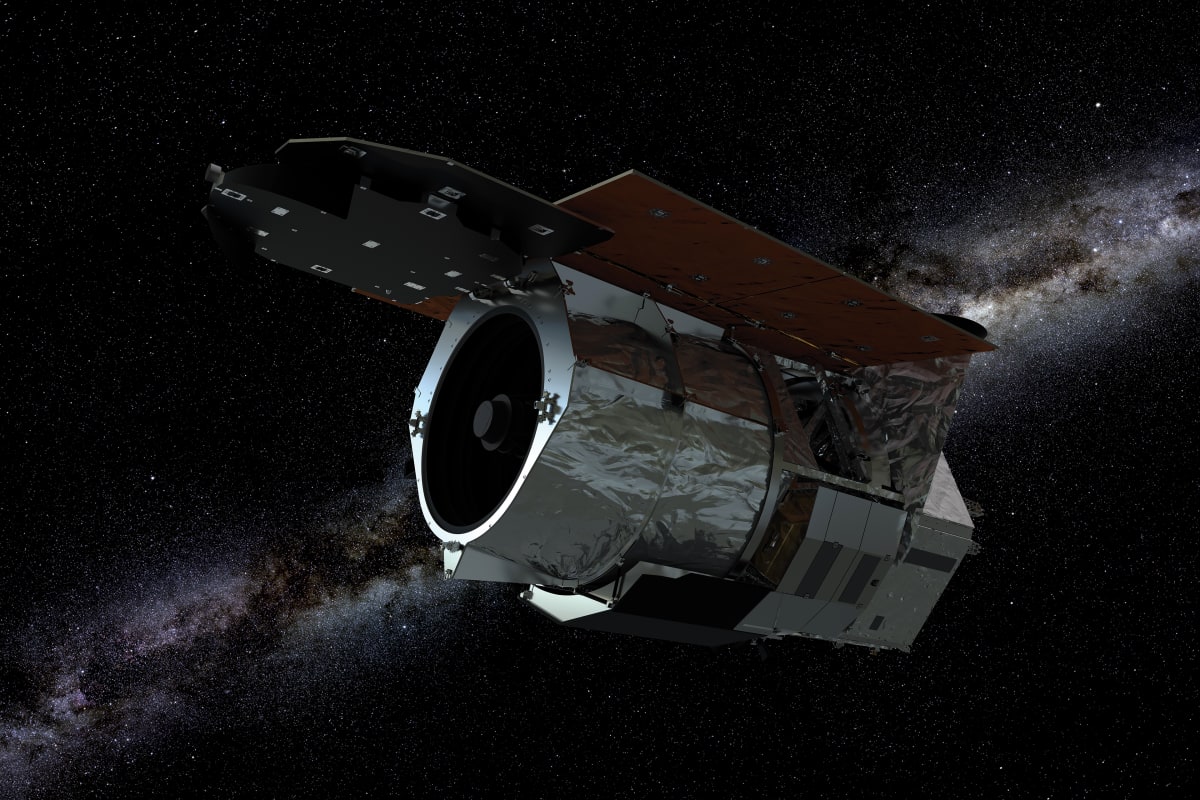
NASA Prepares Nancy Grace Roman Space Telescope for Launch on Falcon Heavy

A New Era for Space Astronomy

On a crisp morning at Kennedy Space Center, the Falcon Heavy rocket, towering 70 meters, rolled onto Launch Pad 41A with the Nancy Grace Roman Space Telescope safely tucked beneath its payload fairing. This marks the final, highly‑visible step before the telescope—NASA’s most ambitious wide‑field observatory since Hubble—begins its journey to the Sun–Earth L2 point.


Who Was Nancy Grace Roman?

  • Pioneer of Space Astronomy – Often called the “Mother of Hubble,” Roman led NASA’s early astrophysics programs in the 1960s and 1970s.
  • Advocate for Open Data – She championed the idea that space‑based data should be publicly available, a principle that underpins today’s open‑science missions.
  • Legacy – Naming the telescope after her honors her vision of a universe explored through powerful, wide‑field imaging.

Why the Roman Telescope Matters

Feature Significance
Wide‑field Infrared Survey 100× the field of view of Hubble, enabling rapid mapping of dark energy, exoplanets, and distant galaxies.
Coronagraph Instrument First space‑based coronagraph capable of directly imaging exoplanets that are 1,000 times fainter than their host stars.
High‑precision Astrometry Measures stellar positions with micro‑arcsecond accuracy, refining our understanding of cosmic expansion.

The mission’s core science goals are to probe dark energy, investigate exoplanet demographics, and conduct a near‑infrared survey of the sky that will complement data from the James Webb Space Telescope.


From Budget Battles to Launch Pad Triumph

The Roman Telescope survived a turbulent political landscape:

  • 2018–2020 – Proposed cuts under the Trump administration threatened the mission’s budget, prompting a vigorous advocacy campaign by scientists and the public.
  • 2021 – Congress restored full funding, recognizing the telescope’s unique capability to answer fundamental cosmological questions.
  • 2023 – NASA selected SpaceX’s Falcon Heavy for the launch, leveraging its heavy‑lift capacity and proven reliability.

This perseverance underscores how scientific ambition can endure beyond shifting policy winds.


The Launch Timeline

  1. Payload Integration (May 2024) – The telescope was integrated into the Falcon Heavy payload fairing at SpaceX’s Starbase.
  2. Transport to Florida (June 2024) – A specialized transport vehicle delivered the integrated stack to Kennedy Space Center.
  3. Roll‑out to Pad 41A (July 2024) – The rocket‑telescope combo rolled out under a clear sky, greeted by NASA officials and media.
  4. Countdown and Liftoff (Projected Q4 2024) – Final checks, fueling, and a targeted launch window later this year.

What to Watch For

  • Exoplanet Imaging – The coronagraph will attempt the first direct images of Earth‑size worlds in reflected light.
  • Dark Energy Survey – A massive dataset will allow astronomers to test whether the universe’s expansion is accelerating due to a mysterious energy.
  • Data Release – Consistent with Roman’s legacy, NASA plans to make raw and processed data publicly available within months of collection.

Takeaways

  • The Nancy Grace Roman Space Telescope embodies a blend of scientific ambition, political resilience, and engineering excellence.
  • Its launch on Falcon Heavy showcases a growing partnership between NASA and commercial launch providers.
  • The mission will likely reshape our understanding of the cosmos, from the nature of dark energy to the demographics of worlds beyond our solar system.

Stay tuned for live coverage as the countdown begins—this launch could redefine the next chapter of space exploration.


Original Reporting & Source: Space

Discussion (0)

Sign in to join the discussion.

No comments yet. Be the first to start the conversation!

| |

NASA Prepares Nancy Grace Roman Space Telescope for Launch on Falcon Heavy

By Umang Sisodia • 3 min read • 7 views

A New Era for Space Astronomy

On a crisp morning at Kennedy Space Center, the Falcon Heavy rocket, towering 70 meters, rolled onto Launch Pad 41A with the Nancy Grace Roman Space Telescope safely tucked beneath its payload fairing. This marks the final, highly‑visible step before the telescope—NASA’s most ambitious wide‑field observatory since Hubble—begins its journey to the Sun–Earth L2 point.


Who Was Nancy Grace Roman?

  • Pioneer of Space Astronomy – Often called the “Mother of Hubble,” Roman led NASA’s early astrophysics programs in the 1960s and 1970s.
  • Advocate for Open Data – She championed the idea that space‑based data should be publicly available, a principle that underpins today’s open‑science missions.
  • Legacy – Naming the telescope after her honors her vision of a universe explored through powerful, wide‑field imaging.

Why the Roman Telescope Matters

Feature Significance
Wide‑field Infrared Survey 100× the field of view of Hubble, enabling rapid mapping of dark energy, exoplanets, and distant galaxies.
Coronagraph Instrument First space‑based coronagraph capable of directly imaging exoplanets that are 1,000 times fainter than their host stars.
High‑precision Astrometry Measures stellar positions with micro‑arcsecond accuracy, refining our understanding of cosmic expansion.

The mission’s core science goals are to probe dark energy, investigate exoplanet demographics, and conduct a near‑infrared survey of the sky that will complement data from the James Webb Space Telescope.


From Budget Battles to Launch Pad Triumph

The Roman Telescope survived a turbulent political landscape:

  • 2018–2020 – Proposed cuts under the Trump administration threatened the mission’s budget, prompting a vigorous advocacy campaign by scientists and the public.
  • 2021 – Congress restored full funding, recognizing the telescope’s unique capability to answer fundamental cosmological questions.
  • 2023 – NASA selected SpaceX’s Falcon Heavy for the launch, leveraging its heavy‑lift capacity and proven reliability.

This perseverance underscores how scientific ambition can endure beyond shifting policy winds.


The Launch Timeline

  1. Payload Integration (May 2024) – The telescope was integrated into the Falcon Heavy payload fairing at SpaceX’s Starbase.
  2. Transport to Florida (June 2024) – A specialized transport vehicle delivered the integrated stack to Kennedy Space Center.
  3. Roll‑out to Pad 41A (July 2024) – The rocket‑telescope combo rolled out under a clear sky, greeted by NASA officials and media.
  4. Countdown and Liftoff (Projected Q4 2024) – Final checks, fueling, and a targeted launch window later this year.

What to Watch For

  • Exoplanet Imaging – The coronagraph will attempt the first direct images of Earth‑size worlds in reflected light.
  • Dark Energy Survey – A massive dataset will allow astronomers to test whether the universe’s expansion is accelerating due to a mysterious energy.
  • Data Release – Consistent with Roman’s legacy, NASA plans to make raw and processed data publicly available within months of collection.

Takeaways

  • The Nancy Grace Roman Space Telescope embodies a blend of scientific ambition, political resilience, and engineering excellence.
  • Its launch on Falcon Heavy showcases a growing partnership between NASA and commercial launch providers.
  • The mission will likely reshape our understanding of the cosmos, from the nature of dark energy to the demographics of worlds beyond our solar system.

Stay tuned for live coverage as the countdown begins—this launch could redefine the next chapter of space exploration.


Original Reporting & Source: Space