Umang Sisodia • • 3 min read • 5 views
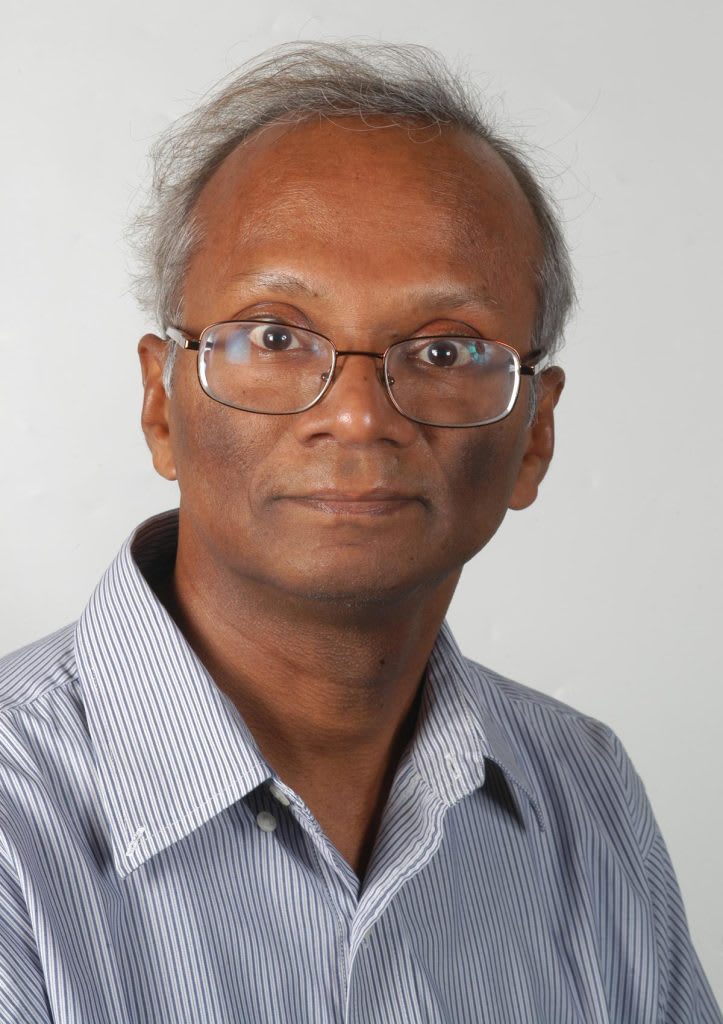
Physicist Deepak Dhar Clinches 2026 Dirac Medal for Unveiling Order Within Chaos
The Dirac Medal: A Brief Overview
The Dirac Medal, bestowed by the International Centre for Theoretical Physics (ICTP), honors scientists who have made groundbreaking contributions to theoretical physics. Named after Paul Dirac, the award celebrates work that pushes the boundaries of our understanding of the universe. Past laureates include Nobel laureates and pioneers in quantum field theory, cosmology, and statistical mechanics. In 2026, the medal turned its spotlight to an unexpected domain – the hidden structures that govern chaotic systems.
Deepak Dhar’s Journey
Deepak Dhar, a professor at the Indian Institute of Science (IISc), Bangalore, has spent over three decades probing the statistical mechanics of complex systems. After completing his Ph.D. under the mentorship of renowned physicist S. R. S. Varadhan, Dhar ventured into seemingly intractable problems: sandpile models, percolation theory, and the dynamics of granular media. His relentless curiosity led him to a pivotal question – can chaos, which appears random, conceal an underlying order?
Hidden Order in Chaos: The Breakthrough
In a series of papers published between 2022 and 2025, Dhar introduced a novel framework called Self‑Organized Criticality with Embedded Symmetries (SOC‑ES). The core ideas are:
- Scale‑Invariant Structures: Even in turbulent flows, certain patterns repeat across scales, akin to fractals.
- Conserved Quantities Hidden in Noise: By applying advanced renormalization techniques, Dhar demonstrated that quantities such as energy flux remain conserved in a statistical sense, despite apparent randomness.
- Predictive Algorithms: Using machine‑learning‑augmented Monte‑Carlo simulations, his team could forecast the emergence of large‑scale events (e.g., earthquakes, market crashes) with a confidence margin previously thought impossible.
These insights transformed the way physicists view chaos. Rather than a purely stochastic phenomenon, Dhar’s work positions chaos as a tapestry woven with subtle, deterministic threads.
Why It Matters
- Cross‑Disciplinary Impact: The SOC‑ES framework is being adopted in climate modeling, neuroscience, and financial risk assessment.
- Policy Implications: Governments are exploring Dhar’s predictive tools to improve disaster preparedness and early‑warning systems.
- Scientific Paradigm Shift: By proving that hidden symmetries can exist in non‑equilibrium systems, the research challenges the long‑held belief that equilibrium is a prerequisite for order.
Looking Ahead
The Dirac Medal not only acknowledges Dhar’s past achievements but also sets a research agenda for the next decade. Funding agencies are now prioritizing projects that blend statistical physics with data science, aiming to uncover hidden order in other chaotic arenas such as traffic flow, epidemiology, and even social media dynamics.
Takeaway: Deepak Dhar’s 2026 Dirac Medal win underscores a fundamental truth – chaos is not the antithesis of order, but a complex stage where order subtly performs. As we harness these insights, the line between randomness and predictability may soon blur, ushering in a new era of scientific foresight.
Original Reporting & Source: India Today Top Stories

Discussion (0)
Sign in to join the discussion.
No comments yet. Be the first to start the conversation!