Umang Sisodia • • 3 min read • 14 views
WMO Warns: El Niño Likely to Persist Until Early 2027 – Global Implications
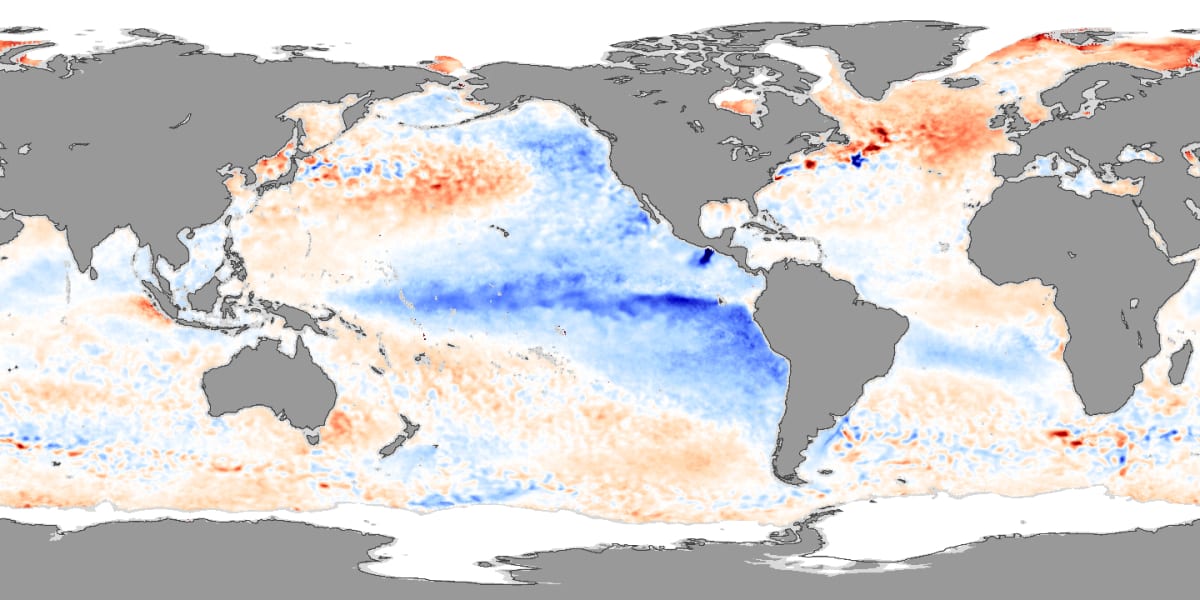
El Niño Extends Into 2027 – WMO’s Unprecedented Warning
The World Meteorological Organization (WMO) has issued a stark advisory: there is a 100 % probability that the current El Niño episode will linger until early 2027. This is the first time the agency has attached absolute certainty to a multi‑year forecast for the climate phenomenon, underscoring the seriousness of the projected impacts on weather patterns worldwide.
What Is El Niño?
El Niño is a periodic warming of the central and eastern equatorial Pacific Ocean that disrupts global atmospheric circulation. While the event typically lasts 9‑12 months, strong episodes can stretch beyond a year, influencing rainfall, temperature, and storm tracks across continents.
Why the 2027 Projection Matters
- Record‑breaking sea‑surface temperatures: Satellite observations show the Pacific Ocean’s surface temperature anomaly has remained above +1.5 °C for the past 18 months, a threshold rarely sustained.
- Atmospheric feedback loops: Persistent warm waters reinforce upper‑level wind patterns that inhibit the natural cooling phase, effectively locking the system in place.
- Model convergence: The latest Coupled Model Intercomparison Project (CMIP‑7) ensembles converge on a narrow probability band, giving the WMO confidence to declare a 100 % chance.
Global Ripple Effects
| Region | Expected Impact | Key Sectors Affected |
|---|---|---|
| South Asia (India, Bangladesh, Pakistan) | Delayed and weakened monsoon, higher temperature extremes | Agriculture, water resources, public health |
| North America (West Coast) | Increased winter storms, coastal flooding | Infrastructure, emergency services |
| Australia & New Zealand | Drier conditions, heightened bush‑fire risk | Forestry, tourism |
| South America (Andes) | Altered precipitation, glacier melt acceleration | Hydropower, agriculture |
| Africa (Horn of Africa) | Prolonged drought, food insecurity | Livelihoods, humanitarian aid |
Specific Concerns for India
India’s monsoon, the lifeline for more than 60 % of its agrarian economy, is highly sensitive to Pacific temperature anomalies. A lingering El Niño can:
- Postpone monsoon onset by up to two weeks, compressing the rainy window.
- Reduce total rainfall by 5‑15 % in central and western states, jeopardising sowing schedules for rice and cotton.
- Elevate heat‑wave frequency during the pre‑monsoon months, increasing mortality risk for vulnerable populations.
The Ministry of Earth Sciences has already begun issuing sector‑specific advisories, urging farmers to adopt drought‑resilient crop varieties and water‑saving irrigation techniques.
Climate‑Policy Takeaways
- Strengthen early‑warning systems: Real‑time satellite monitoring and community‑level dissemination can mitigate loss of life.
- Invest in climate‑smart agriculture: Diversification, rain‑water harvesting, and climate‑resilient seeds are essential.
- International coordination: The WMO’s warning calls for synchronized response mechanisms among affected nations, especially in sharing data and mobilising disaster relief.
- Long‑term mitigation: While El Niño is a natural oscillation, its amplified impacts are intertwined with anthropogenic warming. Reducing greenhouse‑gas emissions remains the ultimate safeguard.
Looking Ahead
The 2027 horizon is not a distant certainty but a looming reality that demands proactive planning. Governments, scientists, and citizens must translate the WMO’s warning into concrete actions—whether it is adjusting planting calendars, reinforcing coastal defenses, or accelerating the transition to renewable energy.
Stay informed, stay prepared, and remember: climate resilience is a collective responsibility.
Original Reporting & Source: India Today Top Stories

Discussion (0)
Sign in to join the discussion.
No comments yet. Be the first to start the conversation!