Umang Sisodia • • 3 min read • 12 views

Iran Accuses U.S. of Killing Six Navy Sailors in Gulf Strike – Implications for Regional Tension
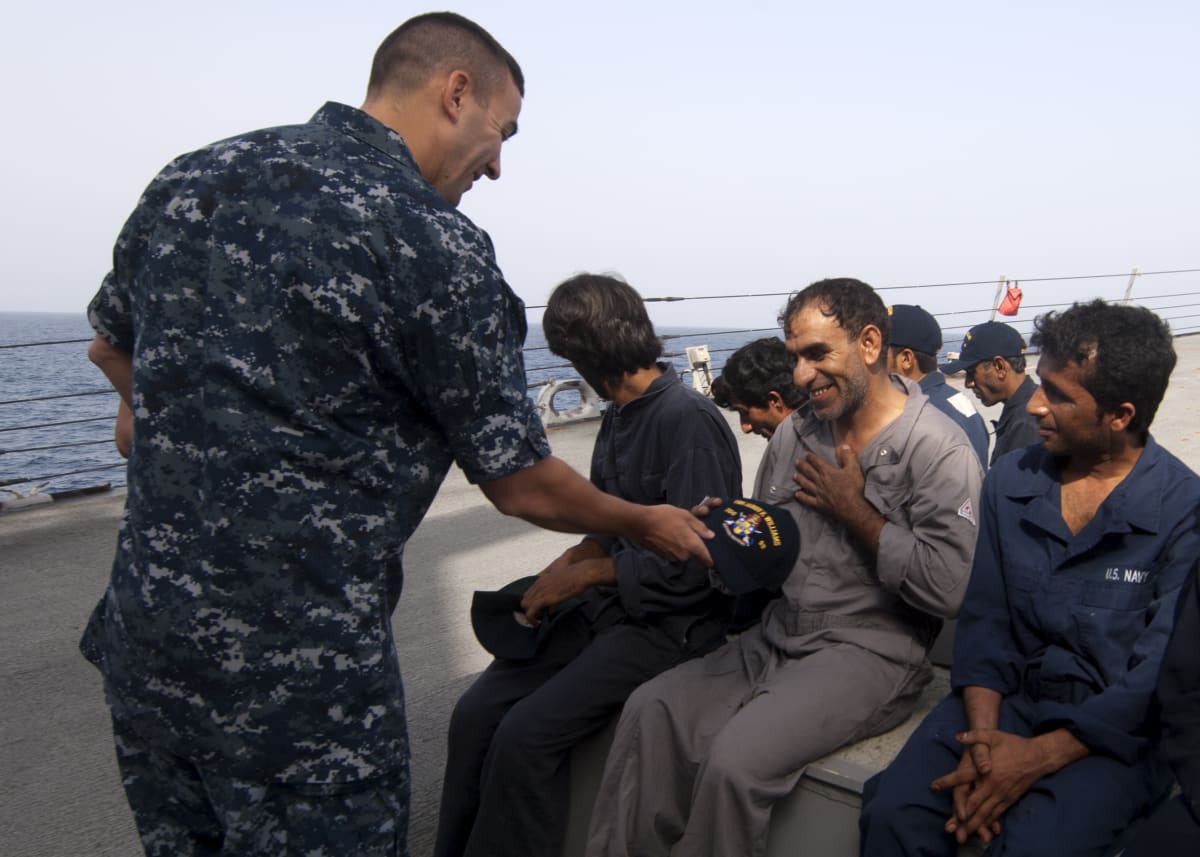
Iran Accuses U.S. of Killing Six Navy Sailors in Gulf Strike – Implications for Regional Tension

Overview

The Middle East’s flashpoint has sharpened after Iranian state media reported that six members of the Islamic Republic’s navy were killed in a U.S. strike on a vessel in the Gulf of Oman. The claim follows a series of escalatory incidents, including a reported U.S. bombing of a wedding party in Sirik that left at least four civilians dead. As Tehran vows retaliation, analysts warn that the episode could push the region closer to a broader naval confrontation.


The Incident

  • Date & Location: The strike reportedly took place on a naval patrol vessel operating near the strategic Strait of Hormuz, a choke‑point through which over a fifth of global oil shipments pass.
  • Casualties: Iranian media, citing the Tasnim News Agency, confirmed six navy personnel dead, adding that the total death toll from recent U.S. actions now stands at 13, including three pilots.
  • U.S. Position: The United States has not formally confirmed the attack, but Pentagon officials have reiterated that American forces will continue to target “terrorist” and “militant” elements that threaten shipping in the region.

Iran’s Narrative

Iranian officials framed the strike as a blatant violation of international law and an act of aggression against a sovereign state. Tehran’s new Hormuz strategy—outlined in recent state‑run commentary—emphasises rapid, asymmetric responses such as swarming tactics with fast attack craft and the use of anti‑ship ballistic missiles.

“You will fail to escape the depths of hell,” a senior commander warned, signaling a willingness to expand the conflict beyond conventional naval engagements.


U.S. Response

While the U.S. has not directly acknowledged the specific incident, the Pentagon’s public statements underscore a continued commitment to protecting freedom of navigation in the Persian Gulf. Washington maintains a robust carrier strike group presence, including the USS Dwight D. Eisenhower, and has warned that any further attacks on its assets will be met with proportionate force.


Regional Implications

  • Escalation Risk: The death of naval personnel heightens the probability of reciprocal strikes, potentially drawing in proxy forces from Lebanon’s Hezbollah or Iraq’s Popular Mobilisation Forces.
  • Shipping Disruption: Any sustained conflict in the Strait of Hormuz could trigger spikes in oil prices and force commercial vessels to reroute around the Cape of Good Hope, adding weeks to transit times.
  • Diplomatic Strain: Allies such as Saudi Arabia and the United Arab Emirates are closely monitoring the situation, balancing their own security concerns with economic ties to both Tehran and Washington.

Historical Context

The Gulf has been a theater of naval brinkmanship since the 1980s, from the “Tanker War” during the Iran‑Iraq conflict to the 2003 Iraq invasion. Recent years have seen a resurgence of U.S. drone and missile strikes targeting Iranian-backed militias in Syria and Iraq, while Iran has expanded its ballistic missile inventory capable of striking ships at sea.


Looking Ahead

Experts suggest three possible trajectories:

  1. Limited Retaliation: Iran may launch a calibrated missile strike on a U.S. vessel, signaling resolve without triggering full‑scale war.
  2. Escalation to Open Conflict: A miscalculation could spiral into a broader naval clash involving allied navies.
  3. Diplomatic De‑Escalation: Back‑channel negotiations, possibly mediated by European powers, could lead to a cease‑fire and a joint maritime security framework.

The coming weeks will be critical in determining whether the Gulf’s simmering tensions boil over or settle into a precarious stalemate.


Stay informed with real‑time updates as the situation evolves.


Original Reporting & Source: thehindu.com

Discussion (0)

Sign in to join the discussion.

No comments yet. Be the first to start the conversation!

| |

Iran Accuses U.S. of Killing Six Navy Sailors in Gulf Strike – Implications for Regional Tension

By Umang Sisodia • 3 min read • 12 views

Overview

The Middle East’s flashpoint has sharpened after Iranian state media reported that six members of the Islamic Republic’s navy were killed in a U.S. strike on a vessel in the Gulf of Oman. The claim follows a series of escalatory incidents, including a reported U.S. bombing of a wedding party in Sirik that left at least four civilians dead. As Tehran vows retaliation, analysts warn that the episode could push the region closer to a broader naval confrontation.


The Incident

  • Date & Location: The strike reportedly took place on a naval patrol vessel operating near the strategic Strait of Hormuz, a choke‑point through which over a fifth of global oil shipments pass.
  • Casualties: Iranian media, citing the Tasnim News Agency, confirmed six navy personnel dead, adding that the total death toll from recent U.S. actions now stands at 13, including three pilots.
  • U.S. Position: The United States has not formally confirmed the attack, but Pentagon officials have reiterated that American forces will continue to target “terrorist” and “militant” elements that threaten shipping in the region.

Iran’s Narrative

Iranian officials framed the strike as a blatant violation of international law and an act of aggression against a sovereign state. Tehran’s new Hormuz strategy—outlined in recent state‑run commentary—emphasises rapid, asymmetric responses such as swarming tactics with fast attack craft and the use of anti‑ship ballistic missiles.

“You will fail to escape the depths of hell,” a senior commander warned, signaling a willingness to expand the conflict beyond conventional naval engagements.


U.S. Response

While the U.S. has not directly acknowledged the specific incident, the Pentagon’s public statements underscore a continued commitment to protecting freedom of navigation in the Persian Gulf. Washington maintains a robust carrier strike group presence, including the USS Dwight D. Eisenhower, and has warned that any further attacks on its assets will be met with proportionate force.


Regional Implications

  • Escalation Risk: The death of naval personnel heightens the probability of reciprocal strikes, potentially drawing in proxy forces from Lebanon’s Hezbollah or Iraq’s Popular Mobilisation Forces.
  • Shipping Disruption: Any sustained conflict in the Strait of Hormuz could trigger spikes in oil prices and force commercial vessels to reroute around the Cape of Good Hope, adding weeks to transit times.
  • Diplomatic Strain: Allies such as Saudi Arabia and the United Arab Emirates are closely monitoring the situation, balancing their own security concerns with economic ties to both Tehran and Washington.

Historical Context

The Gulf has been a theater of naval brinkmanship since the 1980s, from the “Tanker War” during the Iran‑Iraq conflict to the 2003 Iraq invasion. Recent years have seen a resurgence of U.S. drone and missile strikes targeting Iranian-backed militias in Syria and Iraq, while Iran has expanded its ballistic missile inventory capable of striking ships at sea.


Looking Ahead

Experts suggest three possible trajectories:

  1. Limited Retaliation: Iran may launch a calibrated missile strike on a U.S. vessel, signaling resolve without triggering full‑scale war.
  2. Escalation to Open Conflict: A miscalculation could spiral into a broader naval clash involving allied navies.
  3. Diplomatic De‑Escalation: Back‑channel negotiations, possibly mediated by European powers, could lead to a cease‑fire and a joint maritime security framework.

The coming weeks will be critical in determining whether the Gulf’s simmering tensions boil over or settle into a precarious stalemate.


Stay informed with real‑time updates as the situation evolves.


Original Reporting & Source: thehindu.com