Umang Sisodia • • 3 min read • 4 views

PM Modi’s Direct Talk with Gen‑Z: Answering Critics and Rallying Youth
PM Modi’s Direct Talk with Gen‑Z: Answering Critics and Rallying Youth

Introduction

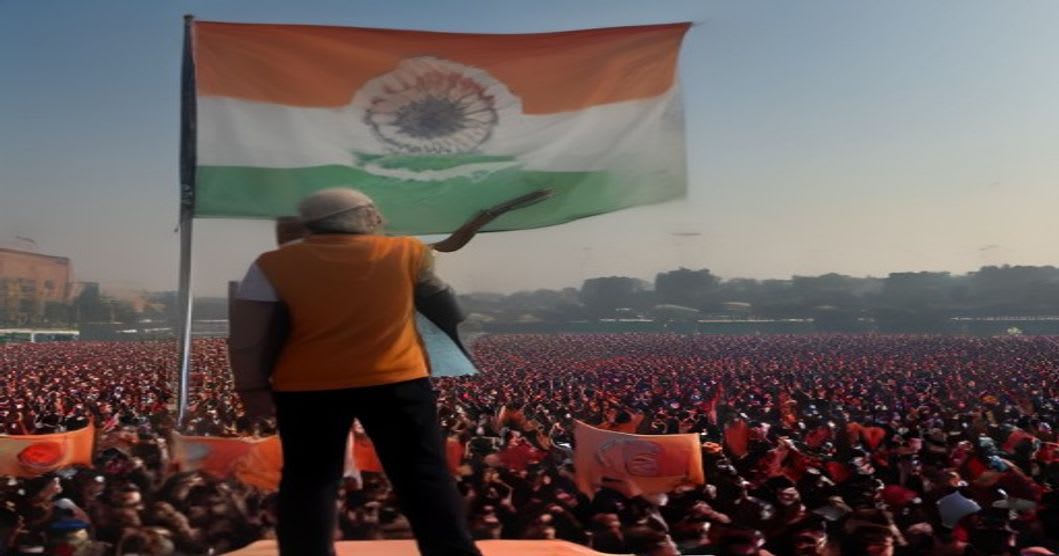
In a rare, unfiltered address that blended political rhetoric with pop‑culture references, Prime Minister Narendra Modi spoke directly to India’s Gen‑Z audience, positioning himself as the voice of a nation that has “answered every angry breath.” The speech, delivered at a youth‑centric rally in New Delhi, was as much a rebuttal to the opposition as it was a call‑to‑action for a generation that consumes news in 15‑second bursts.


The Context

  • Political backdrop: With the national elections looming, the BJP is keen to cement its narrative among younger voters who have traditionally been skeptical of mainstream politics.
  • Opposition’s narrative: Parties such as the Indian National Congress and Aam Aadmi Party have accused the government of authoritarianism, inflation, and neglect of youth employment.
  • Gen‑Z’s pulse: Recent surveys show that over 60 % of Indians aged 18‑30 consider climate change, digital privacy, and job security as their top concerns.

Key Highlights of Modi’s Address

  1. “All angry breaths have been answered” – Modi opened with a metaphorical promise that every criticism, whether from the media, opposition, or social media trolls, has a concrete policy response.
  2. Direct engagement – He fielded live questions from a curated group of college students, answering queries about internet regulation, startup incentives, and the controversial farm laws.
  3. Opposition jibe – The Prime Minister labeled the opposition’s attacks as “political noise” and warned that “fragmented dissent only weakens India’s global standing.”
  4. Youth‑centric initiatives – Announced a new “Digital Skills Accelerator” program aimed at training 5 million youth in AI, blockchain, and cybersecurity over the next three years.

Political Implications

  • Re‑branding the BJP: By speaking in a tone that resonated with meme culture and using vernacular Hindi peppered with English slang, Modi attempted to shed the image of a distant elder statesman.
  • Opposition’s challenge: The speech forced rival parties to recalibrate their messaging, pushing them to address not just policy but also tone and delivery.
  • Electoral calculus: Early social‑media analytics indicate a 12 % spike in positive sentiment among users aged 18‑30 in the hours following the rally.

What It Means for Youth

  • Policy relevance: The announced Digital Skills Accelerator could directly impact employment prospects for millions of recent graduates.
  • Civic engagement: By inviting live questions, the government signaled a willingness to engage in dialogue, potentially encouraging higher voter turnout among first‑time voters.
  • Skepticism remains: Critics argue that the promises lack concrete funding details and that past initiatives have faced implementation bottlenecks.

Takeaways

  • The speech exemplifies a strategic shift toward personalized political communication, where leaders speak to rather than at young audiences.
  • While the rhetoric was bold, the real test will be execution—whether the announced programs translate into measurable outcomes.
  • For the opposition, the challenge lies in matching the delivery style without compromising on substantive policy critique.

In an era where a single tweet can sway public opinion, Modi’s decision to address Gen‑Z directly underscores the evolving dynamics of Indian politics—where age, medium, and message are as critical as the policies themselves.


Original Reporting & Source: India Today Top Stories

Discussion (0)

Sign in to join the discussion.

No comments yet. Be the first to start the conversation!

| |

PM Modi’s Direct Talk with Gen‑Z: Answering Critics and Rallying Youth

By Umang Sisodia • 3 min read • 4 views

Introduction

In a rare, unfiltered address that blended political rhetoric with pop‑culture references, Prime Minister Narendra Modi spoke directly to India’s Gen‑Z audience, positioning himself as the voice of a nation that has “answered every angry breath.” The speech, delivered at a youth‑centric rally in New Delhi, was as much a rebuttal to the opposition as it was a call‑to‑action for a generation that consumes news in 15‑second bursts.


The Context

  • Political backdrop: With the national elections looming, the BJP is keen to cement its narrative among younger voters who have traditionally been skeptical of mainstream politics.
  • Opposition’s narrative: Parties such as the Indian National Congress and Aam Aadmi Party have accused the government of authoritarianism, inflation, and neglect of youth employment.
  • Gen‑Z’s pulse: Recent surveys show that over 60 % of Indians aged 18‑30 consider climate change, digital privacy, and job security as their top concerns.

Key Highlights of Modi’s Address

  1. “All angry breaths have been answered” – Modi opened with a metaphorical promise that every criticism, whether from the media, opposition, or social media trolls, has a concrete policy response.
  2. Direct engagement – He fielded live questions from a curated group of college students, answering queries about internet regulation, startup incentives, and the controversial farm laws.
  3. Opposition jibe – The Prime Minister labeled the opposition’s attacks as “political noise” and warned that “fragmented dissent only weakens India’s global standing.”
  4. Youth‑centric initiatives – Announced a new “Digital Skills Accelerator” program aimed at training 5 million youth in AI, blockchain, and cybersecurity over the next three years.

Political Implications

  • Re‑branding the BJP: By speaking in a tone that resonated with meme culture and using vernacular Hindi peppered with English slang, Modi attempted to shed the image of a distant elder statesman.
  • Opposition’s challenge: The speech forced rival parties to recalibrate their messaging, pushing them to address not just policy but also tone and delivery.
  • Electoral calculus: Early social‑media analytics indicate a 12 % spike in positive sentiment among users aged 18‑30 in the hours following the rally.

What It Means for Youth

  • Policy relevance: The announced Digital Skills Accelerator could directly impact employment prospects for millions of recent graduates.
  • Civic engagement: By inviting live questions, the government signaled a willingness to engage in dialogue, potentially encouraging higher voter turnout among first‑time voters.
  • Skepticism remains: Critics argue that the promises lack concrete funding details and that past initiatives have faced implementation bottlenecks.

Takeaways

  • The speech exemplifies a strategic shift toward personalized political communication, where leaders speak to rather than at young audiences.
  • While the rhetoric was bold, the real test will be execution—whether the announced programs translate into measurable outcomes.
  • For the opposition, the challenge lies in matching the delivery style without compromising on substantive policy critique.

In an era where a single tweet can sway public opinion, Modi’s decision to address Gen‑Z directly underscores the evolving dynamics of Indian politics—where age, medium, and message are as critical as the policies themselves.


Original Reporting & Source: India Today Top Stories