Umang Sisodia • • 4 min read • 7 views

Modi's BRICS Chemistry: Warm Hug with Putin and Handshakes with Global Leaders
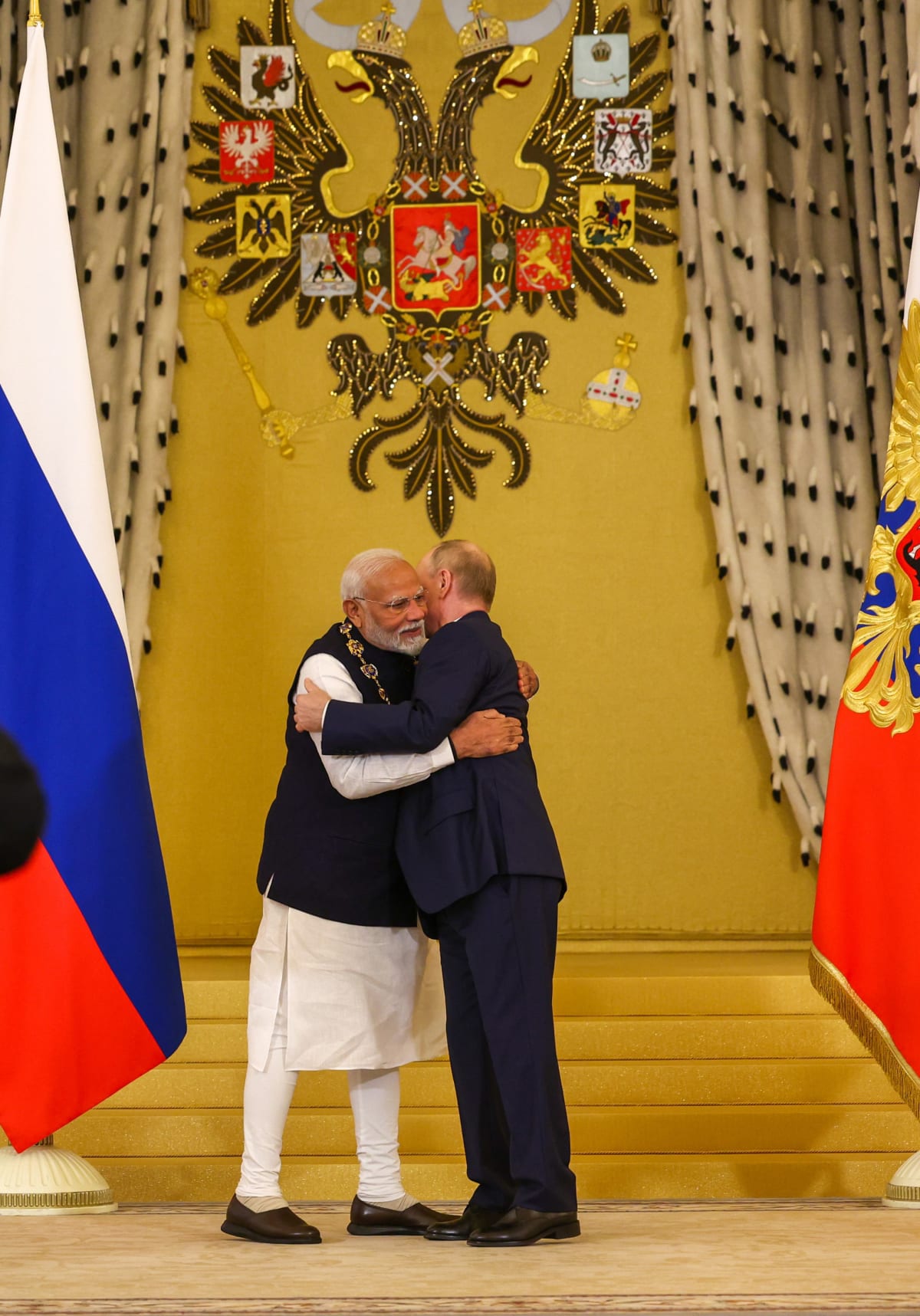
Modi's BRICS Chemistry: Warm Hug with Putin and Handshakes with Global Leaders

A New Chapter in BRICS Relations

The recent BRICS summit in New Delhi showcased an unexpected yet telling display of camaraderie among its leaders. Prime Minister Narendra Modi was seen embracing Russian President Vladimir Putin and exchanging a firm handshake with President Xi Jinping of China, President Luiz Inácio Lula da Silva of Brazil, and President Cyril Ramaphosa of South Africa. These moments, captured on camera, have sparked a wave of analysis about the evolving dynamics within the bloc and India’s strategic positioning.


The Symbolism Behind the Hug

In diplomatic circles, a hug is far more than a friendly gesture; it is a calculated signal. Modi’s warm embrace with Putin was the first such public display since the Ukraine conflict escalated, indicating a possible shift in India’s approach to Russia. Analysts suggest that the hug serves multiple purposes:

  • Reassurance to Russia: Demonstrating that India remains a reliable partner despite Western sanctions.
  • Balancing Act: Allowing India to maintain its strategic autonomy while engaging with both Western and non‑Western powers.
  • Domestic Messaging: Projecting a strong, confident leadership image to the Indian electorate.

Handshakes and Hand‑in‑Hand: The Broader BRICS Interaction

Beyond the Russia‑India moment, Modi’s interactions with other BRICS heads were equally significant:

  • With President Xi: A firm handshake accompanied by a brief exchange in Mandarin, underscoring deepening trade ties and cooperation on technology.
  • With President Lula: A warm clasp that highlighted India’s interest in expanding agricultural and energy collaboration with Brazil.
  • With President Ramaphosa: A mutual nod that reaffirmed joint commitments to multilateralism and reform of global financial institutions.

These gestures, while simple, are emblematic of the “BRICS chemistry” that the summit’s organizers aimed to promote – a sense of unity and shared purpose among emerging economies.


Strategic Outcomes of the Summit

  1. Economic Cooperation: The leaders signed a series of MoUs covering renewable energy, digital infrastructure, and trade facilitation. India’s focus on green technology aligns with Brazil’s agritech expertise and South Africa’s mineral resources.
  2. Security Dialogue: A discreet side‑meeting addressed counter‑terrorism cooperation, with India offering intelligence sharing mechanisms.
  3. Reforming Global Governance: The bloc reiterated its demand for greater representation in the International Monetary Fund (IMF) and United Nations Security Council, positioning itself as a counterweight to Western hegemony.

What This Means for India’s Foreign Policy

  • Strategic Autonomy: Modi’s overt displays of warmth with leaders across the spectrum reinforce India’s non‑aligned stance, allowing it to extract maximum benefit from each partnership.
  • Economic Leverage: By deepening ties with BRICS, India can diversify its supply chains, reduce dependence on any single market, and attract investment in high‑growth sectors.
  • Geopolitical Influence: A visible camaraderie among BRICS leaders projects a united front, potentially reshaping negotiations in multilateral forums.

Takeaways for Readers

  • The hug between Modi and Putin is a diplomatic signal, not a casual photo‑op.
  • Handshakes with other BRICS heads reflect concrete cooperation agendas, especially in green tech and trade.
  • India’s balanced diplomacy continues to be its greatest asset in an increasingly multipolar world.

Looking Ahead

As the BRICS summit concludes, the real test will be how these symbolic gestures translate into tangible outcomes over the next 12‑18 months. Will the MoUs signed in New Delhi materialize into projects? Can India leverage its newfound rapport to influence global governance reforms? Only time will tell, but the chemistry displayed at the summit suggests a promising, if cautiously optimistic, trajectory.


For further reading, explore the official BRICS summit communique and detailed analyses from think‑tanks such as the Observer Research Foundation and the Carnegie India.


Original Reporting & Source: India Today Top Stories

Discussion (0)

Sign in to join the discussion.

No comments yet. Be the first to start the conversation!

| |

Modi's BRICS Chemistry: Warm Hug with Putin and Handshakes with Global Leaders

By Umang Sisodia • 4 min read • 7 views

A New Chapter in BRICS Relations

The recent BRICS summit in New Delhi showcased an unexpected yet telling display of camaraderie among its leaders. Prime Minister Narendra Modi was seen embracing Russian President Vladimir Putin and exchanging a firm handshake with President Xi Jinping of China, President Luiz Inácio Lula da Silva of Brazil, and President Cyril Ramaphosa of South Africa. These moments, captured on camera, have sparked a wave of analysis about the evolving dynamics within the bloc and India’s strategic positioning.


The Symbolism Behind the Hug

In diplomatic circles, a hug is far more than a friendly gesture; it is a calculated signal. Modi’s warm embrace with Putin was the first such public display since the Ukraine conflict escalated, indicating a possible shift in India’s approach to Russia. Analysts suggest that the hug serves multiple purposes:

  • Reassurance to Russia: Demonstrating that India remains a reliable partner despite Western sanctions.
  • Balancing Act: Allowing India to maintain its strategic autonomy while engaging with both Western and non‑Western powers.
  • Domestic Messaging: Projecting a strong, confident leadership image to the Indian electorate.

Handshakes and Hand‑in‑Hand: The Broader BRICS Interaction

Beyond the Russia‑India moment, Modi’s interactions with other BRICS heads were equally significant:

  • With President Xi: A firm handshake accompanied by a brief exchange in Mandarin, underscoring deepening trade ties and cooperation on technology.
  • With President Lula: A warm clasp that highlighted India’s interest in expanding agricultural and energy collaboration with Brazil.
  • With President Ramaphosa: A mutual nod that reaffirmed joint commitments to multilateralism and reform of global financial institutions.

These gestures, while simple, are emblematic of the “BRICS chemistry” that the summit’s organizers aimed to promote – a sense of unity and shared purpose among emerging economies.


Strategic Outcomes of the Summit

  1. Economic Cooperation: The leaders signed a series of MoUs covering renewable energy, digital infrastructure, and trade facilitation. India’s focus on green technology aligns with Brazil’s agritech expertise and South Africa’s mineral resources.
  2. Security Dialogue: A discreet side‑meeting addressed counter‑terrorism cooperation, with India offering intelligence sharing mechanisms.
  3. Reforming Global Governance: The bloc reiterated its demand for greater representation in the International Monetary Fund (IMF) and United Nations Security Council, positioning itself as a counterweight to Western hegemony.

What This Means for India’s Foreign Policy

  • Strategic Autonomy: Modi’s overt displays of warmth with leaders across the spectrum reinforce India’s non‑aligned stance, allowing it to extract maximum benefit from each partnership.
  • Economic Leverage: By deepening ties with BRICS, India can diversify its supply chains, reduce dependence on any single market, and attract investment in high‑growth sectors.
  • Geopolitical Influence: A visible camaraderie among BRICS leaders projects a united front, potentially reshaping negotiations in multilateral forums.

Takeaways for Readers

  • The hug between Modi and Putin is a diplomatic signal, not a casual photo‑op.
  • Handshakes with other BRICS heads reflect concrete cooperation agendas, especially in green tech and trade.
  • India’s balanced diplomacy continues to be its greatest asset in an increasingly multipolar world.

Looking Ahead

As the BRICS summit concludes, the real test will be how these symbolic gestures translate into tangible outcomes over the next 12‑18 months. Will the MoUs signed in New Delhi materialize into projects? Can India leverage its newfound rapport to influence global governance reforms? Only time will tell, but the chemistry displayed at the summit suggests a promising, if cautiously optimistic, trajectory.


For further reading, explore the official BRICS summit communique and detailed analyses from think‑tanks such as the Observer Research Foundation and the Carnegie India.


Original Reporting & Source: India Today Top Stories