Umang Sisodia • • 4 min read • 5 views

Trump Announces New AI Czar and ‘AI Force’ Amid Intensifying US‑China Tech Race
Trump Announces New AI Czar and ‘AI Force’ Amid Intensifying US‑China Tech Race

Trump Unveils a New AI Czar and the ‘AI Force’

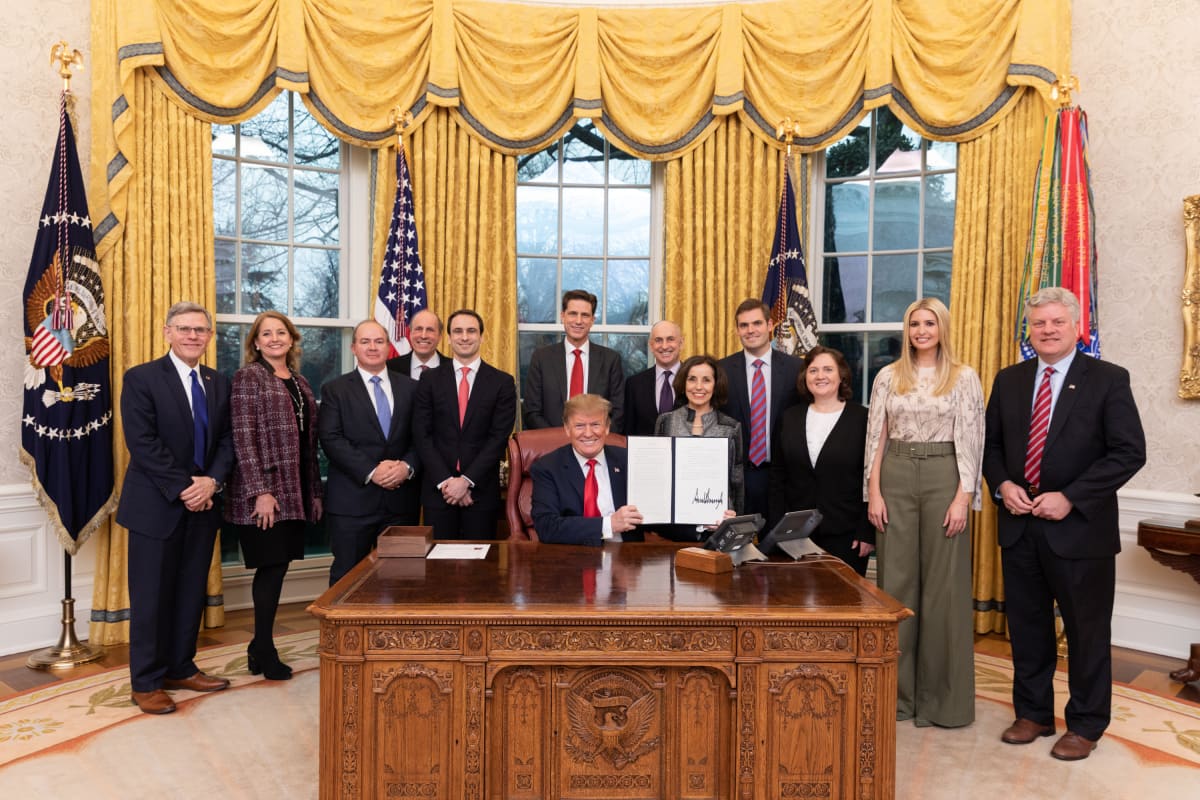
On a crisp Tuesday morning, former President Donald J. Trump took to the podium at a White House press briefing to announce the creation of a new “AI Czar” position, coupled with an ambitious “AI Force” task‑force aimed at accelerating America’s artificial‑intelligence capabilities. The declaration comes as the United States and China lock horns in what experts dub the “AI Cold War,” a competition for dominance over generative models, quantum‑enhanced computing, and defense‑grade AI systems.

“We are going to make America the AI superpower again. I’m appointing a top‑notch AI czar and launching an AI Force that will put us ahead of China and the rest of the world,” – Donald J. Trump.

The announcement instantly trended on Google, Twitter, and major news wires, spurring a flood of commentary from tech CEOs, policymakers, and academic circles.


  • Political Weight: A former president stepping back into the policy arena on a cutting‑edge issue grabs headlines.
  • Strategic Urgency: The US‑China AI rivalry is now a national‑security priority, highlighted in recent Pentagon and State Department reports.
  • Economic Stakes: AI‑driven industries are projected to add $15 trillion to global GDP by 2030, making leadership a matter of economic survival.

The surge on Google Trends reflects a public appetite for clarity on how this move will reshape jobs, privacy, and global power balances.


The US‑China AI Race: A Brief History

  1. Early 2010s – Foundations: Both nations poured billions into AI research, focusing on machine‑learning algorithms and data collection.
  2. 2017‑2020 – Strategic Documents: China released its Next Generation AI Development Plan (2017), while the US unveiled the American AI Initiative (2019).
  3. 2022‑2024 – Weaponization: AI began to appear in autonomous weapons, deep‑fake propaganda, and cyber‑espionage tools, prompting the National Security Commission on AI to issue a stark warning.
  4. 2024 – Market Realignment: Chinese firms like Baidu and SenseTime secured massive government contracts, while US giants such as OpenAI and Google faced regulatory scrutiny.

These milestones illustrate why a centralized AI leadership—the role Trump proposes—could be seen as a decisive pivot.

US-China AI competition US-China AI competition


What the ‘AI Force’ Could Mean for Policy

  • Coordinated R&D Funding: A dedicated budget, potentially $20 billion over the next five years, earmarked for quantum‑AI labs, high‑performance computing clusters, and talent pipelines.
  • Regulatory Fast‑Track: Streamlined approvals for AI pilots in defense, healthcare, and critical infrastructure, while still adhering to emerging AI safety standards.
  • Public‑Private Partnerships: Formal alliances with Silicon Valley innovators, academic powerhouses, and defense contractors to accelerate deployment.
  • Talent Retention Programs: Visa reforms and scholarship schemes aimed at keeping top AI researchers on US soil.

Potential Global Ripple Effects

  • Allied Nations: NATO members may be invited to join a “Trans‑Atlantic AI Alliance,” harmonizing standards and joint exercises.
  • China’s Response: Expect a counter‑announcement, possibly a “AI Sovereignty Council,” and accelerated investment in domestic AI chips.
  • Market Volatility: AI‑centric stocks (e.g., Nvidia, AMD) could see heightened swings as investors price in policy certainty or risk.
  • Ethical Debates: Civil liberties groups will likely press for transparent oversight to prevent misuse of AI in surveillance or autonomous weapons.

Key Takeaways

  • Strategic Leadership: The AI Czar role signals a shift from fragmented agency efforts to a unified national strategy.
  • Geopolitical Stakes: The US‑China AI race is now framed as a matter of global security, not just economic competition.
  • Implementation Challenges: Success hinges on funding, talent acquisition, and balancing innovation with ethical safeguards.
  • Watch the Narrative: How the administration frames the AI Force—whether as a defensive shield or an offensive accelerator—will shape public perception and international response.

As the world watches, the next months will reveal whether Trump’s bold proclamation translates into tangible AI supremacy or becomes another chapter in the ongoing tech‑policy tug‑of‑war.


Original Reporting & Source: India Today Top Stories

Discussion (0)

Sign in to join the discussion.

No comments yet. Be the first to start the conversation!

| |

Trump Announces New AI Czar and ‘AI Force’ Amid Intensifying US‑China Tech Race

By Umang Sisodia • 4 min read • 5 views

Trump Unveils a New AI Czar and the ‘AI Force’

On a crisp Tuesday morning, former President Donald J. Trump took to the podium at a White House press briefing to announce the creation of a new “AI Czar” position, coupled with an ambitious “AI Force” task‑force aimed at accelerating America’s artificial‑intelligence capabilities. The declaration comes as the United States and China lock horns in what experts dub the “AI Cold War,” a competition for dominance over generative models, quantum‑enhanced computing, and defense‑grade AI systems.

“We are going to make America the AI superpower again. I’m appointing a top‑notch AI czar and launching an AI Force that will put us ahead of China and the rest of the world,” – Donald J. Trump.

The announcement instantly trended on Google, Twitter, and major news wires, spurring a flood of commentary from tech CEOs, policymakers, and academic circles.


  • Political Weight: A former president stepping back into the policy arena on a cutting‑edge issue grabs headlines.
  • Strategic Urgency: The US‑China AI rivalry is now a national‑security priority, highlighted in recent Pentagon and State Department reports.
  • Economic Stakes: AI‑driven industries are projected to add $15 trillion to global GDP by 2030, making leadership a matter of economic survival.

The surge on Google Trends reflects a public appetite for clarity on how this move will reshape jobs, privacy, and global power balances.


The US‑China AI Race: A Brief History

  1. Early 2010s – Foundations: Both nations poured billions into AI research, focusing on machine‑learning algorithms and data collection.
  2. 2017‑2020 – Strategic Documents: China released its Next Generation AI Development Plan (2017), while the US unveiled the American AI Initiative (2019).
  3. 2022‑2024 – Weaponization: AI began to appear in autonomous weapons, deep‑fake propaganda, and cyber‑espionage tools, prompting the National Security Commission on AI to issue a stark warning.
  4. 2024 – Market Realignment: Chinese firms like Baidu and SenseTime secured massive government contracts, while US giants such as OpenAI and Google faced regulatory scrutiny.

These milestones illustrate why a centralized AI leadership—the role Trump proposes—could be seen as a decisive pivot.

US-China AI competition US-China AI competition


What the ‘AI Force’ Could Mean for Policy

  • Coordinated R&D Funding: A dedicated budget, potentially $20 billion over the next five years, earmarked for quantum‑AI labs, high‑performance computing clusters, and talent pipelines.
  • Regulatory Fast‑Track: Streamlined approvals for AI pilots in defense, healthcare, and critical infrastructure, while still adhering to emerging AI safety standards.
  • Public‑Private Partnerships: Formal alliances with Silicon Valley innovators, academic powerhouses, and defense contractors to accelerate deployment.
  • Talent Retention Programs: Visa reforms and scholarship schemes aimed at keeping top AI researchers on US soil.

Potential Global Ripple Effects

  • Allied Nations: NATO members may be invited to join a “Trans‑Atlantic AI Alliance,” harmonizing standards and joint exercises.
  • China’s Response: Expect a counter‑announcement, possibly a “AI Sovereignty Council,” and accelerated investment in domestic AI chips.
  • Market Volatility: AI‑centric stocks (e.g., Nvidia, AMD) could see heightened swings as investors price in policy certainty or risk.
  • Ethical Debates: Civil liberties groups will likely press for transparent oversight to prevent misuse of AI in surveillance or autonomous weapons.

Key Takeaways

  • Strategic Leadership: The AI Czar role signals a shift from fragmented agency efforts to a unified national strategy.
  • Geopolitical Stakes: The US‑China AI race is now framed as a matter of global security, not just economic competition.
  • Implementation Challenges: Success hinges on funding, talent acquisition, and balancing innovation with ethical safeguards.
  • Watch the Narrative: How the administration frames the AI Force—whether as a defensive shield or an offensive accelerator—will shape public perception and international response.

As the world watches, the next months will reveal whether Trump’s bold proclamation translates into tangible AI supremacy or becomes another chapter in the ongoing tech‑policy tug‑of‑war.


Original Reporting & Source: India Today Top Stories