Umang Sisodia • • 7 min read • 1 view

SC Warns Govt Over Missing Footpath Near Delhi HC: Dharnas Loom as Citizens Demand Safety
Listen to Article
Select a voice and press play
SC Warns Govt Over Missing Footpath Near Delhi HC: Dharnas Loom as Citizens Demand Safety

Key Takeaways

  • The Supreme Court has issued a stern warning to the Delhi government for failing to provide a safe footpath and crossing near the Delhi High Court premises.
  • Citizens and activist groups have announced a dharna (sit‑in protest) to pressure authorities into immediate remedial action.
  • The issue spotlights broader urban planning gaps in Delhi, where rapid development often outpaces pedestrian infrastructure.
  • Legal experts argue the SC’s intervention could set a precedent for judicial oversight of civic amenities across India.

On April 12, 2026, a petition filed by a coalition of resident welfare associations and senior citizens highlighted a glaring safety hazard: a missing footpath and an unmarked crossing just outside the Delhi High Court complex. The petition argued that the absence of a proper walkway forced pedestrians—including lawyers, litigants, and the general public—to navigate a chaotic mix of traffic, parked vehicles, and uneven terrain.

The Supreme Court (SC), sitting as a bench on public interest litigation, took a swift cognizance of the matter. In a four‑page order, the Court warned the Delhi government that continued neglect would amount to a violation of the Right to Life under Article 21 of the Constitution, which courts have repeatedly interpreted to include the right to safe mobility.

"The State cannot turn a blind eye to the basic civic needs of its citizens. Failure to provide a footpath where the public is mandated to walk is tantamount to a denial of the fundamental right to life and dignity," – Justice Anjali Bose, SC.

Why This Story Is Trending

The SC’s admonition struck a chord on social media and Google Trends for several reasons:

  1. Human‑Scale Urbanism – Delhi’s rapid expansion has left many neighborhoods with inadequate pedestrian infrastructure. The footpath issue is emblematic of a larger crisis that commuters across the capital face daily.
  2. Judicial Activism – The Supreme Court’s direct involvement in a micro‑level civic issue is relatively rare, making it news‑worthy and sparking debate about the limits of judicial intervention.
  3. Grassroots Mobilisation – The announcement of a dharnā (sit‑in) by local NGOs has galvanized citizens, turning a technical grievance into a mass movement.
  4. Political Sensitivity – The Delhi High Court, a symbol of judicial authority, sits adjacent to the contested site, adding a layer of institutional pressure on the state government.

The Legal Backdrop: Article 21 and the Right to Safe Mobility

India’s jurisprudence has progressively expanded Article 21 beyond mere existence to encompass a spectrum of rights, including the right to a clean environment, health, and safe mobility. Landmark cases such as Olga Tellis vs. Bombay Municipal Corporation (1985) and Vishaka vs. State of Rajasthan (1997) have set precedents that the state must proactively safeguard citizens’ welfare.

In the present case, the SC cited the Supreme Court’s own 2018 judgment in M.C. Mehta vs. Union of India, which recognized the right to a safe and accessible public space as integral to Article 21. By invoking this doctrine, the Court signaled that urban planning failures can be subject to constitutional scrutiny.

The Government’s Response: Promises vs. Action

Following the SC order, the Delhi Municipal Corporation (DMC) released a statement promising to:

  • Conduct a detailed site survey within seven days.
  • Allocate ₹3.5 crore for immediate construction of a temporary footbridge.
  • Submit a comprehensive master plan for permanent footpath development within three months.

However, critics argue that such timelines are optimistic given Delhi’s bureaucratic bottlenecks. Past promises regarding pedestrian upgrades in areas like Connaught Place and Saket have stalled for years, fueling public skepticism.

The Dharnā: Citizens Take to the Streets

In response to perceived governmental inertia, the Delhi Citizens’ Forum (DCF) announced a 24‑hour dharna at the contested site on April 20, 2026. The protest aims to:

  • Highlight the immediate safety risks faced by pedestrians.
  • Pressurize the DMC to expedite construction.
  • Create a public record that can be used for further legal action if the government defaults.

Organisers have coordinated with local schools, senior citizen groups, and legal aid clinics to ensure a peaceful, well‑structured sit‑in. The dharna is expected to attract media attention, with live streams already scheduled on platforms like YouTube and Instagram.
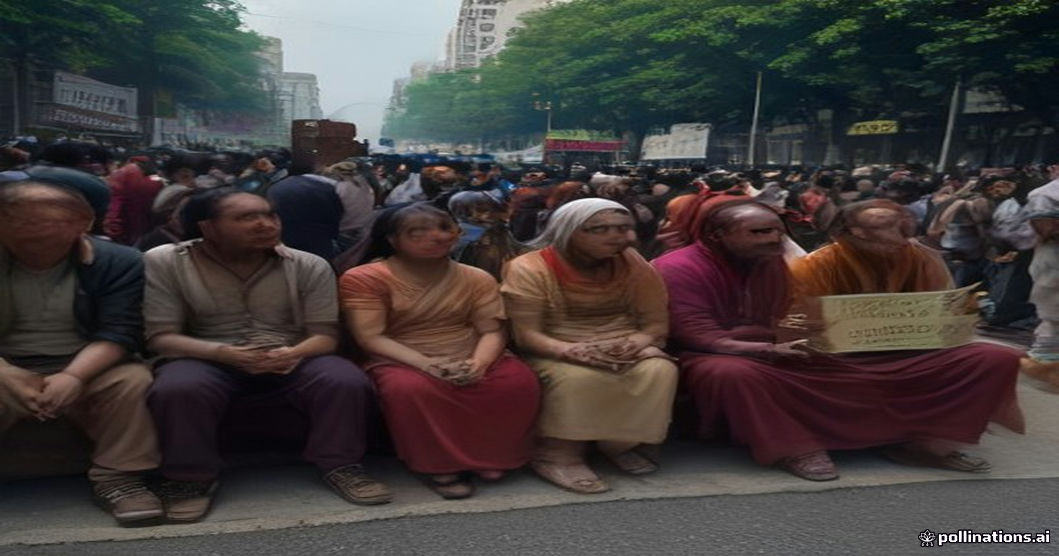
Delhi footpath crossing protest Delhi footpath crossing protest

Expert Opinions: Urban Planning, Law, and Civic Engagement

Urban Planner’s View

Rohit Sharma, a senior urban planner at the National Institute of Urban Affairs, notes that “Delhi’s master plan, last revised in 2020, earmarks 30% of road width for pedestrian use, but implementation is patchy. The SC’s intervention could act as a catalyst for enforcing these standards across the city.”

Prof. Anita Desai, a constitutional law expert at Jawaharlal Nehru University, warns that “while judicial oversight can compel swift action, it should not replace legislative responsibility. The real test will be whether the state adopts a systemic approach rather than ad‑hoc fixes.”

Civil Society Perspective

The Delhi NGO coalition argues that the dharna is not just about a footpath; it’s about reclaiming public space. “When citizens occupy the space where the state has failed, they send a powerful message: safety is non‑negotiable,” says Arvind Kumar, spokesperson for the coalition.

Comparative Cases: When Courts Intervened in Urban Infrastructure

  • Mumbai’s Slum Rehabilitation Act (2008) – The SC mandated the municipal corporation to provide basic amenities before approving redevelopment projects.
  • Bangalore’s Traffic Congestion (2019) – A PIL forced the state to implement a dedicated cycle lane network after the court highlighted the health implications of traffic‑related pollution.

These precedents illustrate that judicial activism can accelerate infrastructure projects, but sustained change often requires policy reform and budgetary allocation.

The Road Ahead: What to Expect in the Next 90 Days

  1. Site Survey & Interim Measures – Within a week, engineers are expected to submit a technical report outlining immediate safety measures, such as temporary barriers and signage.
  2. Funding Allocation – The Delhi government is likely to earmark additional funds from the Urban Development Scheme to avoid contempt of court.
  3. Legal Follow‑Up – If the DMC fails to meet the SC’s deadline, a contempt petition could be filed, potentially leading to punitive measures against responsible officials.
  4. Public Momentum – The dharna could evolve into a broader movement advocating for pedestrian-friendly policies across Delhi’s urban landscape.

Editorial Analysis & Future Outlook

The Supreme Court’s warning over a missing footpath near the Delhi High Court is a micro‑cosm of a national crisis: rapid urbanisation outpacing basic civic amenities. By invoking Article 21, the Court has re‑framed pedestrian safety as a constitutional right, setting a powerful legal precedent that could reverberate beyond Delhi.

If the government complies promptly, we may witness a template for collaborative governance—where courts, civil society, and municipal bodies co‑create safe public spaces. Conversely, a delayed or half‑hearted response could embolden citizen activism, leading to more frequent dharnas and increased judicial scrutiny of municipal failures.

In the long term, this episode could catalyze:

  • Policy Reforms: Integration of pedestrian infrastructure metrics into the Delhi Master Plan and other state-level urban policies.
  • Budget Prioritisation: Allocation of a dedicated ‘Pedestrian Safety Fund’ within municipal budgets.
  • Judicial Precedent: Courts across India may reference this SC order when adjudicating similar civic grievances, expanding the scope of judicial activism in urban governance.

Ultimately, the success of this movement hinges on sustained public pressure, transparent implementation, and political will. The footpath may be a single strip of concrete, but it stands as a symbolic front line in the broader battle for livable, humane cities in India.


Original Reporting & Source: India Today Top Stories

Discussion (0)

Sign in to join the discussion.

No comments yet. Be the first to start the conversation!

| |

SC Warns Govt Over Missing Footpath Near Delhi HC: Dharnas Loom as Citizens Demand Safety

By Umang Sisodia • 7 min read • 1 view

Key Takeaways

  • The Supreme Court has issued a stern warning to the Delhi government for failing to provide a safe footpath and crossing near the Delhi High Court premises.
  • Citizens and activist groups have announced a dharna (sit‑in protest) to pressure authorities into immediate remedial action.
  • The issue spotlights broader urban planning gaps in Delhi, where rapid development often outpaces pedestrian infrastructure.
  • Legal experts argue the SC’s intervention could set a precedent for judicial oversight of civic amenities across India.

On April 12, 2026, a petition filed by a coalition of resident welfare associations and senior citizens highlighted a glaring safety hazard: a missing footpath and an unmarked crossing just outside the Delhi High Court complex. The petition argued that the absence of a proper walkway forced pedestrians—including lawyers, litigants, and the general public—to navigate a chaotic mix of traffic, parked vehicles, and uneven terrain.

The Supreme Court (SC), sitting as a bench on public interest litigation, took a swift cognizance of the matter. In a four‑page order, the Court warned the Delhi government that continued neglect would amount to a violation of the Right to Life under Article 21 of the Constitution, which courts have repeatedly interpreted to include the right to safe mobility.

"The State cannot turn a blind eye to the basic civic needs of its citizens. Failure to provide a footpath where the public is mandated to walk is tantamount to a denial of the fundamental right to life and dignity," – Justice Anjali Bose, SC.

Why This Story Is Trending

The SC’s admonition struck a chord on social media and Google Trends for several reasons:

  1. Human‑Scale Urbanism – Delhi’s rapid expansion has left many neighborhoods with inadequate pedestrian infrastructure. The footpath issue is emblematic of a larger crisis that commuters across the capital face daily.
  2. Judicial Activism – The Supreme Court’s direct involvement in a micro‑level civic issue is relatively rare, making it news‑worthy and sparking debate about the limits of judicial intervention.
  3. Grassroots Mobilisation – The announcement of a dharnā (sit‑in) by local NGOs has galvanized citizens, turning a technical grievance into a mass movement.
  4. Political Sensitivity – The Delhi High Court, a symbol of judicial authority, sits adjacent to the contested site, adding a layer of institutional pressure on the state government.

The Legal Backdrop: Article 21 and the Right to Safe Mobility

India’s jurisprudence has progressively expanded Article 21 beyond mere existence to encompass a spectrum of rights, including the right to a clean environment, health, and safe mobility. Landmark cases such as Olga Tellis vs. Bombay Municipal Corporation (1985) and Vishaka vs. State of Rajasthan (1997) have set precedents that the state must proactively safeguard citizens’ welfare.

In the present case, the SC cited the Supreme Court’s own 2018 judgment in M.C. Mehta vs. Union of India, which recognized the right to a safe and accessible public space as integral to Article 21. By invoking this doctrine, the Court signaled that urban planning failures can be subject to constitutional scrutiny.

The Government’s Response: Promises vs. Action

Following the SC order, the Delhi Municipal Corporation (DMC) released a statement promising to:

  • Conduct a detailed site survey within seven days.
  • Allocate ₹3.5 crore for immediate construction of a temporary footbridge.
  • Submit a comprehensive master plan for permanent footpath development within three months.

However, critics argue that such timelines are optimistic given Delhi’s bureaucratic bottlenecks. Past promises regarding pedestrian upgrades in areas like Connaught Place and Saket have stalled for years, fueling public skepticism.

The Dharnā: Citizens Take to the Streets

In response to perceived governmental inertia, the Delhi Citizens’ Forum (DCF) announced a 24‑hour dharna at the contested site on April 20, 2026. The protest aims to:

  • Highlight the immediate safety risks faced by pedestrians.
  • Pressurize the DMC to expedite construction.
  • Create a public record that can be used for further legal action if the government defaults.

Organisers have coordinated with local schools, senior citizen groups, and legal aid clinics to ensure a peaceful, well‑structured sit‑in. The dharna is expected to attract media attention, with live streams already scheduled on platforms like YouTube and Instagram.

Delhi footpath crossing protest Delhi footpath crossing protest

Expert Opinions: Urban Planning, Law, and Civic Engagement

Urban Planner’s View

Rohit Sharma, a senior urban planner at the National Institute of Urban Affairs, notes that “Delhi’s master plan, last revised in 2020, earmarks 30% of road width for pedestrian use, but implementation is patchy. The SC’s intervention could act as a catalyst for enforcing these standards across the city.”

Prof. Anita Desai, a constitutional law expert at Jawaharlal Nehru University, warns that “while judicial oversight can compel swift action, it should not replace legislative responsibility. The real test will be whether the state adopts a systemic approach rather than ad‑hoc fixes.”

Civil Society Perspective

The Delhi NGO coalition argues that the dharna is not just about a footpath; it’s about reclaiming public space. “When citizens occupy the space where the state has failed, they send a powerful message: safety is non‑negotiable,” says Arvind Kumar, spokesperson for the coalition.

Comparative Cases: When Courts Intervened in Urban Infrastructure

  • Mumbai’s Slum Rehabilitation Act (2008) – The SC mandated the municipal corporation to provide basic amenities before approving redevelopment projects.
  • Bangalore’s Traffic Congestion (2019) – A PIL forced the state to implement a dedicated cycle lane network after the court highlighted the health implications of traffic‑related pollution.

These precedents illustrate that judicial activism can accelerate infrastructure projects, but sustained change often requires policy reform and budgetary allocation.

The Road Ahead: What to Expect in the Next 90 Days

  1. Site Survey & Interim Measures – Within a week, engineers are expected to submit a technical report outlining immediate safety measures, such as temporary barriers and signage.
  2. Funding Allocation – The Delhi government is likely to earmark additional funds from the Urban Development Scheme to avoid contempt of court.
  3. Legal Follow‑Up – If the DMC fails to meet the SC’s deadline, a contempt petition could be filed, potentially leading to punitive measures against responsible officials.
  4. Public Momentum – The dharna could evolve into a broader movement advocating for pedestrian-friendly policies across Delhi’s urban landscape.

Editorial Analysis & Future Outlook

The Supreme Court’s warning over a missing footpath near the Delhi High Court is a micro‑cosm of a national crisis: rapid urbanisation outpacing basic civic amenities. By invoking Article 21, the Court has re‑framed pedestrian safety as a constitutional right, setting a powerful legal precedent that could reverberate beyond Delhi.

If the government complies promptly, we may witness a template for collaborative governance—where courts, civil society, and municipal bodies co‑create safe public spaces. Conversely, a delayed or half‑hearted response could embolden citizen activism, leading to more frequent dharnas and increased judicial scrutiny of municipal failures.

In the long term, this episode could catalyze:

  • Policy Reforms: Integration of pedestrian infrastructure metrics into the Delhi Master Plan and other state-level urban policies.
  • Budget Prioritisation: Allocation of a dedicated ‘Pedestrian Safety Fund’ within municipal budgets.
  • Judicial Precedent: Courts across India may reference this SC order when adjudicating similar civic grievances, expanding the scope of judicial activism in urban governance.

Ultimately, the success of this movement hinges on sustained public pressure, transparent implementation, and political will. The footpath may be a single strip of concrete, but it stands as a symbolic front line in the broader battle for livable, humane cities in India.


Original Reporting & Source: India Today Top Stories