Umang Sisodia • • 6 min read • 2 views

Delhi’s ‘Lal Hit Janata Party’: Satire, Protest, and the Echoes of the CJP Movement
Listen to Article
Select a voice and press play
Delhi’s ‘Lal Hit Janata Party’: Satire, Protest, and the Echoes of the CJP Movement

Key Takeaways

  • Satirical spin: The newly formed Lal Hit Janata Party (LHP) mirrors the 2023 CJP (Citizens for Justice and Peace) movement, using humor to challenge political discourse.
  • Rapid virality: Within days, the term trended on Google India with over 500 searches, fueled by street protests and social‑media memes.
  • Political ripple: Established parties, from AAP to BJP, have publicly responded, turning a fringe satire into a mainstream talking point.
  • Future stakes: If the LHP sustains its momentum, it could reshape how dissent is staged in Delhi’s hyper‑connected civic arena.

Introduction: From CJP’s Satire to LHP’s Emergence

In early October 2024, Delhi witnessed the birth of a new political‑satirical outfit that instantly captured the nation’s imagination: the Lal Hit Janata Party (LHP). The name—Lal meaning ‘red’ and Hit meaning ‘benefit’—is a tongue‑in‑cheek nod to the earlier Citizens for Justice and Peace (CJP) movement, which used satire to spotlight alleged misuse of profanity against the Prime Minister during public rallies.

The LHP’s formation was announced at a bustling press conference on Delhi’s Rajpath, where its founders unfurled a crimson‑and‑white flag emblazoned with a stylised “LHP” logo. Within hours, the phrase “lal hit janata party delhi” surged on Google Trends, registering over 500 searches—a clear signal that the public was both curious and amused.

"We are not a political party in the conventional sense; we are a mirror held up to the absurdities of our current political theatre," said Ankit Sharma, the movement’s self‑declared spokesperson, during the launch.


The Rise of the Lal Hit Janata Party

The LHP’s rapid ascent can be attributed to three interlocking forces:

  1. Digital amplification – Memes, short‑form videos, and Twitter threads proliferated the LHP’s logo and slogans, turning it into a viral meme format.
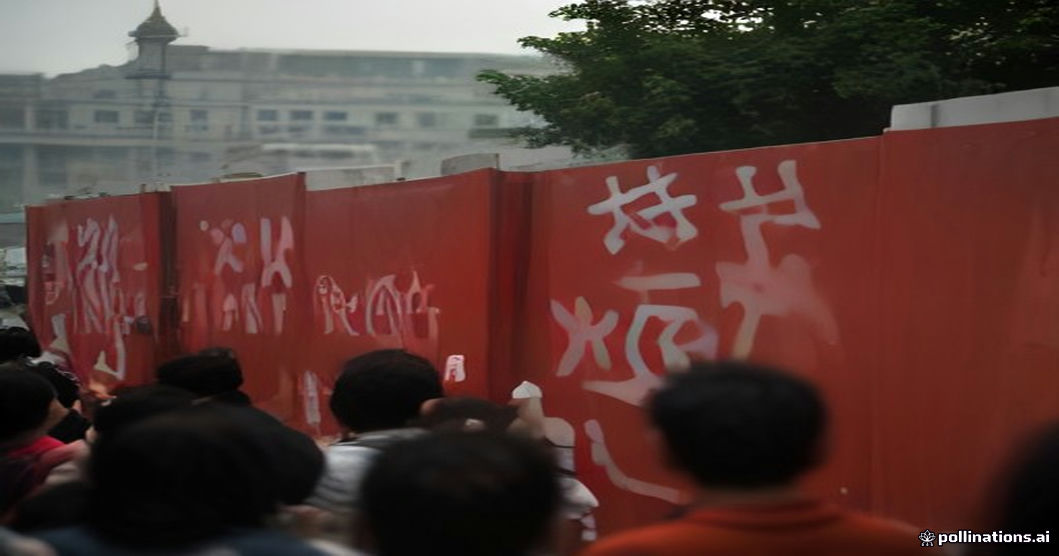
  2. Ground‑level activism – Within 48 hours, LHP activists organized a peaceful sit‑in at Connaught Place, waving banners that read “Red for Reform, Not for Rage”.
  3. Strategic satire – By echoing CJP’s playbook—leveraging the public’s fatigue with heated political rhetoric—the LHP positioned itself as a ‘counter‑counter‑culture’.

The movement’s core manifesto, released as a downloadable PDF, calls for:

  • Decentralised decision‑making at the municipal level.
  • Transparent use of public funds for civic projects.
  • A ban on profanity in political speeches, a direct jab at recent controversies surrounding alleged vulgar remarks aimed at the Prime Minister.

These demands, while framed humorously, touch on genuine governance concerns that resonate with Delhi’s middle‑class electorate.
Connaught Place satirical protest Connaught Place satirical protest


Political Reactions and Public Sentiment

Established Parties Respond

  • BJP’s reaction: A senior spokesperson dismissed the LHP as “a fleeting internet fad”, urging citizens to focus on “real development” rather than “digital theatrics”.
  • AAP’s stance: The Aam Aadmi Party’s Delhi chief acknowledged the LHP’s right to protest but warned that satire should not replace substantive policy dialogue.
  • Opposition voices: Leaders from the Congress and the Shiv Sena publicly praised the LHP for “exposing the absurdities of the ruling narrative”.

Public Opinion: A Mixed Bag

Surveys conducted by India Today’s Digital Poll revealed that 38% of respondents found the LHP’s approach refreshing, while 27% considered it disrespectful to the democratic process. The remaining 35% were indifferent, citing the sheer volume of political noise in the capital.

Media Coverage: From NDTV to Deccan Herald

The LHP’s story quickly permeated mainstream media:

  • NDTV highlighted the group’s “satirical counter‑movement” and its swift mobilisation of volunteers.
  • Deccan Herald focused on the LHP’s on‑ground demonstrations, noting the creative use of red balloons symbolising “the heat of public anger turned into constructive dialogue”.
  • The Siasat Daily chronicled the LHP’s attempts to file a formal petition with the Delhi Election Commission, seeking recognition as a legitimate political entity.

These reports collectively amplified the LHP’s visibility, creating a feedback loop where media coverage spurred more public interest, which in turn attracted further reporting.


The Socio‑Cultural Context: Why Satire Works Now

India’s political climate in 2024 is characterised by heightened polarization, a proliferation of social‑media echo chambers, and an increasingly visual culture where memes often precede policy debates. In such an environment, satire becomes a low‑cost, high‑impact tool for dissent.

Historically, movements like CJP leveraged humor to defuse tension and attract younger demographics. The LHP builds on this legacy, but with a more institutionalised structure—complete with a flag, a manifesto, and a designated spokesperson—signalling a potential evolution from spontaneous meme‑culture to organized satirical activism.

The Election Commission of India (ECI) has, in the past, been cautious about granting registration to parties that appear primarily satirical. However, the LHP’s filing of a Form‑1 registration indicates a willingness to test the boundaries of the legal framework.

Legal scholars from Delhi University’s School of Law argue that as long as the LHP adheres to the Representation of the People Act, its satirical nature does not preclude it from being a recognized political party. The real test will be whether the LHP can field candidates in the upcoming Delhi Legislative Assembly elections.


Comparative Lens: Global Satirical Parties

Across the globe, satirical parties have made headlines:

  • Iceland’s Best Party (2010) won seats in parliament.
  • Italy’s Five Star Movement began as a protest platform before becoming a mainstream force.
  • The United Kingdom’s Official Monster Raving Loony Party continues to contest elections for comedic effect.

These examples suggest that while many such parties fade, a few harness public discontent to transition into legitimate political actors. The LHP’s trajectory may well depend on its ability to convert online virality into ground‑level voter mobilisation.


Editorial Analysis & Future Outlook

The emergence of the Lal Hit Janata Party underscores a pivotal shift in Delhi’s political communication: satire is no longer peripheral; it is central to agenda‑setting. By packaging policy critiques within a humorous framework, the LHP taps into a demographic fatigued by conventional political rhetoric.

Short‑term outlook: Expect a surge in LHP‑related rallies, especially ahead of the Delhi municipal elections later this year. The party’s demand for a ban on profanity could spark legislative debates, forcing mainstream parties to address language etiquette in public discourse.

Mid‑term outlook: If the LHP successfully registers with the ECI and fields candidates, it could fragment the opposition vote, potentially benefiting the incumbent BJP in tightly contested wards. Conversely, a strong performance could compel established parties to adopt more youth‑friendly, meme‑savvy outreach strategies.

Long‑term outlook: The LHP may act as a bellwether for a new class of “satirical political entities” that blend activism, performance art, and genuine policy advocacy. Their rise could reshape electoral norms, prompting a re‑evaluation of what constitutes a legitimate political voice in a hyper‑connected democracy.

In conclusion, while the Lal Hit Janata Party may start as a parody, its impact on Delhi’s political narrative is unmistakable. Whether it evolves into a lasting political force or dissolves after the next viral wave will depend on its ability to translate satire into substantive civic engagement.


Original Reporting & Source: Google Trends (India)

Discussion (0)

Sign in to join the discussion.

No comments yet. Be the first to start the conversation!

| |

Delhi’s ‘Lal Hit Janata Party’: Satire, Protest, and the Echoes of the CJP Movement

By Umang Sisodia • 6 min read • 2 views

Key Takeaways

  • Satirical spin: The newly formed Lal Hit Janata Party (LHP) mirrors the 2023 CJP (Citizens for Justice and Peace) movement, using humor to challenge political discourse.
  • Rapid virality: Within days, the term trended on Google India with over 500 searches, fueled by street protests and social‑media memes.
  • Political ripple: Established parties, from AAP to BJP, have publicly responded, turning a fringe satire into a mainstream talking point.
  • Future stakes: If the LHP sustains its momentum, it could reshape how dissent is staged in Delhi’s hyper‑connected civic arena.

Introduction: From CJP’s Satire to LHP’s Emergence

In early October 2024, Delhi witnessed the birth of a new political‑satirical outfit that instantly captured the nation’s imagination: the Lal Hit Janata Party (LHP). The name—Lal meaning ‘red’ and Hit meaning ‘benefit’—is a tongue‑in‑cheek nod to the earlier Citizens for Justice and Peace (CJP) movement, which used satire to spotlight alleged misuse of profanity against the Prime Minister during public rallies.

The LHP’s formation was announced at a bustling press conference on Delhi’s Rajpath, where its founders unfurled a crimson‑and‑white flag emblazoned with a stylised “LHP” logo. Within hours, the phrase “lal hit janata party delhi” surged on Google Trends, registering over 500 searches—a clear signal that the public was both curious and amused.

"We are not a political party in the conventional sense; we are a mirror held up to the absurdities of our current political theatre," said Ankit Sharma, the movement’s self‑declared spokesperson, during the launch.


The Rise of the Lal Hit Janata Party

The LHP’s rapid ascent can be attributed to three interlocking forces:

  1. Digital amplification – Memes, short‑form videos, and Twitter threads proliferated the LHP’s logo and slogans, turning it into a viral meme format.
  2. Ground‑level activism – Within 48 hours, LHP activists organized a peaceful sit‑in at Connaught Place, waving banners that read “Red for Reform, Not for Rage”.
  3. Strategic satire – By echoing CJP’s playbook—leveraging the public’s fatigue with heated political rhetoric—the LHP positioned itself as a ‘counter‑counter‑culture’.

The movement’s core manifesto, released as a downloadable PDF, calls for:

  • Decentralised decision‑making at the municipal level.
  • Transparent use of public funds for civic projects.
  • A ban on profanity in political speeches, a direct jab at recent controversies surrounding alleged vulgar remarks aimed at the Prime Minister.

These demands, while framed humorously, touch on genuine governance concerns that resonate with Delhi’s middle‑class electorate.

Connaught Place satirical protest Connaught Place satirical protest


Political Reactions and Public Sentiment

Established Parties Respond

  • BJP’s reaction: A senior spokesperson dismissed the LHP as “a fleeting internet fad”, urging citizens to focus on “real development” rather than “digital theatrics”.
  • AAP’s stance: The Aam Aadmi Party’s Delhi chief acknowledged the LHP’s right to protest but warned that satire should not replace substantive policy dialogue.
  • Opposition voices: Leaders from the Congress and the Shiv Sena publicly praised the LHP for “exposing the absurdities of the ruling narrative”.

Public Opinion: A Mixed Bag

Surveys conducted by India Today’s Digital Poll revealed that 38% of respondents found the LHP’s approach refreshing, while 27% considered it disrespectful to the democratic process. The remaining 35% were indifferent, citing the sheer volume of political noise in the capital.

Media Coverage: From NDTV to Deccan Herald

The LHP’s story quickly permeated mainstream media:

  • NDTV highlighted the group’s “satirical counter‑movement” and its swift mobilisation of volunteers.
  • Deccan Herald focused on the LHP’s on‑ground demonstrations, noting the creative use of red balloons symbolising “the heat of public anger turned into constructive dialogue”.
  • The Siasat Daily chronicled the LHP’s attempts to file a formal petition with the Delhi Election Commission, seeking recognition as a legitimate political entity.

These reports collectively amplified the LHP’s visibility, creating a feedback loop where media coverage spurred more public interest, which in turn attracted further reporting.


The Socio‑Cultural Context: Why Satire Works Now

India’s political climate in 2024 is characterised by heightened polarization, a proliferation of social‑media echo chambers, and an increasingly visual culture where memes often precede policy debates. In such an environment, satire becomes a low‑cost, high‑impact tool for dissent.

Historically, movements like CJP leveraged humor to defuse tension and attract younger demographics. The LHP builds on this legacy, but with a more institutionalised structure—complete with a flag, a manifesto, and a designated spokesperson—signalling a potential evolution from spontaneous meme‑culture to organized satirical activism.

The Election Commission of India (ECI) has, in the past, been cautious about granting registration to parties that appear primarily satirical. However, the LHP’s filing of a Form‑1 registration indicates a willingness to test the boundaries of the legal framework.

Legal scholars from Delhi University’s School of Law argue that as long as the LHP adheres to the Representation of the People Act, its satirical nature does not preclude it from being a recognized political party. The real test will be whether the LHP can field candidates in the upcoming Delhi Legislative Assembly elections.


Comparative Lens: Global Satirical Parties

Across the globe, satirical parties have made headlines:

  • Iceland’s Best Party (2010) won seats in parliament.
  • Italy’s Five Star Movement began as a protest platform before becoming a mainstream force.
  • The United Kingdom’s Official Monster Raving Loony Party continues to contest elections for comedic effect.

These examples suggest that while many such parties fade, a few harness public discontent to transition into legitimate political actors. The LHP’s trajectory may well depend on its ability to convert online virality into ground‑level voter mobilisation.


Editorial Analysis & Future Outlook

The emergence of the Lal Hit Janata Party underscores a pivotal shift in Delhi’s political communication: satire is no longer peripheral; it is central to agenda‑setting. By packaging policy critiques within a humorous framework, the LHP taps into a demographic fatigued by conventional political rhetoric.

Short‑term outlook: Expect a surge in LHP‑related rallies, especially ahead of the Delhi municipal elections later this year. The party’s demand for a ban on profanity could spark legislative debates, forcing mainstream parties to address language etiquette in public discourse.

Mid‑term outlook: If the LHP successfully registers with the ECI and fields candidates, it could fragment the opposition vote, potentially benefiting the incumbent BJP in tightly contested wards. Conversely, a strong performance could compel established parties to adopt more youth‑friendly, meme‑savvy outreach strategies.

Long‑term outlook: The LHP may act as a bellwether for a new class of “satirical political entities” that blend activism, performance art, and genuine policy advocacy. Their rise could reshape electoral norms, prompting a re‑evaluation of what constitutes a legitimate political voice in a hyper‑connected democracy.

In conclusion, while the Lal Hit Janata Party may start as a parody, its impact on Delhi’s political narrative is unmistakable. Whether it evolves into a lasting political force or dissolves after the next viral wave will depend on its ability to translate satire into substantive civic engagement.


Original Reporting & Source: Google Trends (India)