Umang Sisodia • • 6 min read • 2 views
22 IIT Bombay Students Detained Amid Protest for Sahil Wakode: A Deep Dive into Campus Activism

Key Takeaways
- 22 students from IIT Bombay were detained during a protest demanding justice for Sahil Wakode.
- The incident sparked nationwide debate on student rights, police overreach, and campus autonomy.
- Legal petitions, alumni backlash, and political commentary have turned a campus issue into a broader societal flashpoint.
- Experts warn this could redefine the boundaries of dissent in Indian higher‑education institutions.
The Incident: Detention of 22 IIT Bombay Students
On April 23, 2024, a group of twenty‑two undergraduate students at the Indian Institute of Technology Bombay (IIT Bombay) staged a sit‑in at the institute’s main gate. Their demand was simple yet potent: justice for Sahil Wakode, a fellow student whose recent death has been mired in controversy over alleged police misconduct.
The protest, organized through student‑run social media channels, quickly gathered momentum. Within hours, placards bearing slogans such as “Justice for Sahil” and “Campus Autonomy, Not Police Control” dotted the campus. However, before the demonstration could gain further traction, campus security, backed by local police, intervened. Twenty‑two protesters were handcuffed and escorted out of the campus. Several were taken to the local police station for questioning, while others were released on bail after a brief detention.
Why the Protest Resonated Nationwide
The story surged on Google Trends and dominated the news wires for several reasons:
- Human Rights Concerns – Sahil Wakode’s death, reportedly during a police encounter, has already ignited protests across multiple Indian cities. The IIT Bombay demonstration linked the campus community directly to this larger narrative of alleged state violence.
- IITs as Symbolic Institutions – Indian Institutes of Technology are considered elite bastions of academic excellence. Any perceived infringement on their autonomy is viewed as a threat to the broader educational ecosystem.
- Social Media Amplification – Live streams, Instagram reels, and Twitter threads from on‑ground participants went viral, prompting alumni, faculty, and even Bollywood personalities to voice solidarity.
- Political Timing – The incident coincided with upcoming state elections, giving opposition parties a potent rallying point against the incumbent government’s law‑and‑order narrative.
"When a premier institution like IIT Bombay is forced to police its own students, it sends a chilling message to every campus across the nation," said Dr. Meera Krishnan, a sociologist at Jawaharlal Nehru University.
Legal and Institutional Responses
The detention prompted an immediate legal scramble:
- Student Petition – A group of students filed a writ petition in the Bombay High Court, alleging violation of fundamental rights under Articles 19 and 21 of the Indian Constitution. The petition demanded the immediate release of the detained students and a directive for the institute to ensure a safe space for peaceful dissent.
- Institute’s Statement – IIT Bombay’s administration released a terse statement, emphasizing that "the protest had turned disruptive and posed a security risk". The institute also announced an internal committee to review the incident.
- Police Explanation – Mumbai Police defended their action, citing a "lawful order to disperse an unlawful assembly" and claiming that the students were "non‑compliant".
- Alumni Outcry – Prominent alumni, including Nandan Nilekani and Arundhati Bhattacharya, issued an open letter demanding an independent inquiry and urging the institute to protect its students’ constitutional freedoms.
Voices from the Campus: Student and Faculty Perspectives
The campus atmosphere turned tense. Below are excerpts from interviews conducted with students, faculty, and staff:
- Rohit Sharma (3rd‑year Computer Science): "We are not asking for anything radical. We just want the truth about Sahil’s death. The police response feels like intimidation."
- Prof. Anjali Mehta (Department of Humanities): "Academic institutions have historically been crucibles of dissent. When that space is curtailed, the very spirit of inquiry suffers."
- Campus Security Officer (anonymous): "We were following standard protocol. The protest blocked the main entrance, affecting the daily functioning of the institute."
These testimonies underscore a growing cognitive dissonance between the institute’s reputation for academic freedom and the reality of state‑driven security measures.
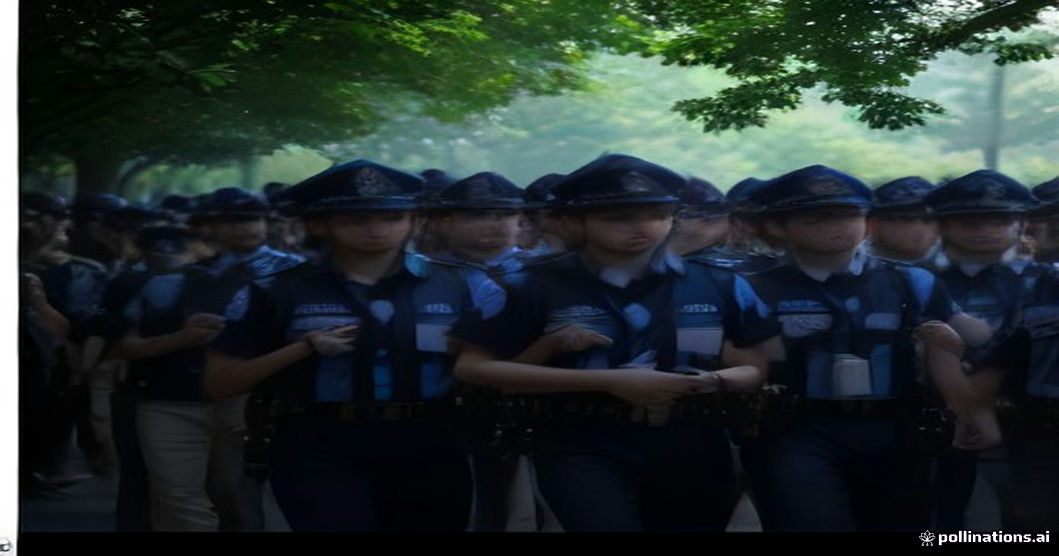 IIT Bombay police escort detained students
Broader Implications for Campus Activism in India
The IIT Bombay episode is unlikely to be an isolated incident. It may herald a new era of campus‑state dynamics:
- Precedent for Future Protests – If institutions concede to police pressure, student movements may become more cautious, potentially stifling legitimate grievances.
- Policy Revisions – The Ministry of Education could be compelled to draft clearer guidelines on the right to protest within autonomous institutions.
- Judicial Oversight – The High Court’s forthcoming judgment on the writ petition will set a legal benchmark for evaluating police actions on educational premises.
- Digital Mobilisation – Social media’s role in amplifying the protest demonstrates that virtual solidarity can translate into real‑world pressure, a trend likely to intensify.
Editorial Analysis & Future Outlook
From an editorial standpoint, the detention of 22 IIT Bombay students is a microcosm of a larger democratic tension: the clash between state authority and citizen‑led dissent within spaces traditionally insulated from political interference. The incident forces us to ask:
- Will Indian higher‑education institutions retain their autonomy? The answer hinges on how quickly the legal system addresses the writ petition and whether the government respects the sanctity of campus spaces.
- Can student activism survive heightened police scrutiny? The surge of digital activism suggests that physical presence may be supplemented—or even replaced—by online campaigns, reshaping protest strategies.
- What role will public opinion play? With alumni, celebrities, and civil‑society groups joining the chorus, the narrative is no longer confined to campus corridors; it has entered the national consciousness.
Looking ahead, we anticipate a two‑fold trajectory:
- Short‑Term – Expect a flurry of legal filings, possible disciplinary actions against student leaders, and a heightened media spotlight on police conduct.
- Long‑Term – The incident could catalyze legislative reforms that codify the right to peaceful assembly in educational institutions, while also prompting universities to develop robust internal grievance mechanisms to pre‑empt external police involvement.
In conclusion, the IIT Bombay protest is more than a headline; it is a litmus test for India’s democratic resilience. How the nation navigates this crossroads will shape the contours of academic freedom, civil liberties, and the very fabric of dissent in the years to come.
Original Reporting & Source: India Today Top Stories

Discussion (0)
Sign in to join the discussion.
No comments yet. Be the first to start the conversation!