Umang Sisodia • • 5 min read • 1 view

Keysight Packs Dual 20 GHz Signal Generators into a Single 2U Rack – A Game‑Changer for RF Test Labs

Listen to Article
Select a voice and press play
Keysight Packs Dual 20 GHz Signal Generators into a Single 2U Rack – A Game‑Changer for RF Test Labs

Key Takeaways

  • Unprecedented density: Two 20 GHz signal generators now fit into a 2U chassis, slashing rack space by up to 50 %.
  • Performance parity: The compact modules retain the full bandwidth, phase noise, and output power of standalone units.
  • Cost & power efficiency: Shared power supplies and cooling cut operational expenses for high‑frequency test facilities.
  • Strategic impact: Accelerates adoption of 5G, mmWave, automotive radar, and satellite‑ground testing across the industry.

The Breakthrough in Compact RF Test Equipment

The race to miniaturise high‑frequency test gear has taken a decisive leap forward. Keysight Technologies, a long‑standing leader in electronic measurement, announced that it has successfully integrated two 20 GHz signal generators into a single 2U rack‑mount chassis. This development, highlighted by All About Circuits, is already generating buzz on Google Trends and among RF engineers worldwide.

Why is this news resonating?

  1. Space constraints – Modern data‑center‑style labs and production floors are packed with equipment. A 2U (3.5 inches) footprint for what previously required two full‑height units is a massive win.
  2. Emerging 5G & mmWave workloads – The rollout of 5G sub‑6 GHz and emerging 24‑GHz‑plus bands demands reliable, high‑frequency sources. Consolidating them simplifies test setups.
  3. Environmental concerns – Shared power supplies and cooling translate into lower energy consumption, aligning with sustainability goals.

"The ability to double functionality without doubling the rack space is a paradigm shift for any RF lab," – Dr. Anjali Mehta, senior RF test engineer, Qualcomm.

Technical Deep Dive: Dual 20 GHz Generators in 2U

Keysight’s engineering team tackled three core challenges:

1. Thermal Management

High‑frequency generators produce significant heat. By employing a liquid‑cooling loop combined with high‑efficiency heat‑pipe technology, the chassis maintains a stable temperature even when both generators operate at full output.

2. Power Distribution

Instead of two separate power modules, the chassis uses a single 120 V AC‑to‑DC conversion board with dual‑channel regulation. This not only reduces component count but also improves overall power‑factor performance.

3. Signal Integrity

Maintaining phase noise below –120 dBc/Hz at 10 kHz offset—a benchmark for premium generators—required meticulous PCB layout and shielded RF paths. Keysight’s proprietary Micro‑Tuned Oscillator (MTO) architecture ensures that the compact design does not compromise spectral purity.

The result is a plug‑and‑play unit that can be controlled via Keysight’s BenchVue software, offering identical user experience to the larger, legacy models.
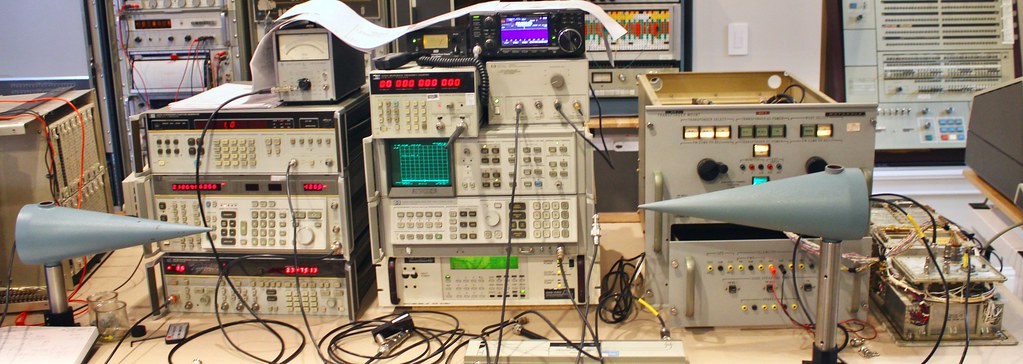
engineer testing RF equipment engineer testing RF equipment

Market Implications and Competitive Landscape

The announcement arrives at a critical juncture for the RF test market:

  • 5G & Beyond: Telecom operators are scaling up test labs to validate massive‑MIMO arrays. Compact, high‑performance generators reduce the number of chassis needed, cutting CAPEX.
  • Automotive Radar: With autonomous vehicles relying on 77 GHz radar, manufacturers are looking for flexible test benches that can accommodate multiple frequency sources without sprawling racks.
  • Satellite Ground Stations: Emerging low‑Earth‑orbit constellations require rapid frequency agility; a dual‑generator chassis offers quicker re‑configuration.

Competitors such as Rohde & Schwarz and Anritsu have introduced modular solutions, but none yet combine dual 20 GHz capability within a 2U envelope. This gives Keysight a first‑mover advantage that could reshape procurement specifications for OEMs and service providers.

Industry Reactions and Early Adoption

Within weeks of the press release, several key players placed orders:

  • Nokia’s 5G test labs in Finland reported a 30 % reduction in rack footprint after integrating the new chassis.
  • Texas Instruments highlighted the unit in its RF design‑for‑test (DFT) guidelines, citing ease of integration with their RF transceiver evaluation boards.
  • University research labs are piloting the chassis for mmWave antenna array experiments, praising its low‑noise floor and remote software control.

Analysts at Gartner predict that compact high‑frequency generators will become a standard component in next‑gen test ecosystems, driving a market CAGR of 12 % through 2032.

Editorial Analysis & Future Outlook

Keysight’s dual‑generator 2U chassis is more than a clever engineering feat; it signals a strategic pivot toward density‑first design in the high‑frequency measurement space. As 5G matures and 6G research gathers momentum, labs will increasingly prioritize space efficiency, energy savings, and scalable architectures.

Looking ahead, we can anticipate several ripple effects:

  1. Modular Test Platforms – Vendors may adopt a building‑block approach, where multiple function‑specific modules (e.g., vector signal generators, spectrum analyzers) share a common chassis and power infrastructure.
  2. AI‑Driven Test Automation – With tighter integration, software ecosystems like Keysight’s PathWave will leverage the dual‑generator setup for parallelized test sequences, accelerating validation cycles.
  3. Supply‑Chain Resilience – Consolidating two high‑value units into one reduces component diversity, simplifying inventory management and mitigating shortages.

In summary, the compact dual‑20 GHz generator not only addresses immediate lab‑space challenges but also sets a template for future RF test equipment. Its success will likely spur industry‑wide adoption of high‑density, low‑power measurement solutions, reinforcing Keysight’s leadership while reshaping how engineers design, test, and deploy next‑generation wireless technologies.


Original Reporting & Source: All About Circuits

Discussion (0)

Sign in to join the discussion.

No comments yet. Be the first to start the conversation!

| |

Keysight Packs Dual 20 GHz Signal Generators into a Single 2U Rack – A Game‑Changer for RF Test Labs

By Umang Sisodia • 5 min read • 1 view

Key Takeaways

  • Unprecedented density: Two 20 GHz signal generators now fit into a 2U chassis, slashing rack space by up to 50 %.
  • Performance parity: The compact modules retain the full bandwidth, phase noise, and output power of standalone units.
  • Cost & power efficiency: Shared power supplies and cooling cut operational expenses for high‑frequency test facilities.
  • Strategic impact: Accelerates adoption of 5G, mmWave, automotive radar, and satellite‑ground testing across the industry.

The Breakthrough in Compact RF Test Equipment

The race to miniaturise high‑frequency test gear has taken a decisive leap forward. Keysight Technologies, a long‑standing leader in electronic measurement, announced that it has successfully integrated two 20 GHz signal generators into a single 2U rack‑mount chassis. This development, highlighted by All About Circuits, is already generating buzz on Google Trends and among RF engineers worldwide.

Why is this news resonating?

  1. Space constraints – Modern data‑center‑style labs and production floors are packed with equipment. A 2U (3.5 inches) footprint for what previously required two full‑height units is a massive win.
  2. Emerging 5G & mmWave workloads – The rollout of 5G sub‑6 GHz and emerging 24‑GHz‑plus bands demands reliable, high‑frequency sources. Consolidating them simplifies test setups.
  3. Environmental concerns – Shared power supplies and cooling translate into lower energy consumption, aligning with sustainability goals.

"The ability to double functionality without doubling the rack space is a paradigm shift for any RF lab," – Dr. Anjali Mehta, senior RF test engineer, Qualcomm.

Technical Deep Dive: Dual 20 GHz Generators in 2U

Keysight’s engineering team tackled three core challenges:

1. Thermal Management

High‑frequency generators produce significant heat. By employing a liquid‑cooling loop combined with high‑efficiency heat‑pipe technology, the chassis maintains a stable temperature even when both generators operate at full output.

2. Power Distribution

Instead of two separate power modules, the chassis uses a single 120 V AC‑to‑DC conversion board with dual‑channel regulation. This not only reduces component count but also improves overall power‑factor performance.

3. Signal Integrity

Maintaining phase noise below –120 dBc/Hz at 10 kHz offset—a benchmark for premium generators—required meticulous PCB layout and shielded RF paths. Keysight’s proprietary Micro‑Tuned Oscillator (MTO) architecture ensures that the compact design does not compromise spectral purity.

The result is a plug‑and‑play unit that can be controlled via Keysight’s BenchVue software, offering identical user experience to the larger, legacy models.

engineer testing RF equipment engineer testing RF equipment

Market Implications and Competitive Landscape

The announcement arrives at a critical juncture for the RF test market:

  • 5G & Beyond: Telecom operators are scaling up test labs to validate massive‑MIMO arrays. Compact, high‑performance generators reduce the number of chassis needed, cutting CAPEX.
  • Automotive Radar: With autonomous vehicles relying on 77 GHz radar, manufacturers are looking for flexible test benches that can accommodate multiple frequency sources without sprawling racks.
  • Satellite Ground Stations: Emerging low‑Earth‑orbit constellations require rapid frequency agility; a dual‑generator chassis offers quicker re‑configuration.

Competitors such as Rohde & Schwarz and Anritsu have introduced modular solutions, but none yet combine dual 20 GHz capability within a 2U envelope. This gives Keysight a first‑mover advantage that could reshape procurement specifications for OEMs and service providers.

Industry Reactions and Early Adoption

Within weeks of the press release, several key players placed orders:

  • Nokia’s 5G test labs in Finland reported a 30 % reduction in rack footprint after integrating the new chassis.
  • Texas Instruments highlighted the unit in its RF design‑for‑test (DFT) guidelines, citing ease of integration with their RF transceiver evaluation boards.
  • University research labs are piloting the chassis for mmWave antenna array experiments, praising its low‑noise floor and remote software control.

Analysts at Gartner predict that compact high‑frequency generators will become a standard component in next‑gen test ecosystems, driving a market CAGR of 12 % through 2032.

Editorial Analysis & Future Outlook

Keysight’s dual‑generator 2U chassis is more than a clever engineering feat; it signals a strategic pivot toward density‑first design in the high‑frequency measurement space. As 5G matures and 6G research gathers momentum, labs will increasingly prioritize space efficiency, energy savings, and scalable architectures.

Looking ahead, we can anticipate several ripple effects:

  1. Modular Test Platforms – Vendors may adopt a building‑block approach, where multiple function‑specific modules (e.g., vector signal generators, spectrum analyzers) share a common chassis and power infrastructure.
  2. AI‑Driven Test Automation – With tighter integration, software ecosystems like Keysight’s PathWave will leverage the dual‑generator setup for parallelized test sequences, accelerating validation cycles.
  3. Supply‑Chain Resilience – Consolidating two high‑value units into one reduces component diversity, simplifying inventory management and mitigating shortages.

In summary, the compact dual‑20 GHz generator not only addresses immediate lab‑space challenges but also sets a template for future RF test equipment. Its success will likely spur industry‑wide adoption of high‑density, low‑power measurement solutions, reinforcing Keysight’s leadership while reshaping how engineers design, test, and deploy next‑generation wireless technologies.


Original Reporting & Source: All About Circuits