Umang Sisodia • • 6 min read • 1 view

Poland’s Abortion Vote Sparks Protest and a Likely Presidential Veto
Listen to Article
Select a voice and press play
Poland’s Abortion Vote Sparks Protest and a Likely Presidential Veto

Key Takeaways

  • The Sejm approved a modest relaxation of Poland’s strict abortion ban, allowing terminations only in cases of fetal abnormalities.
  • President Andrzej Duda, a staunch anti‑abortion advocate, has signaled a probable veto, setting up a constitutional showdown.
  • Nationwide protests, especially in Warsaw, have intensified, echoing a broader European debate on reproductive rights.
  • The episode could reshape Poland’s political landscape, energising both pro‑choice movements and conservative factions.

Poland’s parliament, the Sejm, voted on April 26, 2024 to loosen the country’s notoriously restrictive abortion law. While the amendment narrows the ban—permitting abortions only when severe fetal defects are diagnosed—it falls far short of the broader reproductive freedoms demanded by millions of Polish women. The move has reignited a fierce clash between the ruling Law and Justice (PiS) party, civil society, and a president who has consistently framed abortion as a moral issue.


The Vote: What the Sejm Decided

In a tightly contested session, 235 lawmakers supported the amendment, 215 opposed, and 10 abstained. The revised text removes the previous requirement that a fetal anomaly be “lethal” and replaces it with a “serious and irreversible impairment” clause. Critics argue the change is largely semantic, preserving a de‑facto ban on most abortions while offering a narrow loophole for a small fraction of cases.

"The law is being softened, but not enough to respect women’s autonomy," noted Dr. Anna Kowalska, a reproductive rights lawyer, in an interview with Reuters.

The vote reflects internal tensions within PiS, where hard‑liners pushed for a total ban, while pragmatic members feared international backlash and domestic unrest.


Public Outcry: Streets of Warsaw and Beyond

Within hours of the parliamentary decision, thousands of women, students, and human‑rights activists took to the streets of Warsaw, Kraków, and Gdańsk. The protests, organized by groups such as Women’s Strike (Strajk Kobiet), featured candlelight vigils, placards reading "My body, my choice", and live performances of protest songs.

The AP News highlighted a particularly moving moment when a 23‑year‑old medical student, Marta Nowak, addressed the crowd:

"We are not just fighting for a law; we are fighting for our future, our health, and our dignity."

Police reported several arrests for unlawful assembly, and social media platforms were flooded with hashtags like #PolandProtests and #MyBodyMyChoice. The demonstrations have drawn solidarity from neighboring European capitals, underscoring a regional ripple effect.
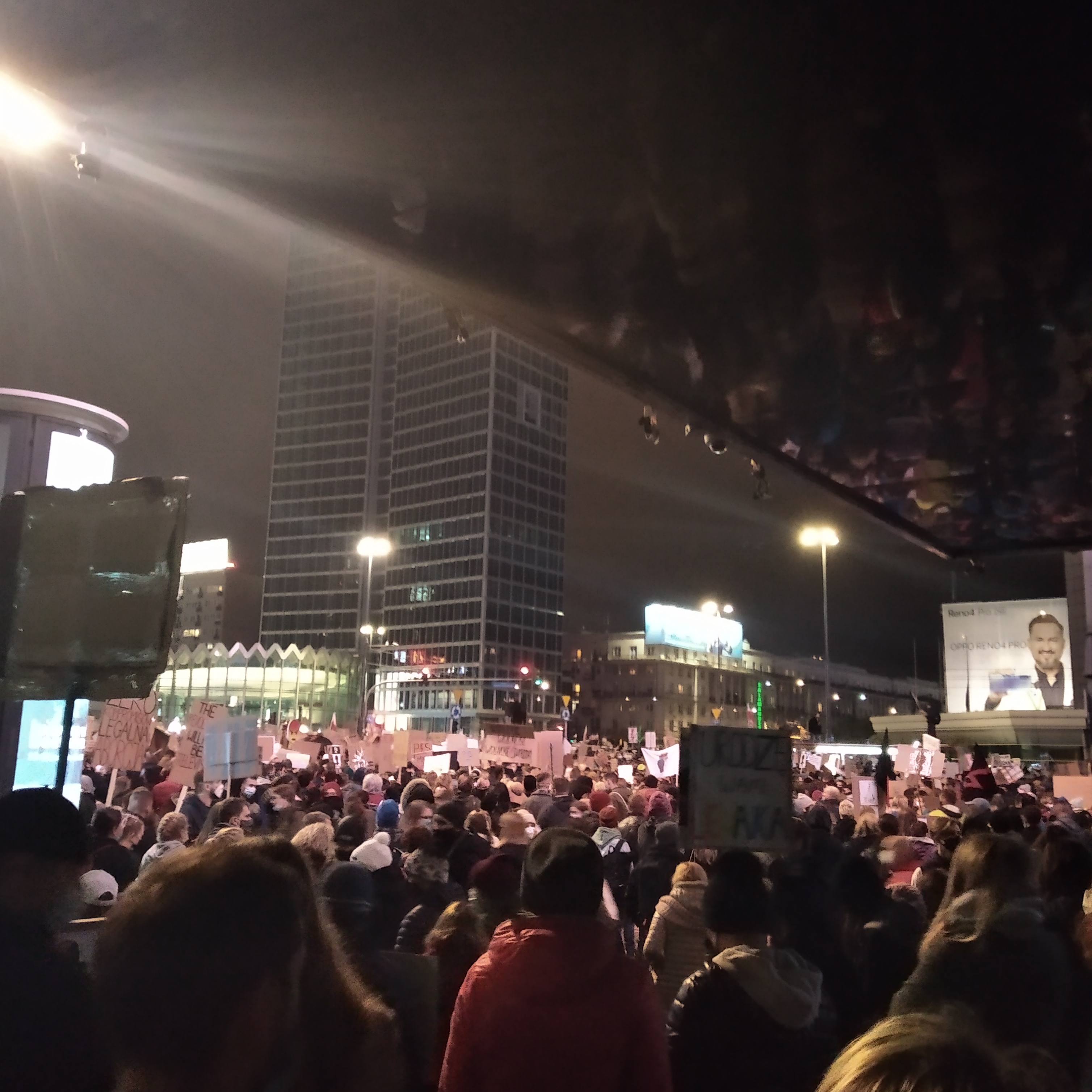
women's rights protest Warsaw street women's rights protest Warsaw street


Presidential Veto: Duda’s Likely Move

President Andrzej Duda, who has positioned himself as the moral guardian of Poland’s Catholic heritage, has already hinted at a veto. In a televised interview with TVN24, he warned that the amendment "undermines the sanctity of life" and pledged to use his constitutional power to block it.

A presidential veto would send the bill back to the Sejm, where a three‑fifths majority (at least 276 votes) is required to override. Given the current parliamentary composition, an override appears unlikely, setting the stage for a prolonged legislative deadlock.


Historical Context: Poland’s Abortion Laws

Poland’s abortion restrictions date back to 1993, when the post‑communist government enacted one of Europe’s toughest bans, allowing terminations only in cases of rape, incest, fetal impairment, or danger to the mother’s life. In 2020, the Constitutional Tribunal, now widely viewed as a PiS‑appointed body, declared abortions due to fetal abnormalities unconstitutional, effectively erasing the most common legal pathway for termination.

The 2024 amendment, therefore, represents the first attempt in four years to re‑introduce any form of legal abortion, albeit a highly limited one. The move has been described by scholars as a “political safety valve” intended to quell growing unrest while preserving the core anti‑abortion agenda.


International Reactions

The European Union, the United Nations, and several NGOs have expressed concern. EU Commission President Ursula von der Leyen urged Poland to "respect women’s fundamental rights" and warned that persistent backsliding could affect funding allocations.

Human‑rights organizations such as Amnesty International and Human Rights Watch released joint statements condemning the law as a violation of the European Convention on Human Rights. Meanwhile, conservative groups in the United States and Latin America have praised Duda’s stance, framing it as a triumph for “pro‑life” values.


Editorial Analysis & Future Outlook

The clash over Poland’s abortion law is more than a single legislative episode; it is a litmus test for the country’s democratic resilience. On one hand, the Sejm’s modest concession demonstrates that even a PiS‑dominated parliament senses the pressure of mass mobilisation. On the other, the president’s likely veto underscores the entrenched power of conservative, religiously‑inspired politics.

If Duda follows through with a veto, the immediate effect will be a political stalemate that could fuel further protests and potentially galvanise opposition parties ahead of the 2025 parliamentary elections. A sustained protest movement may also inspire a new generation of activists, similar to the wave that followed the 2020 ruling.

Conversely, should the Sejm muster a super‑majority to override the veto—a scenario that would require a dramatic shift in parliamentary alliances—the legislation could become a stepping stone toward broader reproductive reforms. Such a breakthrough would likely improve Poland’s standing with the EU and could unlock additional funding for women’s health services.

In either outcome, the episode will reverberate beyond Poland’s borders. European nations watching the Polish case may reassess their own abortion policies, while global NGOs will likely intensify advocacy campaigns.

Bottom line: The Polish abortion debate is poised at a crossroads where legal nuance, moral conviction, and political calculus intersect. The coming weeks will reveal whether Poland’s legislature can navigate this impasse or whether the streets will continue to be the primary arena for change.


Editorial Analysis & Future Outlook

The long‑term impact of this legislative showdown will hinge on three interlinked factors:

  1. Domestic Political Realignment – A veto could consolidate PiS’s base but alienate moderate voters, potentially reshaping coalition dynamics for the next election cycle.
  2. EU‑Poland Relations – Persistent divergence from EU human‑rights standards may trigger conditional funding mechanisms, compelling Warsaw to reconsider its stance.
  3. Social Movement Momentum – The scale and persistence of protests suggest a durable civil‑society network that could influence future policy debates, from gender equality to broader democratic reforms.

Stakeholders—from policymakers to activists—must therefore watch not only the immediate legislative outcome but also the evolving narrative that will define Poland’s democratic trajectory for years to come.


Original Reporting & Source: Google Trends (India)

Discussion (0)

Sign in to join the discussion.

No comments yet. Be the first to start the conversation!

| |

Poland’s Abortion Vote Sparks Protest and a Likely Presidential Veto

By Umang Sisodia • 6 min read • 1 view

Key Takeaways

  • The Sejm approved a modest relaxation of Poland’s strict abortion ban, allowing terminations only in cases of fetal abnormalities.
  • President Andrzej Duda, a staunch anti‑abortion advocate, has signaled a probable veto, setting up a constitutional showdown.
  • Nationwide protests, especially in Warsaw, have intensified, echoing a broader European debate on reproductive rights.
  • The episode could reshape Poland’s political landscape, energising both pro‑choice movements and conservative factions.

Poland’s parliament, the Sejm, voted on April 26, 2024 to loosen the country’s notoriously restrictive abortion law. While the amendment narrows the ban—permitting abortions only when severe fetal defects are diagnosed—it falls far short of the broader reproductive freedoms demanded by millions of Polish women. The move has reignited a fierce clash between the ruling Law and Justice (PiS) party, civil society, and a president who has consistently framed abortion as a moral issue.


The Vote: What the Sejm Decided

In a tightly contested session, 235 lawmakers supported the amendment, 215 opposed, and 10 abstained. The revised text removes the previous requirement that a fetal anomaly be “lethal” and replaces it with a “serious and irreversible impairment” clause. Critics argue the change is largely semantic, preserving a de‑facto ban on most abortions while offering a narrow loophole for a small fraction of cases.

"The law is being softened, but not enough to respect women’s autonomy," noted Dr. Anna Kowalska, a reproductive rights lawyer, in an interview with Reuters.

The vote reflects internal tensions within PiS, where hard‑liners pushed for a total ban, while pragmatic members feared international backlash and domestic unrest.


Public Outcry: Streets of Warsaw and Beyond

Within hours of the parliamentary decision, thousands of women, students, and human‑rights activists took to the streets of Warsaw, Kraków, and Gdańsk. The protests, organized by groups such as Women’s Strike (Strajk Kobiet), featured candlelight vigils, placards reading "My body, my choice", and live performances of protest songs.

The AP News highlighted a particularly moving moment when a 23‑year‑old medical student, Marta Nowak, addressed the crowd:

"We are not just fighting for a law; we are fighting for our future, our health, and our dignity."

Police reported several arrests for unlawful assembly, and social media platforms were flooded with hashtags like #PolandProtests and #MyBodyMyChoice. The demonstrations have drawn solidarity from neighboring European capitals, underscoring a regional ripple effect.

women's rights protest Warsaw street women's rights protest Warsaw street


Presidential Veto: Duda’s Likely Move

President Andrzej Duda, who has positioned himself as the moral guardian of Poland’s Catholic heritage, has already hinted at a veto. In a televised interview with TVN24, he warned that the amendment "undermines the sanctity of life" and pledged to use his constitutional power to block it.

A presidential veto would send the bill back to the Sejm, where a three‑fifths majority (at least 276 votes) is required to override. Given the current parliamentary composition, an override appears unlikely, setting the stage for a prolonged legislative deadlock.


Historical Context: Poland’s Abortion Laws

Poland’s abortion restrictions date back to 1993, when the post‑communist government enacted one of Europe’s toughest bans, allowing terminations only in cases of rape, incest, fetal impairment, or danger to the mother’s life. In 2020, the Constitutional Tribunal, now widely viewed as a PiS‑appointed body, declared abortions due to fetal abnormalities unconstitutional, effectively erasing the most common legal pathway for termination.

The 2024 amendment, therefore, represents the first attempt in four years to re‑introduce any form of legal abortion, albeit a highly limited one. The move has been described by scholars as a “political safety valve” intended to quell growing unrest while preserving the core anti‑abortion agenda.


International Reactions

The European Union, the United Nations, and several NGOs have expressed concern. EU Commission President Ursula von der Leyen urged Poland to "respect women’s fundamental rights" and warned that persistent backsliding could affect funding allocations.

Human‑rights organizations such as Amnesty International and Human Rights Watch released joint statements condemning the law as a violation of the European Convention on Human Rights. Meanwhile, conservative groups in the United States and Latin America have praised Duda’s stance, framing it as a triumph for “pro‑life” values.


Editorial Analysis & Future Outlook

The clash over Poland’s abortion law is more than a single legislative episode; it is a litmus test for the country’s democratic resilience. On one hand, the Sejm’s modest concession demonstrates that even a PiS‑dominated parliament senses the pressure of mass mobilisation. On the other, the president’s likely veto underscores the entrenched power of conservative, religiously‑inspired politics.

If Duda follows through with a veto, the immediate effect will be a political stalemate that could fuel further protests and potentially galvanise opposition parties ahead of the 2025 parliamentary elections. A sustained protest movement may also inspire a new generation of activists, similar to the wave that followed the 2020 ruling.

Conversely, should the Sejm muster a super‑majority to override the veto—a scenario that would require a dramatic shift in parliamentary alliances—the legislation could become a stepping stone toward broader reproductive reforms. Such a breakthrough would likely improve Poland’s standing with the EU and could unlock additional funding for women’s health services.

In either outcome, the episode will reverberate beyond Poland’s borders. European nations watching the Polish case may reassess their own abortion policies, while global NGOs will likely intensify advocacy campaigns.

Bottom line: The Polish abortion debate is poised at a crossroads where legal nuance, moral conviction, and political calculus intersect. The coming weeks will reveal whether Poland’s legislature can navigate this impasse or whether the streets will continue to be the primary arena for change.


Editorial Analysis & Future Outlook

The long‑term impact of this legislative showdown will hinge on three interlinked factors:

  1. Domestic Political Realignment – A veto could consolidate PiS’s base but alienate moderate voters, potentially reshaping coalition dynamics for the next election cycle.
  2. EU‑Poland Relations – Persistent divergence from EU human‑rights standards may trigger conditional funding mechanisms, compelling Warsaw to reconsider its stance.
  3. Social Movement Momentum – The scale and persistence of protests suggest a durable civil‑society network that could influence future policy debates, from gender equality to broader democratic reforms.

Stakeholders—from policymakers to activists—must therefore watch not only the immediate legislative outcome but also the evolving narrative that will define Poland’s democratic trajectory for years to come.


Original Reporting & Source: Google Trends (India)