Umang Sisodia • • 5 min read • 1 view

Beyond the South Pole: 4 Lunar Sites Shaping Humanity’s Next Giant Leap
Listen to Article
Select a voice and press play
Beyond the South Pole: 4 Lunar Sites Shaping Humanity’s Next Giant Leap

Key Takeaways

  • The Moon’s South Pole is a media darling, but four alternative sites offer unique scientific and logistical advantages.
  • A recent National Academies report highlights Mare Tranquillitatis, the Schrödinger basin, the Lunar South‑East highlands, and a network of lava‑tube caves as prime candidates.
  • International agencies (NASA, ESA, CNSA, ISRO) are already weaving these locations into their 2030‑2035 roadmaps, signaling a shift from single‑site to multi‑site lunar architecture.
  • Long‑term, diversifying landing zones will accelerate in‑situ resource utilization, habitat prototyping, and the eventual Mars‑bound crew.

Why the South Pole Dominates Headlines

The South Pole, especially the Shackleton Crater rim, has been the poster child for lunar exploration since the 2010s. Its allure stems from three core factors:

  1. Water Ice Reservoirs – Permanently shadowed regions (PSRs) trap water ice, a potential source of drinking water, oxygen, and rocket propellant.
  2. Sunlight‑Rich Peaks – Elevated rims receive near‑continuous solar illumination, simplifying power generation.
  3. Policy Momentum – NASA’s Artemis program explicitly targets the South Pole, and the 2022 U.S. budget earmarked billions for related infrastructure.

These narratives have driven Google Trends spikes every time NASA releases a new landing‑site update. However, focusing solely on one region creates a strategic bottleneck. As the National Academies of Sciences, Engineering, and Medicine (NASEM) report underscores, a resilient lunar presence demands geographic diversity.
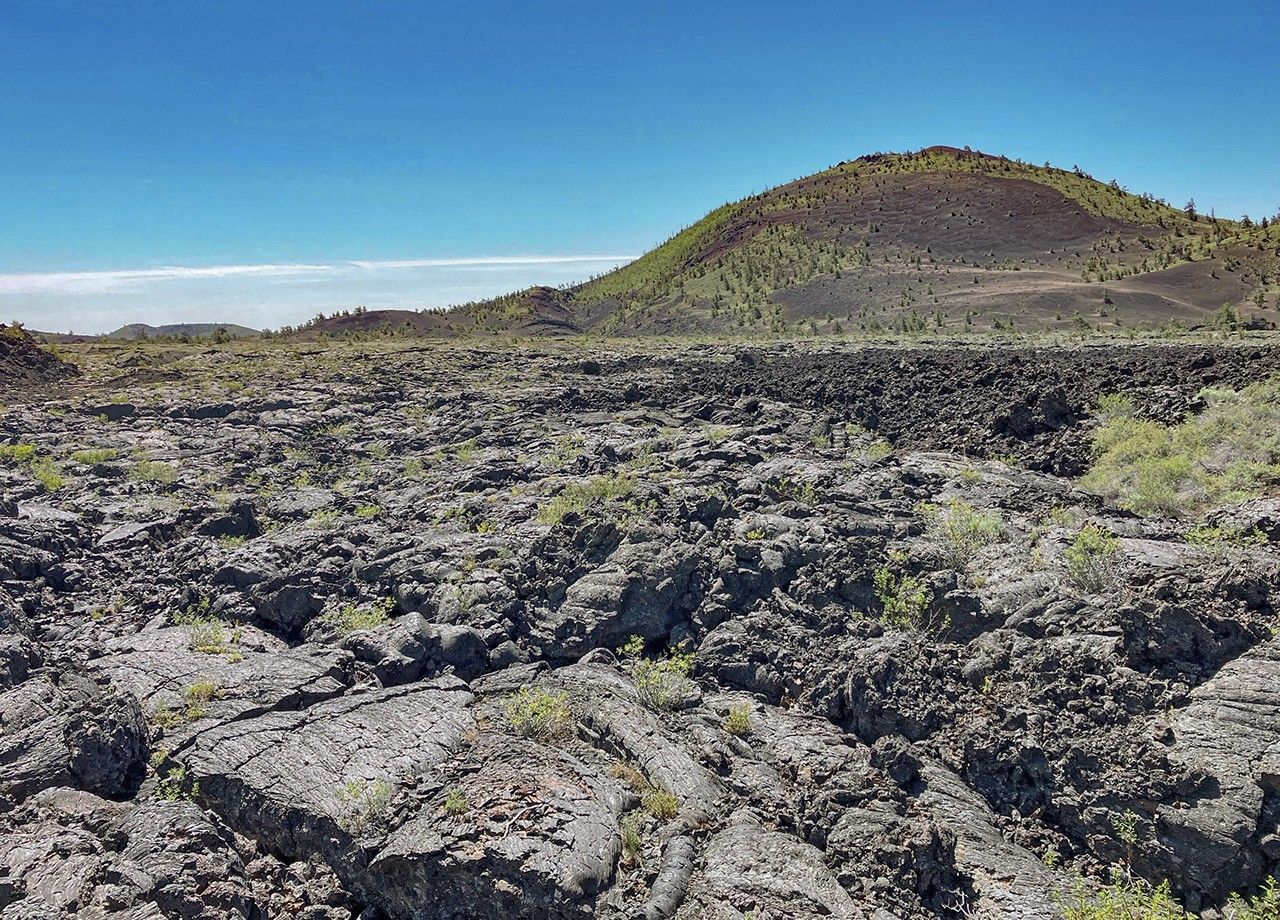
lunar lava tube interior lunar lava tube interior

The Four Emerging Lunar Hotspots

The NASEM committee evaluated dozens of sites using criteria such as scientific value, resource potential, terrain safety, and communication line‑of‑sight. Four locales rose to prominence:

1. Mare Tranquillitatis (Sea of Tranquility)

Historical Significance: Site of Apollo 11’s historic landing, it offers a well‑mapped basaltic plain. Why It Matters: The regolith here is rich in ilmenite, a titanium‑iron oxide that can be processed into oxygen and metal. Its relatively flat terrain reduces landing risk, and the region enjoys continuous Earth‑visible line‑of‑sight for communications.

2. Schrödinger Basin (South‑East Lunar Far Side)

A Deep Impact Crater: One of the youngest impact basins, its walls expose mantle material, providing a window into the Moon’s interior composition. Strategic Edge: The basin’s rim offers natural shielding from solar radiation, and its location on the far side opens opportunities for radio‑quiet astronomy experiments.

3. Lunar South‑East Highlands (e.g., Montes Carpatus region)

High‑land Terrains: These elevations contain anorthositic crust, the primordial lunar material. Resource Angle: High‑land soils have higher concentrations of aluminum and calcium, essential for building structural components via 3D printing.

4. Subsurface Lava‑Tube Networks (e.g., Marius Hills)

Natural Shelters: Lava tubes can provide radiation‑protected habitats without the need for heavy shielding. Future Habitat Blueprint: NASA’s Artemis Base Camp concept envisions using these cavities as the first “underground” lunar habitats, drastically cutting launch mass.

International Race & Policy Momentum

While NASA’s Artemis headlines dominate Western media, other spacefaring nations are quietly integrating these sites into their own strategies:

  • ESA has signed a memorandum with NASA to test habitat modules in the Mare Tranquillitatis region during the 2029 “Moon Village” phase.
  • CNSA (China) plans a 2027 robotic mission to the Schrödinger Basin to sample mantle material, a precursor to a crewed landing.
  • ISRO is evaluating a low‑cost lander for the South‑East Highlands, leveraging its Chandrayaan‑3 experience.

These parallel tracks amplify the story’s Google Trends traction, as each agency releases mission updates, technical papers, and budget allocations.

Technological Hurdles & Opportunities

Diversifying landing zones is not just a policy choice; it imposes engineering challenges that are already spawning innovation:

  • Landing Precision: Sites like lava tubes demand sub‑meter landing accuracy. Companies such as SpaceX and Blue Origin are developing autonomous hazard‑avoidance L‑V‑TOL systems.
  • In‑Situ Resource Utilization (ISRU): Extracting oxygen from ilmenite in Mare Tranquillitatis requires novel electro‑chemical reactors, a field seeing rapid prototyping in university labs.
  • Communication Infrastructure: Far‑side sites like Schrödinger need relay satellites; the upcoming Lunar Gateway will host a “Lunar Relay Node” to bridge this gap.
  • Habitat Construction: 3D‑printing habitats from high‑land regolith is being demonstrated by NASA’s “Regolith Additive Manufacturing Experiment” (RAME) slated for 2026.

Editorial Analysis & Future Outlook

The shift from a single‑site focus to a multi‑site lunar architecture marks a maturation of humanity’s extraterrestrial ambitions. By embracing diverse terrains—plains, basins, highlands, and subsurface caverns—we mitigate risk, broaden scientific return, and create a more robust supply chain for future Mars expeditions.

In the next decade, we can expect:

  1. Concurrent Missions: Simultaneous robotic and crewed missions to at least two of the highlighted sites, establishing a “lunar network” of scientific outposts.
  2. Commercial Partnerships: Private firms will partner with space agencies to deliver ISRU hardware, habitat modules, and even lunar tourism experiences centered around historic locales like Mare Tranquillitatis.
  3. Policy Convergence: International treaties may evolve to address resource rights and habitat ownership across multiple lunar regions, moving beyond the current “one‑site” frameworks.

Ultimately, the Moon will transform from a single “base camp” into a constellation of habitats, each contributing a piece to the grand puzzle of sustainable deep‑space exploration. The narrative is already shifting in search engines, newsrooms, and policy circles—signaling that the world is ready to look beyond the South Pole and imagine a truly lunar civilization.

Editorial Analysis & Future Outlook

The diversification of lunar landing sites is not merely a scientific curiosity; it is a strategic imperative for the next era of space exploration. By spreading our foothold across the Moon’s varied geology, we lay the groundwork for resilient, self‑sustaining habitats that can serve as testbeds for Mars and beyond. The coming years will likely witness a race to claim these new frontiers, driven by a blend of national pride, commercial ambition, and the inexorable human drive to explore.

As policymakers, engineers, and storytellers, we must ensure that this expansion is guided by transparent international cooperation, robust environmental stewardship, and a clear vision that the Moon serves as a shared stepping‑stone for all of humanity.


Original Reporting & Source: Space Policy Online

Discussion (0)

Sign in to join the discussion.

No comments yet. Be the first to start the conversation!

| |

Beyond the South Pole: 4 Lunar Sites Shaping Humanity’s Next Giant Leap

By Umang Sisodia • 5 min read • 1 view

Key Takeaways

  • The Moon’s South Pole is a media darling, but four alternative sites offer unique scientific and logistical advantages.
  • A recent National Academies report highlights Mare Tranquillitatis, the Schrödinger basin, the Lunar South‑East highlands, and a network of lava‑tube caves as prime candidates.
  • International agencies (NASA, ESA, CNSA, ISRO) are already weaving these locations into their 2030‑2035 roadmaps, signaling a shift from single‑site to multi‑site lunar architecture.
  • Long‑term, diversifying landing zones will accelerate in‑situ resource utilization, habitat prototyping, and the eventual Mars‑bound crew.

Why the South Pole Dominates Headlines

The South Pole, especially the Shackleton Crater rim, has been the poster child for lunar exploration since the 2010s. Its allure stems from three core factors:

  1. Water Ice Reservoirs – Permanently shadowed regions (PSRs) trap water ice, a potential source of drinking water, oxygen, and rocket propellant.
  2. Sunlight‑Rich Peaks – Elevated rims receive near‑continuous solar illumination, simplifying power generation.
  3. Policy Momentum – NASA’s Artemis program explicitly targets the South Pole, and the 2022 U.S. budget earmarked billions for related infrastructure.

These narratives have driven Google Trends spikes every time NASA releases a new landing‑site update. However, focusing solely on one region creates a strategic bottleneck. As the National Academies of Sciences, Engineering, and Medicine (NASEM) report underscores, a resilient lunar presence demands geographic diversity.

lunar lava tube interior lunar lava tube interior

The Four Emerging Lunar Hotspots

The NASEM committee evaluated dozens of sites using criteria such as scientific value, resource potential, terrain safety, and communication line‑of‑sight. Four locales rose to prominence:

1. Mare Tranquillitatis (Sea of Tranquility)

Historical Significance: Site of Apollo 11’s historic landing, it offers a well‑mapped basaltic plain. Why It Matters: The regolith here is rich in ilmenite, a titanium‑iron oxide that can be processed into oxygen and metal. Its relatively flat terrain reduces landing risk, and the region enjoys continuous Earth‑visible line‑of‑sight for communications.

2. Schrödinger Basin (South‑East Lunar Far Side)

A Deep Impact Crater: One of the youngest impact basins, its walls expose mantle material, providing a window into the Moon’s interior composition. Strategic Edge: The basin’s rim offers natural shielding from solar radiation, and its location on the far side opens opportunities for radio‑quiet astronomy experiments.

3. Lunar South‑East Highlands (e.g., Montes Carpatus region)

High‑land Terrains: These elevations contain anorthositic crust, the primordial lunar material. Resource Angle: High‑land soils have higher concentrations of aluminum and calcium, essential for building structural components via 3D printing.

4. Subsurface Lava‑Tube Networks (e.g., Marius Hills)

Natural Shelters: Lava tubes can provide radiation‑protected habitats without the need for heavy shielding. Future Habitat Blueprint: NASA’s Artemis Base Camp concept envisions using these cavities as the first “underground” lunar habitats, drastically cutting launch mass.

International Race & Policy Momentum

While NASA’s Artemis headlines dominate Western media, other spacefaring nations are quietly integrating these sites into their own strategies:

  • ESA has signed a memorandum with NASA to test habitat modules in the Mare Tranquillitatis region during the 2029 “Moon Village” phase.
  • CNSA (China) plans a 2027 robotic mission to the Schrödinger Basin to sample mantle material, a precursor to a crewed landing.
  • ISRO is evaluating a low‑cost lander for the South‑East Highlands, leveraging its Chandrayaan‑3 experience.

These parallel tracks amplify the story’s Google Trends traction, as each agency releases mission updates, technical papers, and budget allocations.

Technological Hurdles & Opportunities

Diversifying landing zones is not just a policy choice; it imposes engineering challenges that are already spawning innovation:

  • Landing Precision: Sites like lava tubes demand sub‑meter landing accuracy. Companies such as SpaceX and Blue Origin are developing autonomous hazard‑avoidance L‑V‑TOL systems.
  • In‑Situ Resource Utilization (ISRU): Extracting oxygen from ilmenite in Mare Tranquillitatis requires novel electro‑chemical reactors, a field seeing rapid prototyping in university labs.
  • Communication Infrastructure: Far‑side sites like Schrödinger need relay satellites; the upcoming Lunar Gateway will host a “Lunar Relay Node” to bridge this gap.
  • Habitat Construction: 3D‑printing habitats from high‑land regolith is being demonstrated by NASA’s “Regolith Additive Manufacturing Experiment” (RAME) slated for 2026.

Editorial Analysis & Future Outlook

The shift from a single‑site focus to a multi‑site lunar architecture marks a maturation of humanity’s extraterrestrial ambitions. By embracing diverse terrains—plains, basins, highlands, and subsurface caverns—we mitigate risk, broaden scientific return, and create a more robust supply chain for future Mars expeditions.

In the next decade, we can expect:

  1. Concurrent Missions: Simultaneous robotic and crewed missions to at least two of the highlighted sites, establishing a “lunar network” of scientific outposts.
  2. Commercial Partnerships: Private firms will partner with space agencies to deliver ISRU hardware, habitat modules, and even lunar tourism experiences centered around historic locales like Mare Tranquillitatis.
  3. Policy Convergence: International treaties may evolve to address resource rights and habitat ownership across multiple lunar regions, moving beyond the current “one‑site” frameworks.

Ultimately, the Moon will transform from a single “base camp” into a constellation of habitats, each contributing a piece to the grand puzzle of sustainable deep‑space exploration. The narrative is already shifting in search engines, newsrooms, and policy circles—signaling that the world is ready to look beyond the South Pole and imagine a truly lunar civilization.

Editorial Analysis & Future Outlook

The diversification of lunar landing sites is not merely a scientific curiosity; it is a strategic imperative for the next era of space exploration. By spreading our foothold across the Moon’s varied geology, we lay the groundwork for resilient, self‑sustaining habitats that can serve as testbeds for Mars and beyond. The coming years will likely witness a race to claim these new frontiers, driven by a blend of national pride, commercial ambition, and the inexorable human drive to explore.

As policymakers, engineers, and storytellers, we must ensure that this expansion is guided by transparent international cooperation, robust environmental stewardship, and a clear vision that the Moon serves as a shared stepping‑stone for all of humanity.


Original Reporting & Source: Space Policy Online