Umang Sisodia • • 5 min read • 1 view

Bengaluru-Mumbai Vande Bharat Sleeper Set for Launch Next Month – What It Means for India’s Rail Future
Listen to Article
Select a voice and press play
Bengaluru-Mumbai Vande Bharat Sleeper Set for Launch Next Month – What It Means for India’s Rail Future

Key Takeaways

  • The first Vande Bharat Sleeper service between Bengaluru and Mumbai is slated to commence next month, ending a long‑awaited demand for premium overnight travel.
  • The 840‑km corridor will cut travel time to roughly 16 hours, rivaling air travel in convenience and cost.
  • Economic ripple effects include boosted tourism, freight efficiency, and a push for further sleeper‑class high‑speed upgrades across the country.
  • Operational challenges—track upgrades, crew training, and maintenance—are being addressed through a public‑private partnership model.

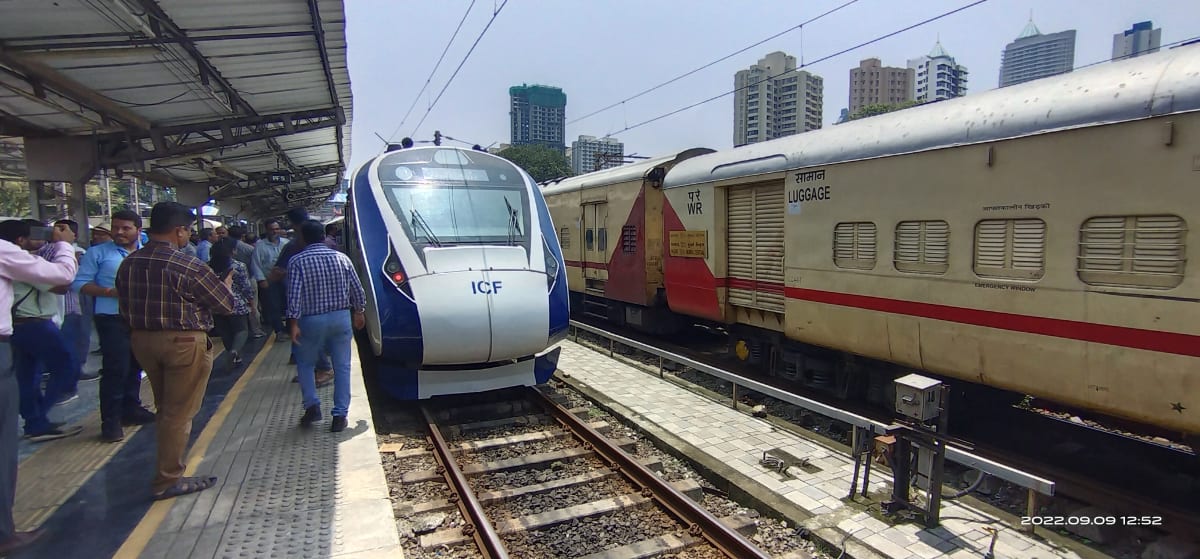
Vande Bharat Sleeper at Bengaluru station

Introduction

The Indian Railways has once again captured the nation’s imagination. After months of speculation, official sources confirmed that the Bengaluru‑Mumbai Vande Bharat Sleeper will roll out next month. The announcement, which has been trending on Google Trends with over 200 daily searches, reflects a broader appetite for faster, more comfortable long‑distance rail travel. While the Vande Bharat Express (the premium day‑time service) has already reshaped inter‑city travel on routes like Delhi‑Katra and Mumbai‑Ahmedabad, the sleeper variant promises to bring the same technology to overnight journeys, a segment that has traditionally relied on older, less‑modern coaches.

The Vande Bharat Sleeper: What It Is

The Vande Bharat Sleeper is an evolution of the semi‑high‑speed Vande Bharat Express, retrofitted with sleeping berths, advanced HVAC, infotainment screens, and onboard Wi‑Fi. Designed for speeds up to 200 km/h, the train can maintain an average speed of 110–120 km/h on mixed‑traffic routes, translating to significantly reduced travel times. Its stainless‑steel body, regenerative braking, and energy‑efficient traction motors align with India’s green‑mobility goals.

"The introduction of the Vande Bharat Sleeper on the Bengaluru‑Mumbai route is a game‑changer for long‑distance travel," said Railway Minister Ashwini Vaishnaw during a press briefing.

Bengaluru‑Mumbai Corridor: Strategic Importance

The 840‑km stretch between India’s tech hub and its financial capital is one of the busiest rail corridors, handling over 150 million passengers annually. Currently, the fastest overnight service, the Karnataka Express, takes about 24‑26 hours. By slashing the journey to approximately 16 hours, the Vande Bharat Sleeper will:

  • Attract business travelers who previously preferred flights due to time constraints.
  • Boost tourism by offering a comfortable, affordable alternative for weekend getaways.
  • Alleviate congestion on existing passenger and freight trains, freeing capacity for cargo movement.

Timeline & Expected Launch Details

According to NDTV and Bangalore Mirror, the inaugural run is scheduled for the first week of November 2026. The Indian Railways has already completed track strengthening between Pune and Solapur, a critical bottleneck. The train will operate six days a week, with a daily rake rotation to ensure maintenance windows are met.

Key operational parameters:

  • Departure from Bengaluru City Junction (SBC): 18:30 hrs
  • Arrival at Mumbai Central (BCT): 10:30 hrs next day
  • Number of coaches: 16 (8 sleeper coaches, 4 pantry, 2 power cars, 2 executive cabins)
  • Ticket fare: Approximately 30 % higher than conventional sleeper, but 20 % lower than a one‑way flight.

Economic & Social Impact

The launch is expected to generate direct employment for over 1,200 railway staff, including crew, maintenance, and catering personnel. Indirectly, the improved connectivity will stimulate real‑estate development around satellite stations such as Hosur and Pune Junction, where ancillary services—hotels, restaurants, and logistics hubs—are likely to proliferate.

Moreover, the reduction in travel time will encourage reverse migration, allowing professionals to reside in Bengaluru’s tech ecosystem while maintaining familial ties in Maharashtra. This could have a subtle yet measurable effect on regional wage differentials and urban planning strategies.

Operational Challenges & Mitigation

Deploying a high‑speed sleeper on a mixed‑traffic corridor is not without hurdles:

  1. Track Modernisation: Sections between Satara and Pune require reinforcement to handle higher axle loads. The Railways has partnered with Larsen & Toubro for rapid upgrades.
  2. Crew Training: The train’s advanced control systems demand specialized driver training. A 30‑day simulation program is underway at the IRDE Centre, Pune.
  3. Maintenance Infrastructure: A dedicated MRO (Maintenance, Repair, Overhaul) hub is being set up at Bangalore East Yard, equipped with diagnostic AI tools.

By addressing these challenges through a public‑private partnership (PPP) framework, the Railways aims to replicate this model on other high‑potential routes such as Delhi‑Howrah and Chennai‑Hyderabad.

Editorial Analysis & Future Outlook

The Bengaluru‑Mumbai Vande Bharat Sleeper is more than a new train; it signals a paradigm shift in India’s approach to long‑distance rail travel. By marrying speed, comfort, and sustainability, the Railways is positioning itself to compete directly with low‑cost airlines on price‑sensitive corridors. If the pilot succeeds, we can anticipate a cascade of sleeper‑class high‑speed services across the subcontinent, potentially reshaping inter‑city mobility patterns.

Long‑term, the success of this service could accelerate the ‘Make in India’ agenda for rail technology, encouraging domestic manufacturers to innovate on rolling‑stock design, energy storage, and passenger‑centric amenities. Moreover, the data collected from onboard Wi‑Fi usage, passenger flow, and real‑time diagnostics will feed into a digital twin of the rail network, enabling predictive maintenance and smarter scheduling.

In essence, the upcoming launch is a litmus test for India’s ability to modernise legacy infrastructure while delivering tangible benefits to everyday commuters. Its outcome will likely dictate the pace at which the nation’s rail network can transition from a capacity‑constrained system to a future‑ready, high‑speed backbone.


Original Reporting & Source: Google Trends (India)

Discussion (0)

Sign in to join the discussion.

No comments yet. Be the first to start the conversation!

| |

Bengaluru-Mumbai Vande Bharat Sleeper Set for Launch Next Month – What It Means for India’s Rail Future

By Umang Sisodia • 5 min read • 1 view

Key Takeaways

  • The first Vande Bharat Sleeper service between Bengaluru and Mumbai is slated to commence next month, ending a long‑awaited demand for premium overnight travel.
  • The 840‑km corridor will cut travel time to roughly 16 hours, rivaling air travel in convenience and cost.
  • Economic ripple effects include boosted tourism, freight efficiency, and a push for further sleeper‑class high‑speed upgrades across the country.
  • Operational challenges—track upgrades, crew training, and maintenance—are being addressed through a public‑private partnership model.

Vande Bharat Sleeper at Bengaluru station

Introduction

The Indian Railways has once again captured the nation’s imagination. After months of speculation, official sources confirmed that the Bengaluru‑Mumbai Vande Bharat Sleeper will roll out next month. The announcement, which has been trending on Google Trends with over 200 daily searches, reflects a broader appetite for faster, more comfortable long‑distance rail travel. While the Vande Bharat Express (the premium day‑time service) has already reshaped inter‑city travel on routes like Delhi‑Katra and Mumbai‑Ahmedabad, the sleeper variant promises to bring the same technology to overnight journeys, a segment that has traditionally relied on older, less‑modern coaches.

The Vande Bharat Sleeper: What It Is

The Vande Bharat Sleeper is an evolution of the semi‑high‑speed Vande Bharat Express, retrofitted with sleeping berths, advanced HVAC, infotainment screens, and onboard Wi‑Fi. Designed for speeds up to 200 km/h, the train can maintain an average speed of 110–120 km/h on mixed‑traffic routes, translating to significantly reduced travel times. Its stainless‑steel body, regenerative braking, and energy‑efficient traction motors align with India’s green‑mobility goals.

"The introduction of the Vande Bharat Sleeper on the Bengaluru‑Mumbai route is a game‑changer for long‑distance travel," said Railway Minister Ashwini Vaishnaw during a press briefing.

Bengaluru‑Mumbai Corridor: Strategic Importance

The 840‑km stretch between India’s tech hub and its financial capital is one of the busiest rail corridors, handling over 150 million passengers annually. Currently, the fastest overnight service, the Karnataka Express, takes about 24‑26 hours. By slashing the journey to approximately 16 hours, the Vande Bharat Sleeper will:

  • Attract business travelers who previously preferred flights due to time constraints.
  • Boost tourism by offering a comfortable, affordable alternative for weekend getaways.
  • Alleviate congestion on existing passenger and freight trains, freeing capacity for cargo movement.

Timeline & Expected Launch Details

According to NDTV and Bangalore Mirror, the inaugural run is scheduled for the first week of November 2026. The Indian Railways has already completed track strengthening between Pune and Solapur, a critical bottleneck. The train will operate six days a week, with a daily rake rotation to ensure maintenance windows are met.

Key operational parameters:

  • Departure from Bengaluru City Junction (SBC): 18:30 hrs
  • Arrival at Mumbai Central (BCT): 10:30 hrs next day
  • Number of coaches: 16 (8 sleeper coaches, 4 pantry, 2 power cars, 2 executive cabins)
  • Ticket fare: Approximately 30 % higher than conventional sleeper, but 20 % lower than a one‑way flight.

Economic & Social Impact

The launch is expected to generate direct employment for over 1,200 railway staff, including crew, maintenance, and catering personnel. Indirectly, the improved connectivity will stimulate real‑estate development around satellite stations such as Hosur and Pune Junction, where ancillary services—hotels, restaurants, and logistics hubs—are likely to proliferate.

Moreover, the reduction in travel time will encourage reverse migration, allowing professionals to reside in Bengaluru’s tech ecosystem while maintaining familial ties in Maharashtra. This could have a subtle yet measurable effect on regional wage differentials and urban planning strategies.

Operational Challenges & Mitigation

Deploying a high‑speed sleeper on a mixed‑traffic corridor is not without hurdles:

  1. Track Modernisation: Sections between Satara and Pune require reinforcement to handle higher axle loads. The Railways has partnered with Larsen & Toubro for rapid upgrades.
  2. Crew Training: The train’s advanced control systems demand specialized driver training. A 30‑day simulation program is underway at the IRDE Centre, Pune.
  3. Maintenance Infrastructure: A dedicated MRO (Maintenance, Repair, Overhaul) hub is being set up at Bangalore East Yard, equipped with diagnostic AI tools.

By addressing these challenges through a public‑private partnership (PPP) framework, the Railways aims to replicate this model on other high‑potential routes such as Delhi‑Howrah and Chennai‑Hyderabad.

Editorial Analysis & Future Outlook

The Bengaluru‑Mumbai Vande Bharat Sleeper is more than a new train; it signals a paradigm shift in India’s approach to long‑distance rail travel. By marrying speed, comfort, and sustainability, the Railways is positioning itself to compete directly with low‑cost airlines on price‑sensitive corridors. If the pilot succeeds, we can anticipate a cascade of sleeper‑class high‑speed services across the subcontinent, potentially reshaping inter‑city mobility patterns.

Long‑term, the success of this service could accelerate the ‘Make in India’ agenda for rail technology, encouraging domestic manufacturers to innovate on rolling‑stock design, energy storage, and passenger‑centric amenities. Moreover, the data collected from onboard Wi‑Fi usage, passenger flow, and real‑time diagnostics will feed into a digital twin of the rail network, enabling predictive maintenance and smarter scheduling.

In essence, the upcoming launch is a litmus test for India’s ability to modernise legacy infrastructure while delivering tangible benefits to everyday commuters. Its outcome will likely dictate the pace at which the nation’s rail network can transition from a capacity‑constrained system to a future‑ready, high‑speed backbone.


Original Reporting & Source: Google Trends (India)