Umang Sisodia • • 5 min read • 1 view
Gujarati Workers Threaten Mass Protest Ahead of Diwali Over Unmet Wage and Hours Demands
Key Takeaways
- Gujarat’s labor community is mobilising a large‑scale protest before Diwali, demanding a wage hike and an eight‑hour workday.
- The movement is being brokered by veteran activist Morbi, who is positioning himself as a mediator between workers and the state.
- If the government fails to address the three core grievances, a statewide strike could disrupt key industrial zones and impact the festive season economy.
- Experts warn that the protest could reshape Gujarat’s labour‑policy landscape and set a precedent for other Indian states.
Background
In recent weeks, the phrase "ગુજરાત સરકાર સામે હવે શ્રમિકો મેદાને" (Workers now take to the streets against the Gujarat government) has surged on Google Trends, crossing the 500‑search threshold. The spike coincides with mounting frustration among daily‑wage labourers, construction workers, and small‑scale industrial employees across Gujarat’s urban and semi‑urban centres. Historically, Gujarat’s growth narrative has hinged on its pro‑business policies, but the rapid expansion of the manufacturing and logistics sectors has left a sizable workforce grappling with stagnant wages and irregular working hours.
The Spark: Diwali Deadline
Diwali, the festival of lights, traditionally marks a period of increased consumer spending, construction activity, and public celebrations. Workers, however, view the upcoming holiday as a deadline rather than a celebration. According to reports from Gujarat Samachar and Divya Bhaskar, labour unions have warned that if their three primary demands are not addressed before Diwali, they will launch an “ઉગ્ર આંદોલન” (intense movement) that could paralyse key economic hubs such as Ahmedabad, Surat, and Vadodara.
Core Demands of the Labor Force
- Wage Increase – A uniform minimum wage hike of at least 15 % across all sectors, aligning with inflation and the rising cost of living.
- Eight‑Hour Workday – Legal enforcement of an eight‑hour workday with overtime compensated at the statutory rate.
- Social Security Benefits – Inclusion of informal workers in state‑run health, pension, and accident insurance schemes.
These demands echo long‑standing grievances that resurfaced during the 2020 COVID‑19 lockdowns, when many workers were left without any safety net.
Government Response So Far
The Gujarat government, led by Chief Minister Bhupendra Patel, has issued a cautious statement acknowledging the concerns but emphasizing fiscal prudence. A senior official told VTV Gujarati that the state is “considering a phased approach” and has set up a three‑member committee comprising a labour minister, an industry representative, and an independent economist. However, the committee’s mandate and timeline remain vague, fueling further distrust among the workers.
Grassroots Mobilisation
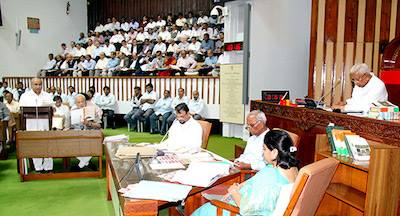
Local activists, especially those based in Morbi—a city known for its ceramic and engineering clusters—have taken centre stage. Morbi’s veteran leader, Umiya Dham Sidhar, has positioned himself as a mediator, promising to “bridge the gap” between the government and the labourers. He has organised a series of “question‑and‑answer” sessions in community halls, where workers can directly voice their concerns.
 Gujarat workers street meeting
Potential Trajectory of the Movement
If the protest escalates, the following scenarios are plausible:
- Economic Disruption – Major industrial parks, especially those linked to the Gujarat International Finance Tec‑City (GIFT), could face shutdowns, affecting both domestic and export‑oriented production.
- Political Repercussions – The Bharatiya Janata Party (BJP), which enjoys a strong foothold in Gujarat, may face criticism for perceived insensitivity to labour rights, potentially influencing upcoming municipal elections.
- Policy Shift – A successful movement could compel the state to adopt a more inclusive labour code, potentially influencing national labour reforms.
Voices from the Ground
“We work from sunrise to midnight, yet our families struggle to afford basic medicines. Diwali should be a time of joy, not hunger,” – Ramesh Patel, construction worker from Ahmedabad.
“If the government does not act, we will not celebrate Diwali. We will stand on the streets until our demands are met,” – Meena Shah, textile mill worker in Surat.
These testimonies underscore the human dimension behind the headlines, highlighting how economic policies translate into daily hardships.
Editorial Analysis & Future Outlook
The looming protest in Gujarat is more than a regional labour dispute; it is a litmus test for India’s broader socio‑economic contract. As the nation grapples with post‑pandemic recovery, the balance between rapid industrial growth and workers’ welfare is increasingly fragile. Gujarat’s handling of this crisis will likely reverberate across other high‑growth states such as Maharashtra, Karnataka, and Tamil Nadu, where similar grievances are simmering beneath the surface.
Should the government engage constructively—by delivering a transparent wage revision, enforcing the eight‑hour workday, and extending social security to informal workers—it could defuse tensions and set a progressive benchmark. Conversely, a heavy‑handed or delayed response may embolden labour movements nationwide, compelling policymakers to re‑examine the sustainability of growth‑centric models.
In the long term, the outcome may catalyse a shift toward inclusive growth, prompting both state and central governments to embed labour considerations into economic planning. For Gujarat, a state proud of its entrepreneurial spirit, embracing this shift could enhance its reputation as a forward‑looking hub that values both capital and labour.
Bottom line: The pre‑Diwali labour protest is poised to become a defining moment for Gujarat’s socio‑economic trajectory. The next few weeks will reveal whether dialogue and compromise can avert disruption, or whether Gujarat will witness one of the most significant worker‑led movements in its recent history.
Original Reporting & Source: Google Trends (India)

Discussion (0)
Sign in to join the discussion.
No comments yet. Be the first to start the conversation!