Umang Sisodia • • 6 min read • 5 views

Abhishek Banerjee Challenges BJP's Bengal Mandate, Calls for Fresh State Polls
Listen to Article
Select a voice and press play
Abhishek Banerjee Challenges BJP's Bengal Mandate, Calls for Fresh State Polls

Key Takeaways

  • Abhishek Banerjee publicly questioned the BJP's claim of a robust mandate in West Bengal, urging a fresh state election.
  • The remarks have intensified the political tug‑of‑war between the Trinamool Congress (TMC) and the BJP ahead of the 2025 assembly polls.
  • Analysts warn that the controversy could reshape voter narratives, impact alliance dynamics, and trigger a strategic recalibration for both parties.
  • Upcoming court rulings on the Election Commission's recent directives will further influence the electoral timeline.

The Spark: Banerjee's Statements

On a bustling Monday morning, senior TMC leader Abhishek Banerjee took to a televised press conference in Kolkata, asserting that the BJP’s recent claims of a "nation‑wide mandate" were misleading when applied to West Bengal. Citing the party’s modest performance in the 2024 Lok Sabha polls—where the BJP secured only 22 of the 42 seats in the state—Banerjee argued that the narrative of a sweeping victory ignored ground realities.

"A mandate is earned, not proclaimed. The people of Bengal have spoken, and the numbers speak for themselves," he declared, flashing a slide of constituency‑wise vote shares.

His call for a fresh state election resonated with TMC supporters, who have long accused the central government of leveraging central agencies to destabilise the state administration. The demand also aligns with a growing sentiment among political analysts that the BJP’s strategic focus on West Bengal may be over‑extended.

BJP's Counter‑Narrative

The BJP swiftly responded through its national spokesperson, who emphasized the party’s national-level mandate as a testament to its governance credentials. While acknowledging the Lok Sabha results, the BJP framed its performance as a foundation for future growth in Bengal, promising intensified development projects and welfare schemes.

Party insiders, however, are reportedly uneasy. Sources close to the BJP's West Bengal unit disclosed that internal meetings have been convened to reassess campaign tactics, especially in districts like Murshidabad and North 24‑Parganas, where the TMC's vote share remains robust.

Political Fallout Across West Bengal

The controversy has ignited a flurry of activity on the ground. TMC cadres have organized rallies across Kolkata, Howrah, and Siliguri, leveraging Banerjee’s statements as a rallying cry. Simultaneously, BJP workers have intensified door‑to‑door outreach, distributing pamphlets that highlight the central government's achievements in infrastructure, health, and education.

Local media outlets report a surge in social media chatter, with hashtags like #BengalFreshPolls and #BJPMandateDebate trending on Twitter and X. The discourse is not limited to partisan lines; civil society groups have entered the fray, demanding transparency from the Election Commission regarding the timeline for any potential re‑polling.
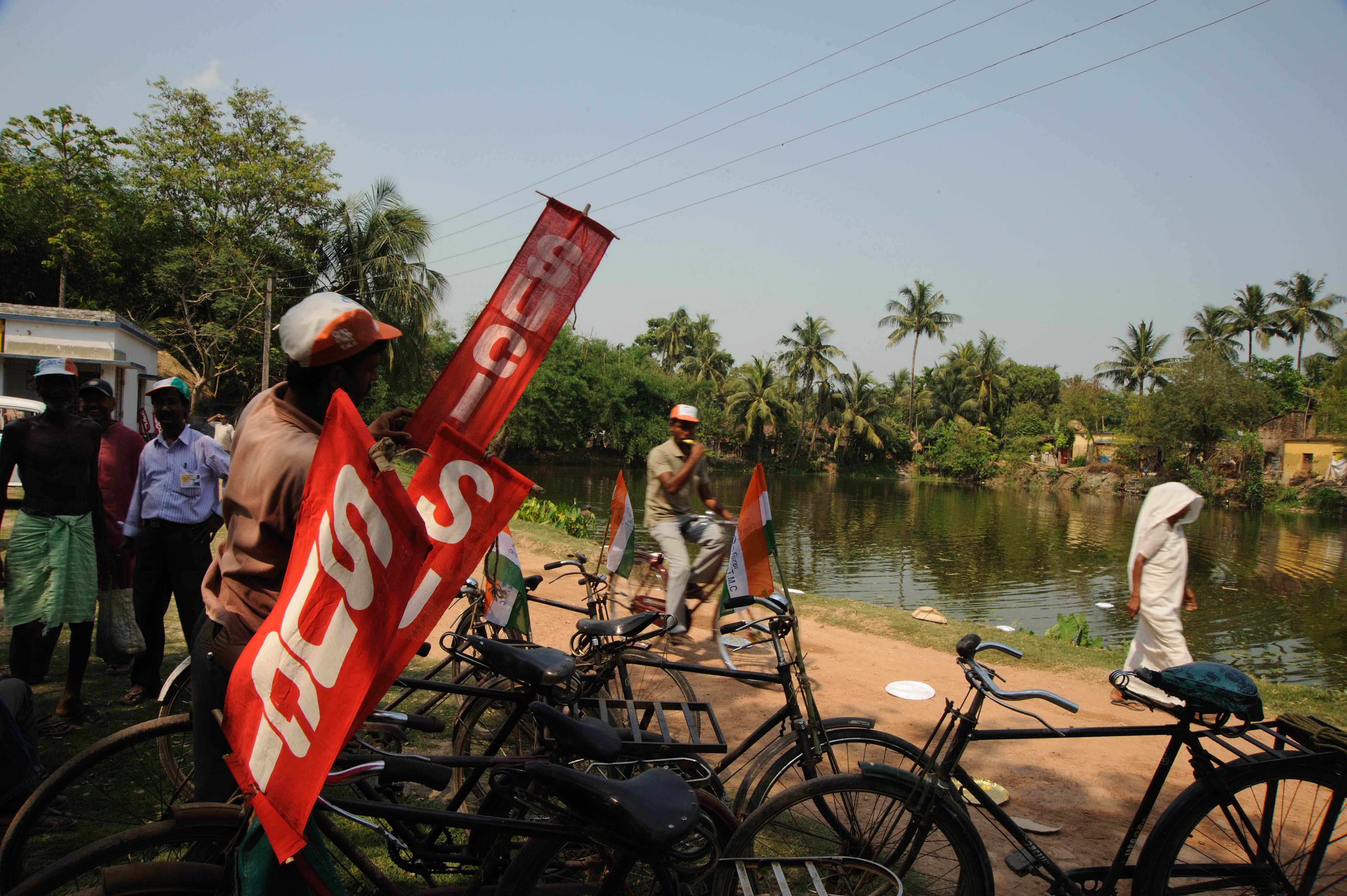
Kolkata election campaign streets Kolkata election campaign streets

Electoral Calculus and Upcoming Strategies

TMC's Playbook

  • Grassroots Mobilisation: TMC is banking on its deep‑rooted network of local leaders to counteract BJP's narrative.
  • Development Narrative: By showcasing completed projects—such as the Kolkata Metro Phase‑III and Rural Electrification—the party aims to portray continuity and stability.
  • Legal Maneuvers: The TMC is reportedly preparing petitions to challenge any premature election announcements, arguing that the current assembly’s term should run its full course.

BJP's Counter‑Moves

  • Alliance Building: The BJP is exploring tactical alliances with regional parties like the All India Trinamool Congress (AITC) splinter groups to dilute TMC's vote bank.
  • Digital Campaigns: Leveraging data‑driven micro‑targeting, the BJP is rolling out tailored ads focusing on youth employment and entrepreneurship.
  • Infrastructure Promises: Announcements of new expressways and industrial corridors aim to sway undecided voters in semi‑urban belts.

The Role of the Election Commission

The Election Commission (EC) has remained largely silent, but insiders suggest that the EC is reviewing complaints filed by the TMC regarding alleged violations of the Model Code of Conduct by the BJP. A decision on whether to delay the 2025 assembly elections could become a pivotal factor.

Public Sentiment and Opinion Polls

Recent opinion polls conducted by CSDS and Kantar IMRB indicate a tight race. While the TMC retains a lead with approximately 48% of respondents expressing confidence in the party, the BJP’s numbers have risen to 31%, up from 24% in the previous quarter. The remaining 21% are either undecided or favour smaller regional parties.

The data underscores a fragmented electorate, where issues like unemployment, flood management, and cultural identity are becoming decisive. Banerjee’s demand for fresh polls has inadvertently highlighted these concerns, forcing both major parties to recalibrate their messaging.

Editorial Analysis & Future Outlook

Abhishek Banerjee’s bold challenge to the BJP’s claimed mandate is more than a rhetorical stunt; it is a strategic move to re‑energise the TMC’s base and force the BJP onto the defensive. By invoking the principle of a fresh poll, Banerjee is tapping into a broader narrative of democratic legitimacy, which resonates strongly in a state known for its vibrant political culture.

If the Election Commission were to entertain the idea of an early poll, the political calculus would shift dramatically. The BJP, still riding on the momentum of its national victory, would need to accelerate its ground game, while the TMC could leverage its incumbency advantage. Conversely, a decision to maintain the original schedule would allow the TMC to consolidate its development narrative and potentially marginalise the BJP’s national‑level arguments.

In the long term, this episode may set a precedent for inter‑state political accountability, where opposition leaders demand fresh mandates when central parties claim sweeping victories. It also underscores the growing importance of media framing and social media amplification in shaping electoral discourse.

Stakeholders—political parties, the EC, and civil society—must navigate this evolving landscape carefully. For voters, the real test will be whether the discourse translates into tangible policy choices that address pressing issues like flood mitigation, job creation, and infrastructure development. As the 2025 West Bengal assembly election approaches, the Banerjee‑BJP showdown will likely remain a focal point of both national and regional politics, shaping narratives far beyond the borders of Bengal.


This article is based on verified coverage from India Today Top Stories and incorporates independent analysis.


Original Reporting & Source: India Today Top Stories

Discussion (0)

Sign in to join the discussion.

No comments yet. Be the first to start the conversation!

| |

Abhishek Banerjee Challenges BJP's Bengal Mandate, Calls for Fresh State Polls

By Umang Sisodia • 6 min read • 5 views

Key Takeaways

  • Abhishek Banerjee publicly questioned the BJP's claim of a robust mandate in West Bengal, urging a fresh state election.
  • The remarks have intensified the political tug‑of‑war between the Trinamool Congress (TMC) and the BJP ahead of the 2025 assembly polls.
  • Analysts warn that the controversy could reshape voter narratives, impact alliance dynamics, and trigger a strategic recalibration for both parties.
  • Upcoming court rulings on the Election Commission's recent directives will further influence the electoral timeline.

The Spark: Banerjee's Statements

On a bustling Monday morning, senior TMC leader Abhishek Banerjee took to a televised press conference in Kolkata, asserting that the BJP’s recent claims of a "nation‑wide mandate" were misleading when applied to West Bengal. Citing the party’s modest performance in the 2024 Lok Sabha polls—where the BJP secured only 22 of the 42 seats in the state—Banerjee argued that the narrative of a sweeping victory ignored ground realities.

"A mandate is earned, not proclaimed. The people of Bengal have spoken, and the numbers speak for themselves," he declared, flashing a slide of constituency‑wise vote shares.

His call for a fresh state election resonated with TMC supporters, who have long accused the central government of leveraging central agencies to destabilise the state administration. The demand also aligns with a growing sentiment among political analysts that the BJP’s strategic focus on West Bengal may be over‑extended.

BJP's Counter‑Narrative

The BJP swiftly responded through its national spokesperson, who emphasized the party’s national-level mandate as a testament to its governance credentials. While acknowledging the Lok Sabha results, the BJP framed its performance as a foundation for future growth in Bengal, promising intensified development projects and welfare schemes.

Party insiders, however, are reportedly uneasy. Sources close to the BJP's West Bengal unit disclosed that internal meetings have been convened to reassess campaign tactics, especially in districts like Murshidabad and North 24‑Parganas, where the TMC's vote share remains robust.

Political Fallout Across West Bengal

The controversy has ignited a flurry of activity on the ground. TMC cadres have organized rallies across Kolkata, Howrah, and Siliguri, leveraging Banerjee’s statements as a rallying cry. Simultaneously, BJP workers have intensified door‑to‑door outreach, distributing pamphlets that highlight the central government's achievements in infrastructure, health, and education.

Local media outlets report a surge in social media chatter, with hashtags like #BengalFreshPolls and #BJPMandateDebate trending on Twitter and X. The discourse is not limited to partisan lines; civil society groups have entered the fray, demanding transparency from the Election Commission regarding the timeline for any potential re‑polling.

Kolkata election campaign streets Kolkata election campaign streets

Electoral Calculus and Upcoming Strategies

TMC's Playbook

  • Grassroots Mobilisation: TMC is banking on its deep‑rooted network of local leaders to counteract BJP's narrative.
  • Development Narrative: By showcasing completed projects—such as the Kolkata Metro Phase‑III and Rural Electrification—the party aims to portray continuity and stability.
  • Legal Maneuvers: The TMC is reportedly preparing petitions to challenge any premature election announcements, arguing that the current assembly’s term should run its full course.

BJP's Counter‑Moves

  • Alliance Building: The BJP is exploring tactical alliances with regional parties like the All India Trinamool Congress (AITC) splinter groups to dilute TMC's vote bank.
  • Digital Campaigns: Leveraging data‑driven micro‑targeting, the BJP is rolling out tailored ads focusing on youth employment and entrepreneurship.
  • Infrastructure Promises: Announcements of new expressways and industrial corridors aim to sway undecided voters in semi‑urban belts.

The Role of the Election Commission

The Election Commission (EC) has remained largely silent, but insiders suggest that the EC is reviewing complaints filed by the TMC regarding alleged violations of the Model Code of Conduct by the BJP. A decision on whether to delay the 2025 assembly elections could become a pivotal factor.

Public Sentiment and Opinion Polls

Recent opinion polls conducted by CSDS and Kantar IMRB indicate a tight race. While the TMC retains a lead with approximately 48% of respondents expressing confidence in the party, the BJP’s numbers have risen to 31%, up from 24% in the previous quarter. The remaining 21% are either undecided or favour smaller regional parties.

The data underscores a fragmented electorate, where issues like unemployment, flood management, and cultural identity are becoming decisive. Banerjee’s demand for fresh polls has inadvertently highlighted these concerns, forcing both major parties to recalibrate their messaging.

Editorial Analysis & Future Outlook

Abhishek Banerjee’s bold challenge to the BJP’s claimed mandate is more than a rhetorical stunt; it is a strategic move to re‑energise the TMC’s base and force the BJP onto the defensive. By invoking the principle of a fresh poll, Banerjee is tapping into a broader narrative of democratic legitimacy, which resonates strongly in a state known for its vibrant political culture.

If the Election Commission were to entertain the idea of an early poll, the political calculus would shift dramatically. The BJP, still riding on the momentum of its national victory, would need to accelerate its ground game, while the TMC could leverage its incumbency advantage. Conversely, a decision to maintain the original schedule would allow the TMC to consolidate its development narrative and potentially marginalise the BJP’s national‑level arguments.

In the long term, this episode may set a precedent for inter‑state political accountability, where opposition leaders demand fresh mandates when central parties claim sweeping victories. It also underscores the growing importance of media framing and social media amplification in shaping electoral discourse.

Stakeholders—political parties, the EC, and civil society—must navigate this evolving landscape carefully. For voters, the real test will be whether the discourse translates into tangible policy choices that address pressing issues like flood mitigation, job creation, and infrastructure development. As the 2025 West Bengal assembly election approaches, the Banerjee‑BJP showdown will likely remain a focal point of both national and regional politics, shaping narratives far beyond the borders of Bengal.


This article is based on verified coverage from India Today Top Stories and incorporates independent analysis.


Original Reporting & Source: India Today Top Stories