Umang Sisodia • • 6 min read • 1 view

Verstappen Dominates FP3 in São Paulo: What It Means for the 2026 Brazilian Grand Prix
Listen to Article
Select a voice and press play
Verstappen Dominates FP3 in São Paulo: What It Means for the 2026 Brazilian Grand Prix

Key Takeaways

  • Max Verstappen clinched pole‑position‑like speed in FP3, outpacing rookie Kimi Antonelli and seasoned Lando Norris.
  • The session highlighted Red Bull’s superior tyre management on the abrasive Interlagos asphalt, while Mercedes struggled to find optimal balance.
  • Early data suggests a strategic battle over the final sprint race, with tyre allocation and fuel‑load decisions likely to shape the weekend’s outcome.
  • Fan excitement is at a fever pitch in India, where the Brazilian GP has surged to the top of Google Trends, reflecting growing F1 viewership.

The FP3 Showdown: Verstappen’s Masterclass

On a humid Saturday at the iconic Interlagos circuit, Max Verstappen turned the practice session into a showcase of raw speed and precision. Clocking a blistering 1:09.842 on the soft tyre, he finished 0.31 seconds ahead of the Italian rookie Kimi Antonelli, who impressed with a best lap of 1:10.152. Lando Norris, representing McLaren, rounded out the top three with 1:10.378.

Verstappen’s lap was a textbook example of exploiting the track’s fast‑sweeping Curva do Sol and the demanding Senna ’S’ corner. By braking later and carrying higher corner‑entry speed, he demonstrated why Red Bull’s aerodynamic package remains the benchmark in 2026. The Dutchman’s confidence was evident in his radio messages, where he repeatedly praised the car’s balance and tyre longevity.
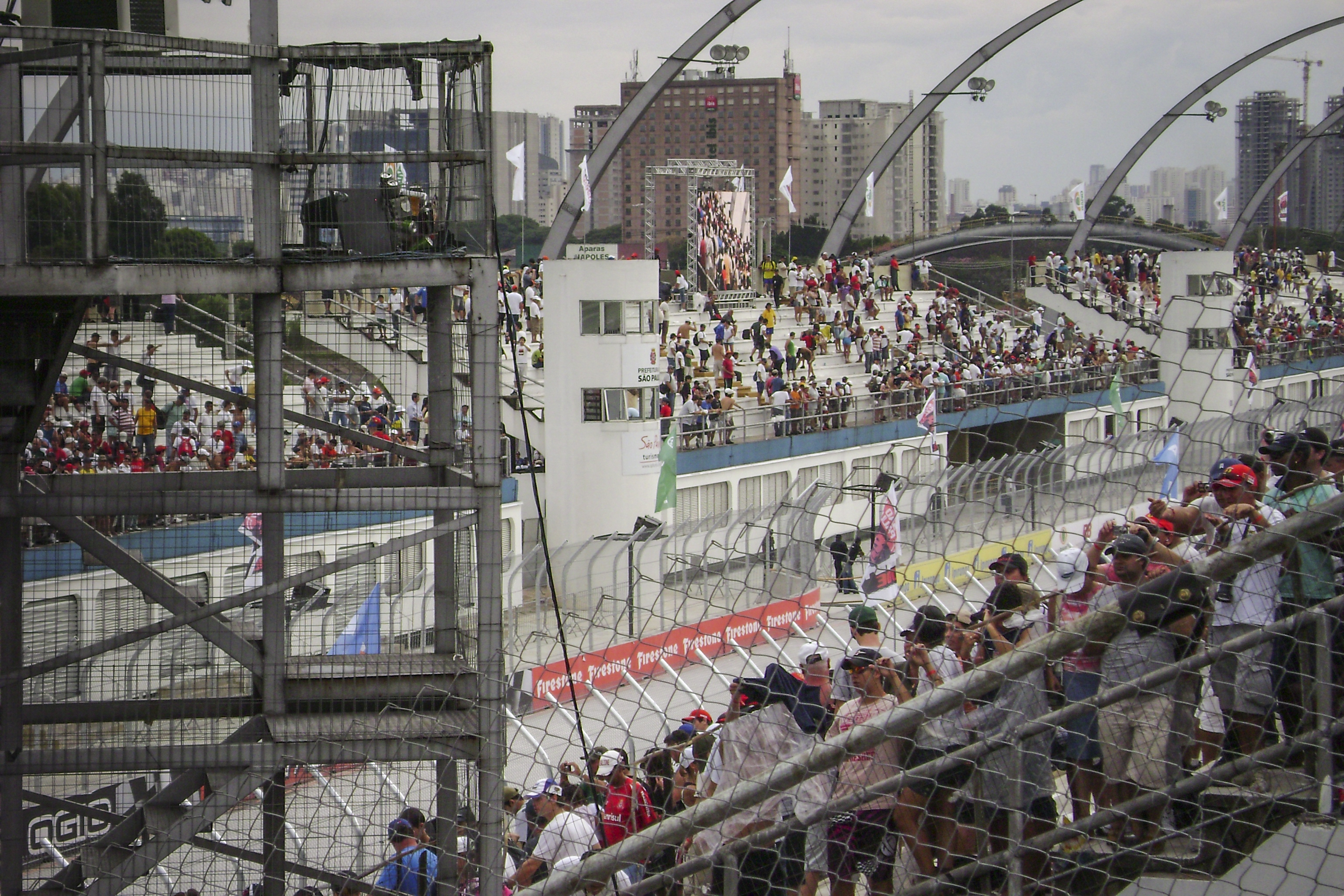
F1 cars on Interlagos pit lane F1 cars on Interlagos pit lane

Why FP3 Matters More Than It Looks

Practice sessions are often dismissed as mere shakedowns, but FP3 carries weight for several reasons:

  • Tyre Allocation: Teams receive a limited allotment of soft, medium and hard compounds for the weekend. A strong FP3 performance can secure the coveted soft tyre for qualifying.
  • Fuel Strategy: With the sprint format in play, fuel loads in FP3 hint at whether a team will push hard for a sprint‑race pole or conserve for the main Grand Prix.
  • Data Harvesting: Engineers collect telemetry on brake temperatures, suspension wear and aerodynamic drag, all of which influence race‑day setups.

In São Paulo, the abrasive surface and high ambient temperatures amplify these variables, making FP3 a critical rehearsal for the race.

Drivers’ Performance Snapshot

Driver Best Lap (min:sec.millis) Tyre Used Notable Observation
Max Verstappen (Red Bull) 1:09.842 Soft Near‑perfect apex on Curva do Sol, minimal wheel‑spin.
Kimi Antonelli (Alpine) 1:10.152 Soft Consistent sector times, impressive for a rookie.
Lando Norris (McLaren) 1:10.378 Medium Strong straight‑line speed, but struggled on the final sector.
Lewis Hamilton (Mercedes) 1:10.721 Medium Under‑steer on the back‑straight, tyre degradation higher than expected.
Charles Leclerc (Ferrari) 1:10.845 Soft Competitive pace but lost time in the pit lane due to a brief radio glitch.

The table underscores a clear hierarchy: Red Bull on top, Alpine’s newcomer challenging the midfield, while traditional front‑runners Mercedes and Ferrari appear to be ironing out balance issues.

Implications for the Sprint and Main Race

With the sprint race scheduled for Sunday afternoon, teams are already calibrating their strategies:

  • Red Bull: Likely to push for a sprint‑race pole, leveraging the soft tyre advantage secured in FP3.
  • Alpine: Antonelli’s performance could earn him a surprise sprint‑race start, potentially shaking up the midfield order.
  • Mercedes: Must decide whether to sacrifice sprint‑race position for a more conservative tyre plan that preserves the hard compound for the Grand Prix.
  • Ferrari: May opt for a mixed‑strategy, using the medium tyre in the sprint to gain track position while saving the soft for the race.

The Brazilian GP is also a crucial points‑earning opportunity for the championship battle. Verstappen’s dominance in FP3 narrows the gap to his closest rivals, but a misstep in the sprint could hand valuable points to the likes of Norris or Leclerc.

Fan & Media Pulse: India’s Growing F1 Appetite

The surge of the “Brazilian Grand Prix” query on Google Trends in India (over 200 daily searches) signals a shifting sports consumption pattern. Indian fans, traditionally cricket‑centric, are increasingly drawn to the drama of Formula 1, fueled by the Netflix series Drive to Survive and the emergence of Indian‑born drivers in junior categories.

Social media chatter reflects excitement: hashtags like #VerstappenFP3, #SaoPauloGP, and #F1India trended on Twitter, with Indian influencers sharing live timing screenshots and speculative pit‑stop strategies. This heightened interest translates into higher viewership numbers for broadcasters like Star Sports and streaming platforms, promising better ad revenues for the sport.

Technical Deep‑Dive: Interlagos’ Unique Challenges

Interlagos is renowned for its undulating terrain, high‑speed corners, and a mix of fast‑sweepers and tight hairpins. The circuit’s low‑grip asphalt forces teams to manage tyre wear meticulously. In 2026, the FIA introduced a revised soft tyre compound that offers marginally higher grip but degrades faster on abrasive surfaces.

Red Bull’s engineers appear to have cracked the optimal camber‑to‑toe settings, allowing Verstappen to extract maximum lateral grip without overheating the tyres. Conversely, Mercedes’ data suggests they are still fine‑tuning the front‑wing angle, resulting in excessive front‑end wash‑out on the long back‑straight.

The Bigger Picture: 2026 Season Outlook

The Brazilian GP is the eleventh round of a 23‑race calendar. With half the season behind, the championship narrative is coalescing around three main storylines:

  1. Red Bull’s Technical Supremacy – Verstappen’s FP3 performance reinforces the team’s aerodynamic edge.
  2. Midfield Volatility – Alpine’s rookie Antonelli, McLaren’s Norris, and Aston Martin’s Fernando Alonso are battling for podiums.
  3. Strategic Evolution – The sprint‑race format is reshaping how teams allocate resources across the weekend.

If Verstappen can convert his practice speed into a sprint‑race pole and a strong Grand Prix finish, he could build a decisive points cushion. However, the unpredictable weather patterns in São Paulo—sudden showers can appear mid‑race—add an extra variable that could favor teams with superior rain‑setup data, such as Ferrari.

Editorial Analysis & Future Outlook

The FP3 showdown in São Paulo is more than a headline; it is a micro‑cosm of the evolving Formula 1 ecosystem. Verstappen’s dominance underscores Red Bull’s continued investment in simulation‑driven aerodynamics, a trend that will likely widen the performance gap unless rival teams accelerate their own R&D pipelines.

For the Indian market, the Brazilian GP’s trending status marks a turning point. As F1’s fan base diversifies, broadcasters and sponsors will prioritize localized content—regional language commentary, behind‑the‑scenes footage, and interactive digital experiences. This could unlock new revenue streams and cement India as a pivotal growth market for the sport.

Looking ahead, the sprint‑race format will keep teams on their toes, forcing them to juggle short‑term speed with long‑term tyre preservation. The data harvested from FP3 will be dissected for hours in the Red Bull garage, shaping not just the São Paulo weekend but also informing strategies for the upcoming Mexican GP and the season‑ending Abu Dhabi showdown.

In summary, Verstappen’s FP3 victory is a harbinger of a potentially decisive phase in the 2026 championship, while the rising Indian curiosity around the Brazilian Grand Prix hints at a broader, more global fan engagement that could redefine Formula 1’s commercial landscape.


Original Reporting & Source: Google Trends (India)

Discussion (0)

Sign in to join the discussion.

No comments yet. Be the first to start the conversation!

| |

Verstappen Dominates FP3 in São Paulo: What It Means for the 2026 Brazilian Grand Prix

By Umang Sisodia • 6 min read • 1 view

Key Takeaways

  • Max Verstappen clinched pole‑position‑like speed in FP3, outpacing rookie Kimi Antonelli and seasoned Lando Norris.
  • The session highlighted Red Bull’s superior tyre management on the abrasive Interlagos asphalt, while Mercedes struggled to find optimal balance.
  • Early data suggests a strategic battle over the final sprint race, with tyre allocation and fuel‑load decisions likely to shape the weekend’s outcome.
  • Fan excitement is at a fever pitch in India, where the Brazilian GP has surged to the top of Google Trends, reflecting growing F1 viewership.

The FP3 Showdown: Verstappen’s Masterclass

On a humid Saturday at the iconic Interlagos circuit, Max Verstappen turned the practice session into a showcase of raw speed and precision. Clocking a blistering 1:09.842 on the soft tyre, he finished 0.31 seconds ahead of the Italian rookie Kimi Antonelli, who impressed with a best lap of 1:10.152. Lando Norris, representing McLaren, rounded out the top three with 1:10.378.

Verstappen’s lap was a textbook example of exploiting the track’s fast‑sweeping Curva do Sol and the demanding Senna ’S’ corner. By braking later and carrying higher corner‑entry speed, he demonstrated why Red Bull’s aerodynamic package remains the benchmark in 2026. The Dutchman’s confidence was evident in his radio messages, where he repeatedly praised the car’s balance and tyre longevity.

F1 cars on Interlagos pit lane F1 cars on Interlagos pit lane

Why FP3 Matters More Than It Looks

Practice sessions are often dismissed as mere shakedowns, but FP3 carries weight for several reasons:

  • Tyre Allocation: Teams receive a limited allotment of soft, medium and hard compounds for the weekend. A strong FP3 performance can secure the coveted soft tyre for qualifying.
  • Fuel Strategy: With the sprint format in play, fuel loads in FP3 hint at whether a team will push hard for a sprint‑race pole or conserve for the main Grand Prix.
  • Data Harvesting: Engineers collect telemetry on brake temperatures, suspension wear and aerodynamic drag, all of which influence race‑day setups.

In São Paulo, the abrasive surface and high ambient temperatures amplify these variables, making FP3 a critical rehearsal for the race.

Drivers’ Performance Snapshot

Driver Best Lap (min:sec.millis) Tyre Used Notable Observation
Max Verstappen (Red Bull) 1:09.842 Soft Near‑perfect apex on Curva do Sol, minimal wheel‑spin.
Kimi Antonelli (Alpine) 1:10.152 Soft Consistent sector times, impressive for a rookie.
Lando Norris (McLaren) 1:10.378 Medium Strong straight‑line speed, but struggled on the final sector.
Lewis Hamilton (Mercedes) 1:10.721 Medium Under‑steer on the back‑straight, tyre degradation higher than expected.
Charles Leclerc (Ferrari) 1:10.845 Soft Competitive pace but lost time in the pit lane due to a brief radio glitch.

The table underscores a clear hierarchy: Red Bull on top, Alpine’s newcomer challenging the midfield, while traditional front‑runners Mercedes and Ferrari appear to be ironing out balance issues.

Implications for the Sprint and Main Race

With the sprint race scheduled for Sunday afternoon, teams are already calibrating their strategies:

  • Red Bull: Likely to push for a sprint‑race pole, leveraging the soft tyre advantage secured in FP3.
  • Alpine: Antonelli’s performance could earn him a surprise sprint‑race start, potentially shaking up the midfield order.
  • Mercedes: Must decide whether to sacrifice sprint‑race position for a more conservative tyre plan that preserves the hard compound for the Grand Prix.
  • Ferrari: May opt for a mixed‑strategy, using the medium tyre in the sprint to gain track position while saving the soft for the race.

The Brazilian GP is also a crucial points‑earning opportunity for the championship battle. Verstappen’s dominance in FP3 narrows the gap to his closest rivals, but a misstep in the sprint could hand valuable points to the likes of Norris or Leclerc.

Fan & Media Pulse: India’s Growing F1 Appetite

The surge of the “Brazilian Grand Prix” query on Google Trends in India (over 200 daily searches) signals a shifting sports consumption pattern. Indian fans, traditionally cricket‑centric, are increasingly drawn to the drama of Formula 1, fueled by the Netflix series Drive to Survive and the emergence of Indian‑born drivers in junior categories.

Social media chatter reflects excitement: hashtags like #VerstappenFP3, #SaoPauloGP, and #F1India trended on Twitter, with Indian influencers sharing live timing screenshots and speculative pit‑stop strategies. This heightened interest translates into higher viewership numbers for broadcasters like Star Sports and streaming platforms, promising better ad revenues for the sport.

Technical Deep‑Dive: Interlagos’ Unique Challenges

Interlagos is renowned for its undulating terrain, high‑speed corners, and a mix of fast‑sweepers and tight hairpins. The circuit’s low‑grip asphalt forces teams to manage tyre wear meticulously. In 2026, the FIA introduced a revised soft tyre compound that offers marginally higher grip but degrades faster on abrasive surfaces.

Red Bull’s engineers appear to have cracked the optimal camber‑to‑toe settings, allowing Verstappen to extract maximum lateral grip without overheating the tyres. Conversely, Mercedes’ data suggests they are still fine‑tuning the front‑wing angle, resulting in excessive front‑end wash‑out on the long back‑straight.

The Bigger Picture: 2026 Season Outlook

The Brazilian GP is the eleventh round of a 23‑race calendar. With half the season behind, the championship narrative is coalescing around three main storylines:

  1. Red Bull’s Technical Supremacy – Verstappen’s FP3 performance reinforces the team’s aerodynamic edge.
  2. Midfield Volatility – Alpine’s rookie Antonelli, McLaren’s Norris, and Aston Martin’s Fernando Alonso are battling for podiums.
  3. Strategic Evolution – The sprint‑race format is reshaping how teams allocate resources across the weekend.

If Verstappen can convert his practice speed into a sprint‑race pole and a strong Grand Prix finish, he could build a decisive points cushion. However, the unpredictable weather patterns in São Paulo—sudden showers can appear mid‑race—add an extra variable that could favor teams with superior rain‑setup data, such as Ferrari.

Editorial Analysis & Future Outlook

The FP3 showdown in São Paulo is more than a headline; it is a micro‑cosm of the evolving Formula 1 ecosystem. Verstappen’s dominance underscores Red Bull’s continued investment in simulation‑driven aerodynamics, a trend that will likely widen the performance gap unless rival teams accelerate their own R&D pipelines.

For the Indian market, the Brazilian GP’s trending status marks a turning point. As F1’s fan base diversifies, broadcasters and sponsors will prioritize localized content—regional language commentary, behind‑the‑scenes footage, and interactive digital experiences. This could unlock new revenue streams and cement India as a pivotal growth market for the sport.

Looking ahead, the sprint‑race format will keep teams on their toes, forcing them to juggle short‑term speed with long‑term tyre preservation. The data harvested from FP3 will be dissected for hours in the Red Bull garage, shaping not just the São Paulo weekend but also informing strategies for the upcoming Mexican GP and the season‑ending Abu Dhabi showdown.

In summary, Verstappen’s FP3 victory is a harbinger of a potentially decisive phase in the 2026 championship, while the rising Indian curiosity around the Brazilian Grand Prix hints at a broader, more global fan engagement that could redefine Formula 1’s commercial landscape.


Original Reporting & Source: Google Trends (India)