Umang Sisodia • • 3 min read • 5 views
Why Nepal’s Flash Floods Demand Joint Action from India and China
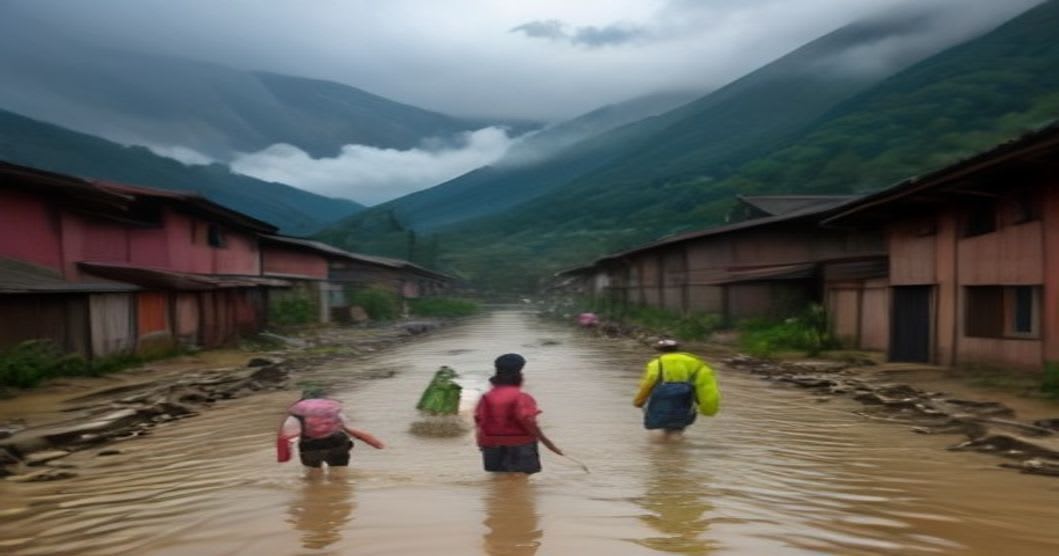
The Himalayan Crisis Unfolds
In early August 2024, torrential monsoon rains triggered a series of flash floods across Nepal’s central and eastern valleys. Rivers swollen beyond capacity ripped through villages, washed away homes, and claimed dozens of lives. While the immediate tragedy is painfully local, the disaster reverberates across the entire Himalayan watershed, a trans‑border system that feeds the Ganges, Brahmaputra, and Mekong rivers. India and China, the two largest riparian powers, have a strategic and humanitarian imperative to address the root causes of these calamities.
A Perfect Storm of Climate and Geography
- Glacial melt and lake outburst risk – Accelerated melting of the Himalayas’ glaciers, many of which straddle the Nepal‑China border, has created unstable glacial lakes. Sudden breaches release massive water volumes downstream.
- Monsoon intensification – Climate models show a 15‑20 % increase in extreme rainfall events over the Indian subcontinent, a trend already evident in the 2024 deluge.
- Deforestation and land‑use change – Unregulated logging and expanding agriculture on steep slopes reduce natural water absorption, amplifying runoff.
These factors converge in Nepal’s narrow valleys, where a few centimeters of rain can swell rivers like the Koshi, Gandaki, and Arun into destructive torrents.
The Trans‑Border Dimension
Both India and China share the Himalayan river basins:
- India receives up to 70 % of its water from upstream Nepalese catchments, especially during the monsoon. Flood peaks in Nepal translate to heightened flood risk in Indian states such as Bihar and West Bengal.
- China controls the headwaters of several major rivers that flow south into Nepal. Its dam projects and water‑management policies directly affect downstream flow regimes.
Historically, cooperation on water‑resource management in the region has been sporadic, limited to bilateral talks and ad‑hoc disaster‑response missions. The 2024 floods expose the inadequacy of this approach.
What Needs to Change?
- Joint Hydrological Monitoring – Establish a tri‑national data‑sharing platform that integrates satellite imagery, ground‑based sensors, and community reporting to forecast glacial‑lake outburst floods (GLOFs) in real time.
- Coordinated Early‑Warning Systems – Deploy multilingual alert mechanisms that reach remote hill villages, leveraging India’s robust telecom network and China’s satellite communication capabilities.
- Integrated River‑Basin Management – Form a Himalayan Basin Commission with equal representation from Nepal, India, and China to plan sustainable water allocation, sediment control, and ecosystem restoration.
- Climate‑Resilient Infrastructure – Prioritise flood‑resilient housing, reinforced embankments, and nature‑based solutions such as reforestation of upstream catchments.
A Call for Shared Responsibility
The flash floods in Nepal are not an isolated tragedy; they are a symptom of a larger, climate‑driven upheaval that knows no borders. India and China, as the dominant downstream and upstream powers, must move beyond diplomatic rhetoric to concrete, collaborative action. The cost of inaction is measured not only in lost lives and property but also in the destabilisation of food security, energy generation, and regional geopolitics.
Takeaway: By treating the Himalayan watershed as a shared commons, India, China, and Nepal can transform a cycle of disaster into a model of cooperative resilience.
This opinion piece reflects the urgent need for cross‑border water governance in the face of accelerating climate risks.
Original Reporting & Source: The Quint

Discussion (0)
Sign in to join the discussion.
No comments yet. Be the first to start the conversation!