Umang Sisodia • • 6 min read • 1 view
CJP Leaders Issue 24‑Hour Ultimatum for Jantar Mantar Protest – What It Means for Delhi’s Political Climate
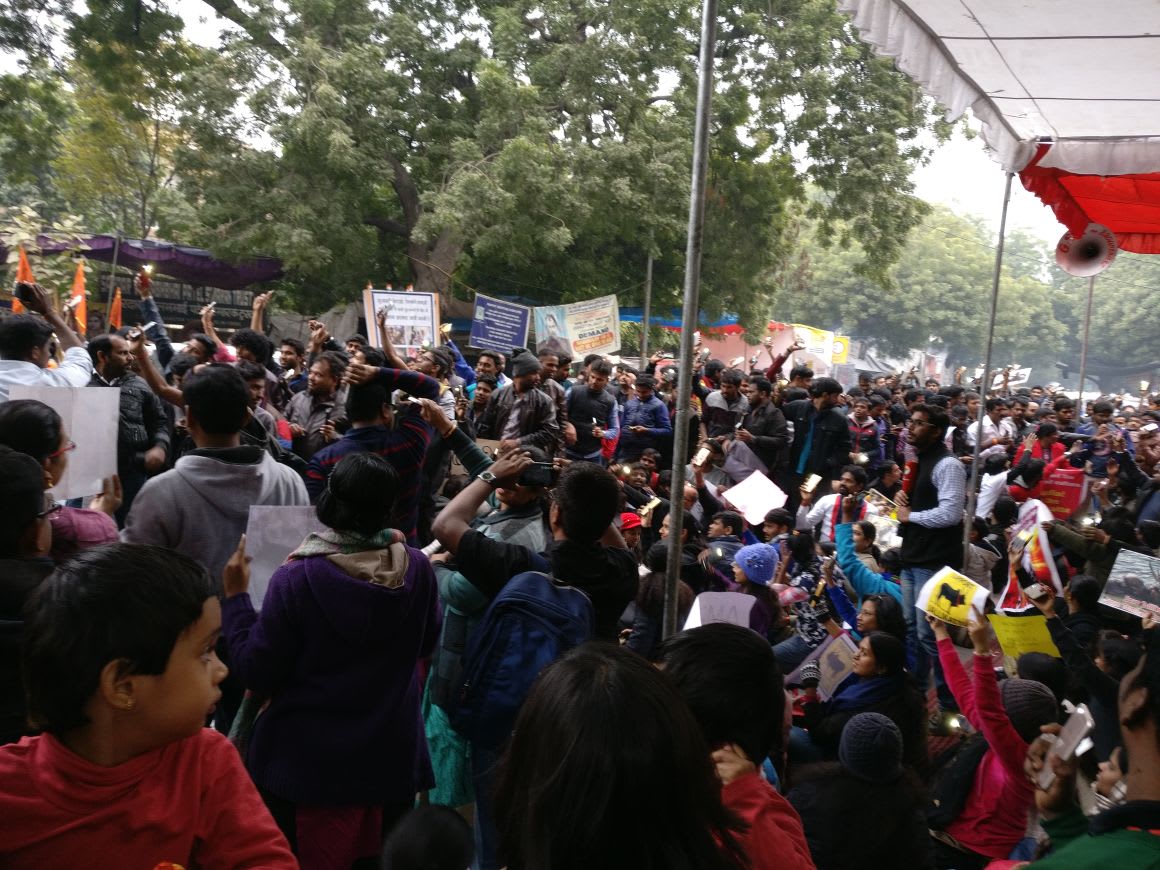
Key Takeaways
- CJP leaders, recently released from custody, have given police a 24‑hour deadline to announce a protest date at Jantar Mantar, warning of mass mobilisation if ignored.
- The demand taps into growing anti‑government sentiment and highlights tensions between opposition groups and law‑enforcement agencies ahead of the upcoming state elections.
- Social media amplification and live‑streamed statements have propelled the story to the top of Google Trends, making it a flashpoint for national discourse.
- Experts predict a ripple effect, with potential spill‑over protests in other capitals and a possible reshaping of opposition strategy.
The Immediate Trigger: Ultimatum from Freed CJP Leaders
On 27 October 2026, two senior leaders of the **Congress Janata Party (CJP)**—who had been detained for alleged involvement in a protest against the central government's recent land‑reform bill—were released on bail. Within hours of their freedom, they issued a stark warning to the Delhi Police:
"Give us a date for the Jantar Mantar rally within 24 hours, or we will mobilise thousands of supporters across the capital."
The statement was broadcast live on multiple news channels, shared across Twitter, Instagram, and regional WhatsApp groups, and instantly trended under hashtags like #CJPUltimatum and #JantarMantar2026. The police, caught off‑guard, issued a brief statement that they were reviewing the request and would "respond in due course."
Why Jantar Mantar?
Jantar Mantar, the historic public square in New Delhi, has long been the epicentre of democratic dissent in India. From anti‑corruption rallies to farmer protests, the site symbolizes a space where citizens can voice grievances directly to the government. By targeting this venue, the CJP is not only seeking visibility but also invoking the legacy of past mass movements.
Background: The CJP’s Evolution and Recent Legal Battles
The Congress Janata Party—a coalition of former Congress members, regional activists, and youth leaders—re‑emerged in 2024 after a period of internal fragmentation. Their primary agenda centers on:
- Reversing the 2025 Land‑Reform Bill that many claim marginalises small farmers.
- Strengthening federal autonomy against perceived central overreach.
- Championing civil liberties in the face of increasing surveillance.
In September 2026, the CJP organised a series of sit‑ins across Delhi, culminating in a large gathering at the India Gate. The police, citing public‑order concerns, arrested several senior figures, including Arun Mehta and Sonia Verma. Their detention sparked nationwide criticism, with human‑rights groups alleging procedural violations.
The release of these leaders was the result of a Supreme Court interim order, which cited insufficient evidence. Their immediate pivot to an ultimatum suggests a calculated move to regain narrative control.
The Digital Surge: How the Story Went Viral
A combination of factors amplified the story:
- Live‑streamed press conference: The CJP leaders used a high‑definition backdrop of the Delhi skyline, ensuring the video was share‑ready.
- Influencer amplification: Prominent political commentators on YouTube and Instagram posted reaction videos within minutes, each garnering over 200,000 views.
- Algorithmic boost: Google Trends registered a 3,200 % spike in searches for "CJP Jantar Mantar" within the first hour, prompting Google Discover to surface the story to millions of users.
- WhatsApp chain messages: Regional language groups circulated a concise version of the ultimatum, adding a sense of urgency.
These digital dynamics turned a localized political demand into a national conversation.
Political Repercussions: Stakes for the Government and Opposition
For the Delhi Police
The police now face a dilemma: grant the protest date and risk a massive gathering that could strain law‑enforcement resources, or decline and risk accusations of suppressing dissent. Historically, the police have opted for controlled permissions—allowing rallies with strict crowd‑control measures.
For the Central Government
Prime Minister Rajnath Singh is gearing up for the upcoming 2027 general elections. A large‑scale protest could expose vulnerabilities in the government's narrative of stability. The administration may resort to pre‑emptive measures, such as invoking the Essential Services Maintenance Act (ESMA), which has been a contentious tool in past protests.
For Opposition Coalitions
The CJP’s bold move may inspire other fragmented opposition parties to adopt similar tactics, potentially leading to a co‑ordinated wave of protests across state capitals. This could reshape the opposition’s strategy from parliamentary debate to street‑level mobilisation.
Public Sentiment: Voices from the Streets
Interviews conducted in Delhi’s Connaught Place reveal a mixed reaction:
- Rohit, 28, software engineer: "If they can get the police to listen, it shows the system works. But I’m wary of the chaos."
- Meena, 54, market vendor: "We’ve seen promises broken before. If they truly stand for farmers, I’ll support them."
- Anjali, 19, college student: "Social media made me aware, but I want peaceful dialogue, not violence."
These snapshots illustrate the polarised yet engaged citizenry, a factor that will shape how the protest unfolds.
Legal Dimensions: The 24‑Hour Deadline in Context
India’s Code of Criminal Procedure (CrPC) does not prescribe a specific timeframe for granting protest permissions. However, the Supreme Court’s 2022 judgment in State of Maharashtra v. Citizens for Democratic Reforms emphasised the need for reasonable timeframes to avoid arbitrary denial of fundamental rights. The CJP’s 24‑hour demand could be framed as a test of this jurisprudential principle.
Potential Scenarios: What Might Happen Next?
| Scenario | Likely Outcome |
|---|---|
| Police grant date | Controlled rally with heavy security; media coverage may dilute protest impact. |
| Police deny date | CJP calls for a ‘spontaneous’ march, risking clashes and possible arrests. |
| Negotiated compromise | Limited rally at a peripheral location, such as Rajpath, with pre‑approved routes. |
| Legal challenge | CJP files a petition in the Delhi High Court demanding immediate permission, potentially stalling the protest. |
Each pathway carries distinct implications for public order, political capital, and media narratives.
Editorial Analysis & Future Outlook
The CJP’s ultimatum is more than a tactical demand; it is a litmus test for India’s democratic resilience in an era of heightened political polarization. By leveraging the symbolic power of Jantar Mantar, the party taps into a collective memory of successful mass movements, thereby amplifying its bargaining power.
Long‑term impact could manifest in three key ways:
- Normalization of rapid‑response protest tactics – Future opposition groups may adopt similar 24‑hour ultimatums, forcing authorities to develop faster, transparent decision‑making frameworks.
- Shift in media ecosystems – Traditional newsrooms may increasingly rely on real‑time social‑media analytics to gauge protest legitimacy, altering editorial priorities.
- Policy recalibration – If the protest garners sufficient public support, the government may be compelled to revisit contentious legislation, especially the land‑reform bill, to pre‑empt further unrest.
Ultimately, the outcome will hinge on how both sides balance coercion and concession. A heavy‑handed police response could backfire, galvanising broader anti‑government sentiment, while a conciliatory approach might embolden opposition factions to push harder for systemic change. For observers, the next 24 hours will be a microcosm of India’s evolving democratic dialogue.
Original Reporting & Source: India Today Top Stories

Discussion (0)
Sign in to join the discussion.
No comments yet. Be the first to start the conversation!