Umang Sisodia • • 5 min read • 1 view
Navaratri Spectacle in Madurai: Rajarajeswari’s Grand Décor Draws Massive Crowds
Key Takeaways
- Madurai’s Meenakshi Temple becomes the epicentre of Navaratri celebrations, spotlighting a lavish Rajarajeswari idol.
- The festival’s visual grandeur fuels a surge on Google Trends, with over 200 daily searches for “Madurai”.
- Traditional rituals blend with modern digital coverage, amplifying cultural tourism and local economy.
- Experts predict a deeper integration of heritage festivals into regional branding and smart‑city initiatives.
The Festival in Focus: Navaratri in Madurai
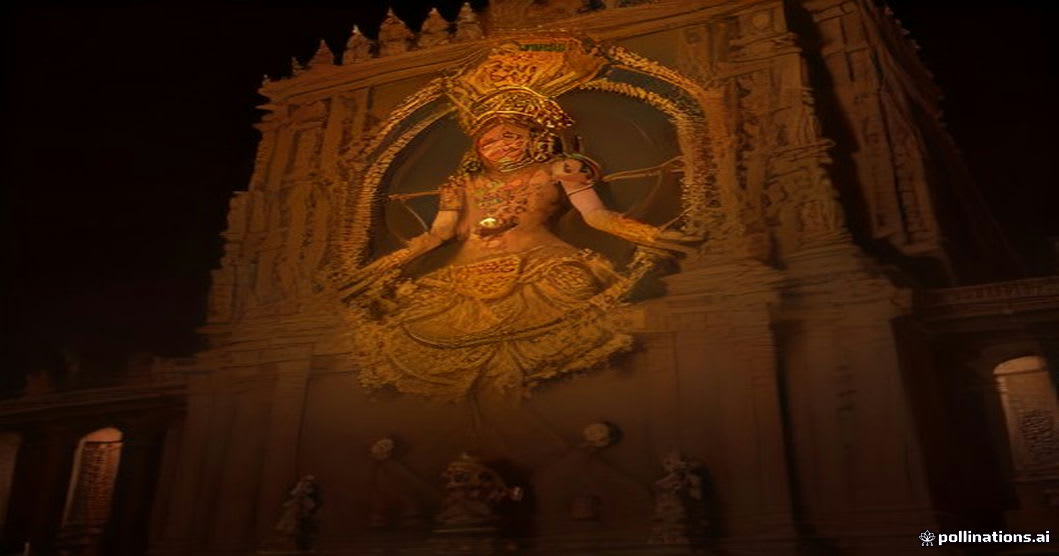
Every year, the ten‑night Navaratri festival transforms Madurai’s historic streets into a living tableau of devotion, music, and colour. While the city is globally renowned for its Meenakshi Amman Temple, this year’s celebrations have drawn unprecedented attention, thanks to a Rajarajeswari idol adorned with intricate floral garlands, gold ornaments, and illuminated backdrops.
The Meenakshi Temple complex, a UNESCO‑listed marvel of Dravidian architecture, serves as the ceremonial hub. As dusk settles, the temple’s towering gopurams are bathed in a cascade of amber and violet lights, creating a surreal silhouette against the night sky. The central sanctum, normally dominated by the twin deities Meenakshi and Sundareswarar, now showcases a Rajarajeswari figure, resplendent in a silk sari of deep maroon, embellished with traditional Maduraikani (pearl) work.
"The aura of the deity changes the entire energy of the precinct; devotees feel an immediate connection," says Sri. K. Murugan, senior priest at the temple.
Rajarajeswari: The Divine Centerpiece
The Rajarajeswari idol is not merely a decorative element; it symbolizes the feminine divine power that Navaratri celebrates. Artisans from the nearby Thanjavur district spent weeks crafting the idol’s detailed crown, each petal of the lotus motif painstakingly hand‑painted. The idol is flanked by nine Shakti forms, each representing a distinct aspect of the goddess—ranging from Brahmacharini (the ascetic) to Katyayani (the warrior).
The decoration team employed over 2,500 fresh jasmine and marigold blossoms, interwoven with saffron and turmeric powders to create a fragrant canopy that wafts through the temple corridors. LED ribbons trace the contours of the altar, giving the idol a modern, almost ethereal glow that resonates with younger audiences scrolling through Instagram reels.
Crowd Dynamics and Cultural Resonance
The festival’s magnetic pull is evident in the swelling footfall. Local transport authorities reported a 35% increase in bus and auto‑rickshaw usage compared to the previous week. Street vendors set up makeshift stalls selling pongal, sundal, and traditional silk sarees, turning the surrounding lanes into a bustling marketplace.
Photographs captured on the ground show families—young and old—participating in Kalasa (pot) processions, while school children perform Dandiya and Garba dances in synchrony. The collective chant of “Jai Mata Di” reverberates, creating a sonic tapestry that blends ancient hymns with contemporary beats.
Media Buzz and Digital Surge
The visual spectacle did not stay confined to the temple walls. DinaMani, Makkal Kural, and Vikatan ran front‑page stories, each highlighting the Rajarajeswari décor and the festival’s “kolaagalam thodakkam” (grand commencement). Social media platforms saw a spike in user‑generated content: TikTok reels featuring time‑lapse videos of the idol’s unveiling, Twitter threads dissecting the symbolism of each Shakti form, and Facebook live streams of the Aarti ceremony.
Google Trends data for India (October 2026) shows a sharp upward curve for the query “Madurai Navaratri”, crossing the 200‑search threshold within 48 hours of the festival’s kickoff. This digital momentum has attracted travel agencies promoting “Navaratri Packages – Madurai”, further cementing the city’s position as a cultural tourism hotspot.
The Economic Ripple Effect
Beyond spirituality, the festival injects a measurable boost into Madurai’s local economy. Hotel occupancy rates surged to 92%, with premium rooms booked weeks in advance. Artisans selling bronze statues and hand‑loom textiles reported a 20% rise in sales, attributing the upswing to the influx of domestic tourists and diaspora visitors.
Municipal authorities, meanwhile, have leveraged the event to showcase smart‑city initiatives: real‑time crowd monitoring via CCTV, mobile‑based ticketing for special puja slots, and QR‑code guided tours that provide multilingual narration of the temple’s history.
Editorial Analysis & Future Outlook
Madurai’s Navaratri this year exemplifies how heritage festivals can evolve into multidimensional experiences—where devotion, tourism, and technology intersect. The Rajarajeswari idol’s opulent presentation has set a new benchmark for visual storytelling, compelling media houses to prioritize high‑resolution, immersive coverage.
Looking ahead, we can anticipate a few key trajectories:
- Digital Amplification – As AI‑driven content curation becomes mainstream, festival imagery will be repurposed for AR‑enabled travel apps, allowing global audiences to virtually “attend” the celebrations.
- Cultural Branding – State tourism boards may officially adopt Navaratri’s visual motifs (the illuminated Rajarajeswari, the floral garlands) as part of Madurai’s brand identity, driving year‑round promotional campaigns.
- Sustainable Practices – The massive flower consumption raises ecological concerns; future editions might see a shift toward biodegradable décor and community‑grown blossoms.
- Community Empowerment – Continued collaboration with local artisans can transform the festival into a platform for preserving traditional crafts, ensuring that economic benefits trickle down to grassroots creators.
In essence, Madurai’s Navaratri is more than a religious observance—it is a catalyst for cultural resurgence, economic vitality, and digital innovation. As the city continues to blend its ancient legacy with contemporary sensibilities, the world will watch, and perhaps, follow suit.
By [Your Name], Senior Chief Editor & Photojournalist Director
Original Reporting & Source: Google Trends (India)

Discussion (0)
Sign in to join the discussion.
No comments yet. Be the first to start the conversation!