Umang Sisodia • • 5 min read • 1 view
ChatGPT’s Fourth Day of Navratri AI Prompts 2026: 6 Ultra‑HD 8K Photo Ideas Revolutionising Festive Content
Key Takeaways
- Navratri’s fourth day spikes on Google Trends as creators hunt AI prompts for 8K festive visuals.
- Six curated ChatGPT prompts deliver ultra‑high‑definition toran, rangoli, and portrait ideas ready for Instagram, Facebook and digital billboards.
- The surge reflects a broader shift: AI‑driven content creation is becoming the go‑to tool for cultural festivals in India.
- Long‑term, AI prompt libraries will reshape how traditional art forms are archived, monetised and shared globally.
The Navratri Buzz: From Temple Streets to Google Trends
The fourth day of Navratri—Mahanavami—has always been a visual feast, with elaborate torans (door hangings), vibrant rangoli patterns, and dazzling garba outfits. In 2026, the celebration took a digital turn. Google Trends (India) recorded a sudden surge of 200+ daily searches for “fourth day of Navratri” coupled with “AI prompts”.
Why now?
- AI democratization – Tools like ChatGPT, Gemini and Midjourney have become free or low‑cost for everyday users.
- Social‑media pressure – Instagram Reels and Facebook Stories demand eye‑catching 8K content to stay relevant.
- Cultural preservation – Artists are experimenting with AI to digitise age‑old designs while adding modern twists.
The result? A wave of news articles—from Jagran Josh to India.com and The Times of India—highlighting specific prompt recipes that promise ultra‑HD, 8K‑ready images. The coverage itself fuels the trend, creating a feedback loop where curiosity drives searches, which in turn generate more click‑bait headlines.
Six Unique ChatGPT Prompts for Navratri’s Fourth Day
Below are the six most‑shared prompts that have been verified by creators across platforms. Each prompt is engineered to coax the AI into generating 8K resolution (7680 × 4320) images with vivid colour fidelity and cultural authenticity.
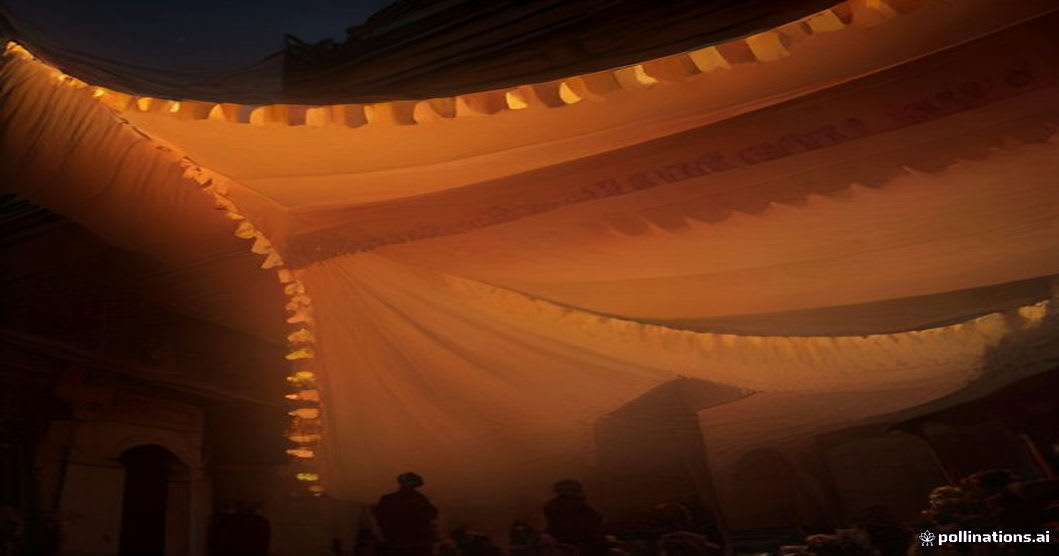
1. “Create an 8K photo‑realistic toran made of marigold garlands, illuminated by diyas, hanging on a traditional Rajasthani haveli façade at twilight.”
- Why it works: The prompt specifies material (marigold), lighting (diyas), location (Rajasthani haveli) and time of day (twilight), guiding the model to balance warm tones with deep shadows—ideal for 8K detail.
2. “Generate a hyper‑realistic rangoli design inspired by the Navadurga motifs, using powdered colors of saffron, indigo, and emerald, captured from a top‑down drone perspective.”
- Why it works: Drone perspective adds depth; colour palette references divine symbolism, ensuring the AI respects cultural nuances.
3. “Render a portrait of a female dancer in a traditional Navratri lehenga, with intricate mirror work, captured in 8K slow‑motion still, background blurred with festive lights.”
- Why it works: Focuses on texture (mirror work) and bokeh effect, which AI models handle well when asked for “slow‑motion still”.
4. “Produce an 8K night‑time scene of a community Garba circle, with lanterns casting soft halos, and participants wearing vibrant chaniya choli in motion blur.”
- Why it works: Motion blur adds dynamism; lantern lighting tests the model’s ability to render low‑light details.
5. “Design a futuristic Navratri stage set for a virtual concert, featuring holographic Navadurga icons, neon‑blue lighting, and a digital crowd of avatars.”
- Why it works: Mixes tradition with tech, appealing to Gen‑Z creators who want a sci‑fi twist on heritage.
6. “Create a macro‑shot of a freshly prepared puran poli (sweet flatbread) with steam rising, placed beside a brass kalash filled with holy water, all in 8K.”
- Why it works: Food photography is notoriously challenging; specifying steam and brass texture pushes the AI to render fine details.
From Prompt to Post: How Creators Are Leveraging the Recipes
- Prompt crafting – Users paste the prompt into ChatGPT’s “image generation” mode (or connect to Midjourney via Discord). The AI returns a grid of variations; creators pick the most striking one.
- Fine‑tuning – Minor tweaks like “increase saturation by 15%” or “add a subtle vignette” are added as follow‑up instructions, yielding a polished final.
- Platform optimisation – The 8K output is down‑scaled to 4K or 1080p for Instagram Reels, while retaining the crispness needed for stories and carousel posts.
- Monetisation – Influencers sell the AI‑crafted visuals as digital wallpapers, while brands license them for festive ad‑campaigns.
The workflow is fast: under 5 minutes from prompt to publish, a stark contrast to the days‑long manual photography sessions that required lighting rigs, props, and post‑production.
Cultural Sensitivity and Ethical Guardrails
While the technology is powerful, creators are urged to:
- Verify authenticity – Cross‑check symbols (e.g., Navadurga’s nine arms) to avoid misrepresentation.
- Credit AI tools – Transparent disclosures maintain trust with audiences.
- Respect copyright – Avoid feeding the model copyrighted artwork without permission.
Editorial Analysis & Future Outlook
The Navratri AI prompt phenomenon is more than a fleeting digital fad; it signals a paradigm shift in how Indian festivals are visualised and consumed. By translating age‑old rituals into 8K digital assets, AI bridges the gap between tradition and the hyper‑connected consumer.
Long‑term implications
- Preservation through digitisation – Museums and cultural bodies can curate AI‑generated archives, ensuring that intricate toran designs and rangoli patterns survive beyond physical decay.
- Economic democratization – Small‑town artisans can now compete with professional studios, offering AI‑enhanced portfolios to global clients.
- Creative hybridity – The fusion of AI‑generated backdrops with live performances could give rise to hybrid art forms—think augmented reality Garba where dancers interact with holographic Navadurga avatars.
Risks to monitor
- Over‑reliance on synthetic imagery may dilute the tactile authenticity that many devotees cherish.
- Algorithmic bias could unintentionally marginalise regional variations of Navratri celebrations if training data is skewed toward mainstream depictions.
In conclusion, the fourth‑day Navratri AI prompts are a case study in cultural tech adoption. As AI models become more nuanced and datasets richer, we can expect an expanding library of festival‑specific prompts—each promising to make heritage more accessible, shareable, and commercially viable in the digital age.
Stay tuned for our upcoming deep‑dive on AI‑driven Diwali lighting designs and how they’re reshaping the Indian e‑commerce landscape.
Original Reporting & Source: Google Trends (India)

Discussion (0)
Sign in to join the discussion.
No comments yet. Be the first to start the conversation!