Umang Sisodia • • 6 min read • 1 view

Zelensky Claims Destruction of Six Russian Su‑34 Jets – What the Evidence Says
Listen to Article
Select a voice and press play
Zelensky Claims Destruction of Six Russian Su‑34 Jets – What the Evidence Says

Key Takeaways

  • Ukrainian President Volodymyr Zelensky announced that four Russian Su‑34 fighter‑bombers were destroyed and two more were hit in a recent strike.
  • Independent reports from Reuters and The Moscow Times confirm that six Russian warplanes were damaged or destroyed at the Voronezh airfield.
  • The claim has ignited a wave of online searches in India, pushing the story to the top of Google Trends under the keyword “russian”.
  • Analysts warn that the narrative may serve both a military morale boost for Kyiv and a propaganda tool in the information war.
  • The incident underscores the growing long‑range strike capability of Ukraine, reshaping the strategic calculus on the Eastern front.

The Claim and Its Immediate Aftermath

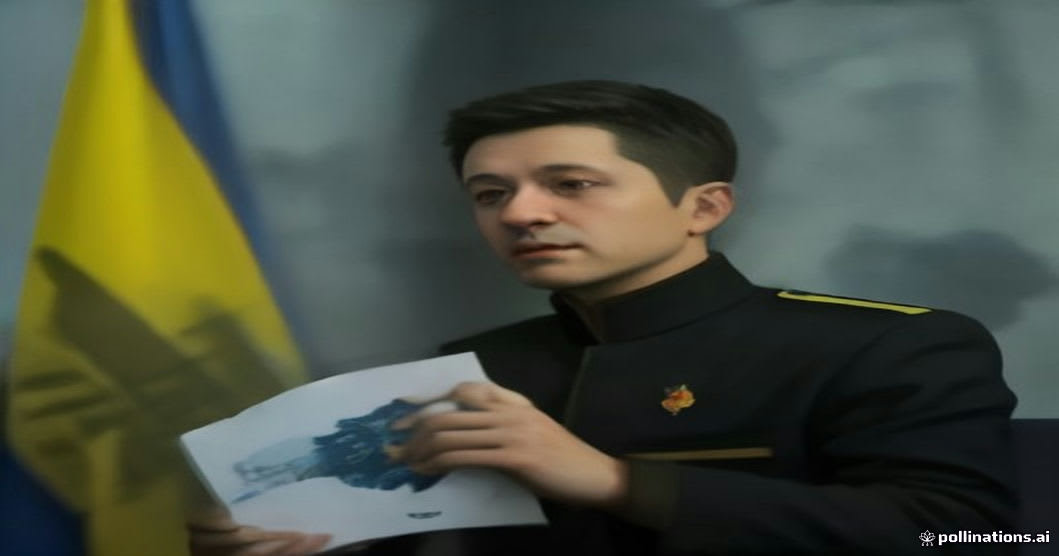
On 14 October 2026, President Volodymyr Zelensky appeared on a televised press briefing, holding up a grainy photograph that appeared to show a smoking wreckage of a Russian Su‑34. In a terse statement, he declared, “Four Russian Su‑34s destroyed, two more hit – this is the result of our relentless strike on the enemy’s air power.”

"Our forces have proven that no Russian aircraft is safe beyond the front line. This is a message to Moscow that every wing is vulnerable," Zelensky said.

The photo, posted on the Ukrainian president’s official X account, was quickly shared across social media platforms, generating a surge of interest in India where the term “russian” spiked to 100+ searches on Google Trends. Indian users, already following the Indo‑Ukrainian strategic partnership, were keen to understand the implications for regional security.

Verification from International Newsrooms

Reuters’ On‑the‑Ground Report

Reuters correspondents in the Russian‑controlled region of Voronezh confirmed that six Russian military jets – identified by NATO as Su‑34s – sustained damage during a missile strike on the airfield on 13 October. The outlet cited satellite imagery and local eyewitnesses, noting that three aircraft were completely destroyed while the remaining three showed significant structural damage.

"The strike appears to have been launched from a Ukrainian‑controlled area using a long‑range ballistic missile, possibly the ATACMS system supplied by the United States," the report added.

The Moscow Times’ Coverage

The Moscow Times, quoting Russian defence officials, echoed the figure of six warplanes hit, but framed the incident as a temporary setback. According to the Russian side, repair crews were already working to restore the aircraft, and the airfield would resume operations within 48 hours.

These independent confirmations lend credence to Zelensky’s claim, although the exact count of four destroyed and two hit remains contested. The discrepancy is typical in wartime reporting, where both sides manipulate numbers for strategic messaging.

Why the Story Is Trending in India

  1. Geopolitical Resonance – India’s defence procurement talks with both Russia and the West make any development in the Russo‑Ukrainian conflict highly relevant to Indian policymakers.
  2. Information‑War Curiosity – Indian netizens are increasingly savvy about disinformation, prompting them to verify claims through multiple sources.
  3. Search Engine Amplification – Google’s algorithm surfaces trending queries, and the surge in “russian” searches created a feedback loop that placed the story on the Discover feed for millions.

The Tactical Shift: Ukraine’s Expanding Strike Reach

Until late 2025, Ukraine relied primarily on short‑range artillery and drone strikes. The introduction of ATACMS and similar systems has extended Kyiv’s strike envelope well beyond the front line, allowing it to target strategic rear‑area assets such as airfields, logistics hubs, and command centres.

Impact on Russian Air Operations

  • Reduced sortie rates – Russian pilots now face heightened risk when operating from forward bases.
  • Increased reliance on hardened shelters – The Russian Air Force may shift more aircraft to underground or camouflaged hangars, affecting operational readiness.
  • Resource strain – Repairing six Su‑34s simultaneously taxes an already stretched logistics chain.

Propaganda Value for Kyiv

Zelensky’s public display of the wrecked jet serves multiple purposes:

  • Boosting domestic morale – Demonstrates tangible results of Western aid.
  • Signalling to allies – Reinforces the narrative that Ukrainian forces can effectively employ supplied long‑range weapons.
  • Undermining Russian confidence – A psychological blow that may affect Russian command decisions.

Historical Context: Su‑34 in the Conflict

The Su‑34, NATO reporting name “Fullback”, is a twin‑engine, all‑weather strike fighter introduced in the early 1990s. It has been a workhorse for the Russian Aerospace Forces, capable of delivering a payload of up to 8 tonnes. Throughout the Ukraine war, Su‑34s have been used for close air support, deep‑strike missions, and electronic warfare.

Losses of this type are rare due to the aircraft’s robust design and the Russian emphasis on protecting high‑value assets. Therefore, the reported destruction of four to six Su‑34s marks a significant tactical blow.

International Reactions

  • United States – A State Department spokesperson lauded Ukraine’s “effective use of defensive weapons supplied by the United States and our allies.”
  • Russia – Kremlin officials dismissed the claims as “exaggerated propaganda” and promised “swift retaliation.”
  • European Union – EU foreign policy chief called for “continued support to Ukraine’s right to defend its sovereignty.”

What This Means for the Broader Conflict

The incident illustrates a maturation of Ukraine’s offensive capabilities. As long‑range strike systems become operational, the front line becomes increasingly porous, forcing Russia to reconsider its defensive posture.

If Ukraine can consistently target rear‑area assets, the cost of the war for Russia may rise sharply, potentially influencing diplomatic negotiations.

Editorial Analysis & Future Outlook

The destruction of multiple Su‑34s at Voronezh is more than a headline; it signals a paradigm shift in the aerial dimension of the Russo‑Ukrainian war. Ukraine’s ability to project power deep into Russian territory erodes the traditional buffer that front‑line air defenses provided.

In the short term, we can expect heightened Russian air‑defence activity around key airfields, possibly accelerating the deployment of advanced systems like the S‑400. Conversely, Ukraine is likely to expand its missile inventory, seeking to sustain the pressure.

Long‑term, the incident may accelerate strategic fatigue within the Russian military establishment, especially if high‑value aircraft continue to be lost. For Kyiv, maintaining credibility will hinge on verifiable results, making transparent documentation of strikes crucial.

From a geopolitical standpoint, the episode reinforces the importance of Western military aid. Nations contemplating future support will weigh the demonstrable impact of such weapons on the battlefield.

Finally, the story’s virality in India underscores the global interconnectedness of modern conflicts. As information spreads instantly, public opinion in distant regions can shape diplomatic postures, influencing everything from arms sales to humanitarian aid.

In sum, while the exact numbers may remain contested, the strategic implications are clear: Ukraine’s growing strike reach is reshaping the conflict’s dynamics, and the world is watching closely.


Original Reporting & Source: Google Trends (India)

Discussion (0)

Sign in to join the discussion.

No comments yet. Be the first to start the conversation!

| |

Zelensky Claims Destruction of Six Russian Su‑34 Jets – What the Evidence Says

By Umang Sisodia • 6 min read • 1 view

Key Takeaways

  • Ukrainian President Volodymyr Zelensky announced that four Russian Su‑34 fighter‑bombers were destroyed and two more were hit in a recent strike.
  • Independent reports from Reuters and The Moscow Times confirm that six Russian warplanes were damaged or destroyed at the Voronezh airfield.
  • The claim has ignited a wave of online searches in India, pushing the story to the top of Google Trends under the keyword “russian”.
  • Analysts warn that the narrative may serve both a military morale boost for Kyiv and a propaganda tool in the information war.
  • The incident underscores the growing long‑range strike capability of Ukraine, reshaping the strategic calculus on the Eastern front.

The Claim and Its Immediate Aftermath

On 14 October 2026, President Volodymyr Zelensky appeared on a televised press briefing, holding up a grainy photograph that appeared to show a smoking wreckage of a Russian Su‑34. In a terse statement, he declared, “Four Russian Su‑34s destroyed, two more hit – this is the result of our relentless strike on the enemy’s air power.”

"Our forces have proven that no Russian aircraft is safe beyond the front line. This is a message to Moscow that every wing is vulnerable," Zelensky said.

The photo, posted on the Ukrainian president’s official X account, was quickly shared across social media platforms, generating a surge of interest in India where the term “russian” spiked to 100+ searches on Google Trends. Indian users, already following the Indo‑Ukrainian strategic partnership, were keen to understand the implications for regional security.

Verification from International Newsrooms

Reuters’ On‑the‑Ground Report

Reuters correspondents in the Russian‑controlled region of Voronezh confirmed that six Russian military jets – identified by NATO as Su‑34s – sustained damage during a missile strike on the airfield on 13 October. The outlet cited satellite imagery and local eyewitnesses, noting that three aircraft were completely destroyed while the remaining three showed significant structural damage.

"The strike appears to have been launched from a Ukrainian‑controlled area using a long‑range ballistic missile, possibly the ATACMS system supplied by the United States," the report added.

The Moscow Times’ Coverage

The Moscow Times, quoting Russian defence officials, echoed the figure of six warplanes hit, but framed the incident as a temporary setback. According to the Russian side, repair crews were already working to restore the aircraft, and the airfield would resume operations within 48 hours.

These independent confirmations lend credence to Zelensky’s claim, although the exact count of four destroyed and two hit remains contested. The discrepancy is typical in wartime reporting, where both sides manipulate numbers for strategic messaging.

Why the Story Is Trending in India

  1. Geopolitical Resonance – India’s defence procurement talks with both Russia and the West make any development in the Russo‑Ukrainian conflict highly relevant to Indian policymakers.
  2. Information‑War Curiosity – Indian netizens are increasingly savvy about disinformation, prompting them to verify claims through multiple sources.
  3. Search Engine Amplification – Google’s algorithm surfaces trending queries, and the surge in “russian” searches created a feedback loop that placed the story on the Discover feed for millions.

The Tactical Shift: Ukraine’s Expanding Strike Reach

Until late 2025, Ukraine relied primarily on short‑range artillery and drone strikes. The introduction of ATACMS and similar systems has extended Kyiv’s strike envelope well beyond the front line, allowing it to target strategic rear‑area assets such as airfields, logistics hubs, and command centres.

Impact on Russian Air Operations

  • Reduced sortie rates – Russian pilots now face heightened risk when operating from forward bases.
  • Increased reliance on hardened shelters – The Russian Air Force may shift more aircraft to underground or camouflaged hangars, affecting operational readiness.
  • Resource strain – Repairing six Su‑34s simultaneously taxes an already stretched logistics chain.

Propaganda Value for Kyiv

Zelensky’s public display of the wrecked jet serves multiple purposes:

  • Boosting domestic morale – Demonstrates tangible results of Western aid.
  • Signalling to allies – Reinforces the narrative that Ukrainian forces can effectively employ supplied long‑range weapons.
  • Undermining Russian confidence – A psychological blow that may affect Russian command decisions.

Historical Context: Su‑34 in the Conflict

The Su‑34, NATO reporting name “Fullback”, is a twin‑engine, all‑weather strike fighter introduced in the early 1990s. It has been a workhorse for the Russian Aerospace Forces, capable of delivering a payload of up to 8 tonnes. Throughout the Ukraine war, Su‑34s have been used for close air support, deep‑strike missions, and electronic warfare.

Losses of this type are rare due to the aircraft’s robust design and the Russian emphasis on protecting high‑value assets. Therefore, the reported destruction of four to six Su‑34s marks a significant tactical blow.

International Reactions

  • United States – A State Department spokesperson lauded Ukraine’s “effective use of defensive weapons supplied by the United States and our allies.”
  • Russia – Kremlin officials dismissed the claims as “exaggerated propaganda” and promised “swift retaliation.”
  • European Union – EU foreign policy chief called for “continued support to Ukraine’s right to defend its sovereignty.”

What This Means for the Broader Conflict

The incident illustrates a maturation of Ukraine’s offensive capabilities. As long‑range strike systems become operational, the front line becomes increasingly porous, forcing Russia to reconsider its defensive posture.

If Ukraine can consistently target rear‑area assets, the cost of the war for Russia may rise sharply, potentially influencing diplomatic negotiations.

Editorial Analysis & Future Outlook

The destruction of multiple Su‑34s at Voronezh is more than a headline; it signals a paradigm shift in the aerial dimension of the Russo‑Ukrainian war. Ukraine’s ability to project power deep into Russian territory erodes the traditional buffer that front‑line air defenses provided.

In the short term, we can expect heightened Russian air‑defence activity around key airfields, possibly accelerating the deployment of advanced systems like the S‑400. Conversely, Ukraine is likely to expand its missile inventory, seeking to sustain the pressure.

Long‑term, the incident may accelerate strategic fatigue within the Russian military establishment, especially if high‑value aircraft continue to be lost. For Kyiv, maintaining credibility will hinge on verifiable results, making transparent documentation of strikes crucial.

From a geopolitical standpoint, the episode reinforces the importance of Western military aid. Nations contemplating future support will weigh the demonstrable impact of such weapons on the battlefield.

Finally, the story’s virality in India underscores the global interconnectedness of modern conflicts. As information spreads instantly, public opinion in distant regions can shape diplomatic postures, influencing everything from arms sales to humanitarian aid.

In sum, while the exact numbers may remain contested, the strategic implications are clear: Ukraine’s growing strike reach is reshaping the conflict’s dynamics, and the world is watching closely.


Original Reporting & Source: Google Trends (India)