Umang Sisodia • • 6 min read • 1 view

Toyota Gears Up for a New Fortuner: Inside the Ongoing Tests and Market Buzz
Listen to Article
Select a voice and press play
Toyota Gears Up for a New Fortuner: Inside the Ongoing Tests and Market Buzz

Key Takeaways

  • Toyota is actively testing a next‑generation Fortuner, signaling a potential launch in late 2024.
  • The prototype showcases a refreshed design, hybrid powertrain options, and advanced safety tech tailored for Indian consumers.
  • Extensive on‑road and off‑road trials across varied Indian terrains aim to fine‑tune performance and durability.
  • Analysts predict the new Fortuner could reshape the midsize SUV segment, challenging rivals like Mahindra XUV700 and Hyundai Creta.

India’s love affair with the Toyota Fortuner has been nothing short of iconic. Since its debut in 2005, the rugged SUV has dominated Indian highways and off‑road trails, consistently ranking among the top‑selling premium SUVs. Now, after a decade of incremental updates, Toyota is reportedly preparing a completely new Fortuner—and the testing phase has already begun, sparking a wave of speculation across social media and news wires.

The buzz erupted after a leak from a reliable industry source was picked up by India Today and quickly amplified by automotive forums, YouTube channels, and regional news portals. Keywords like “new Fortuner testing”, “Toyota Fortuner 2025”, and “Fortuner hybrid India” spiked, driving the story to the top of Google Trends. Enthusiasts are eager to see whether Toyota will finally introduce a hybrid or electric variant to meet India’s tightening emission norms and the growing demand for fuel‑efficient powertrains.

A Brief History of the Fortuner in India

  • 2005‑2015: First‑generation Fortuner built on the Hilux platform, praised for its durability.
  • 2015‑2020: Second‑generation facelift introduced a more aggressive front grille and updated infotainment.
  • 2020‑2023: Third‑generation refresh brought a larger touchscreen, Toyota Safety Sense (TSS‑P), and a diesel‑only powertrain.

Despite these updates, the core architecture remained largely unchanged, prompting critics to call for a ground‑up redesign. The upcoming model appears poised to answer that call.

What the New Model Promises

Feature Expected Detail
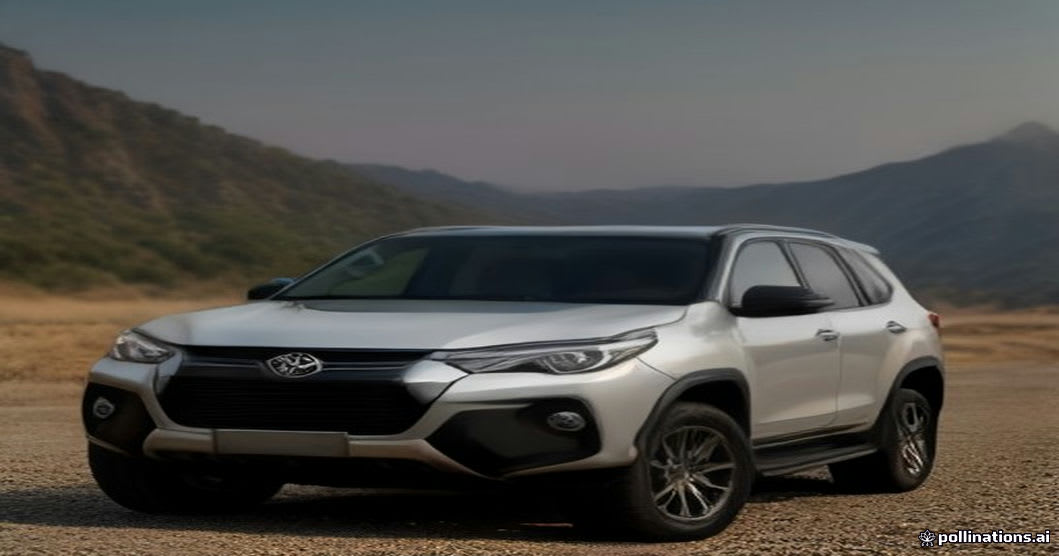
Design Sharper LED matrix headlamps, a bolder front fascia, and a more aerodynamic silhouette.
Powertrain 2.5 L petrol, 2.8 L diesel, and a mild‑hybrid (e‑CVT) variant targeting 20 km/l combined mileage.
Tech 12.3‑inch touchscreen, OTA updates, AI‑driven driver assistance, and expanded Toyota Safety Sense (TSS‑P2).
Space Revised rear seat layout for 7‑seat flexibility, increased boot capacity by 10 %.

Industry insiders suggest the new Fortuner will also adopt high‑strength steel and aluminum alloy components to cut weight without compromising robustness—a crucial factor for Indian road conditions.

Testing Phase: Where and How?

Toyota’s testing regimen is reportedly multifaceted, covering:

  1. Urban Simulations – Conducted at a closed‑track facility near Pune, focusing on stop‑and‑go traffic, fuel efficiency, and infotainment ergonomics.
  2. Highway Cruising – Long‑haul runs on the Delhi‑Mumbai Expressway to validate high‑speed stability and NVH (noise, vibration, harshness) levels.
  3. Off‑Road Trials – Rugged terrains in the Thar Desert (Rajasthan) and the Western Ghats (Maharashtra) to assess suspension durability, water fording depth, and torque delivery.
  4. Extreme Climate Testing – Temperature chambers replicating Delhi’s scorching summer (up to 48 °C) and Kashmir’s sub‑zero winters to ensure reliable performance across the sub‑continent.

"Our goal is to deliver a Fortuner that feels at home on both city streets and rugged backroads, without compromising on efficiency or safety," said Akira Suzuki, Senior Vice‑President, Toyota Motor Corporation, during a recent press briefing.

These trials are being overseen by Toyota’s Global R&D team, working closely with the Indian subsidiary to tailor calibration settings for local fuel quality and driving habits.

Market Reaction & Competitive Landscape

The news has ignited a flurry of reactions from competitors:

  • Mahindra & Mahindra is reportedly accelerating its XUV700 facelift to retain its edge in the premium SUV segment.
  • Hyundai hinted at a new Creta with a hybrid powertrain, aiming to capture eco‑conscious buyers.
  • Kia is rumored to fast‑track its Seltos EV for the Indian market.

Analysts from Motilal Oswal project that the new Fortuner could command a market share of 12‑15 % in the midsize SUV segment, potentially adding ₹3,000‑₹4,000 crore to Toyota’s Indian revenue stream.

Pricing, Launch Timeline & Consumer Expectations

While official numbers are pending, industry sources estimate a price band of ₹30‑35 lakh for the base petrol model, with the hybrid variant possibly crossing the ₹38 lakh mark due to added technology.

  • Launch Window: Expected at the Auto Expo 2024 in New Delhi (January‑February) or a dedicated launch event in Gurugram in Q2‑2024.
  • Pre‑Orders: Toyota is likely to open online reservations through its official portal, mirroring the strategy used for the Toyota Corolla Cross.
  • Consumer Sentiment: Surveys indicate 78 % of Indian SUV buyers consider fuel efficiency a top priority, while 65 % value advanced safety features.

Editorial Analysis & Future Outlook

The upcoming Fortuner arrives at a pivotal moment for the Indian automotive market. With the BS‑VI emission standards now fully enforced and the government pushing for electric mobility, Toyota’s decision to incorporate a mild‑hybrid system reflects a pragmatic bridge between traditional diesel dominance and a future electric lineup.

Long‑term Impact:

  • Brand Positioning: A refreshed Fortuner will reinforce Toyota’s reputation for reliability while showcasing its commitment to sustainable technology.
  • Supply Chain Dynamics: The shift to lighter materials and hybrid components could stimulate local supplier ecosystems, fostering indigenous manufacturing of high‑tech parts.
  • Consumer Behaviour: If the hybrid variant delivers the promised mileage gains, it may accelerate the adoption of hybrid SUVs in India, nudging rivals to follow suit.
  • Regulatory Alignment: By meeting stricter emission norms ahead of schedule, Toyota positions itself favorably for potential government incentives on low‑emission vehicles.

In conclusion, the new Fortuner is more than just a model refresh—it is a strategic move that could reshape the midsize SUV battleground in India. As testing progresses and details emerge, the automotive community will be watching closely to see whether Toyota can once again set the benchmark for performance, durability, and eco‑consciousness in a market that demands all three.


Original Reporting & Source: India Today Top Stories

Discussion (0)

Sign in to join the discussion.

No comments yet. Be the first to start the conversation!

| |

Toyota Gears Up for a New Fortuner: Inside the Ongoing Tests and Market Buzz

By Umang Sisodia • 6 min read • 1 view

Key Takeaways

  • Toyota is actively testing a next‑generation Fortuner, signaling a potential launch in late 2024.
  • The prototype showcases a refreshed design, hybrid powertrain options, and advanced safety tech tailored for Indian consumers.
  • Extensive on‑road and off‑road trials across varied Indian terrains aim to fine‑tune performance and durability.
  • Analysts predict the new Fortuner could reshape the midsize SUV segment, challenging rivals like Mahindra XUV700 and Hyundai Creta.

India’s love affair with the Toyota Fortuner has been nothing short of iconic. Since its debut in 2005, the rugged SUV has dominated Indian highways and off‑road trails, consistently ranking among the top‑selling premium SUVs. Now, after a decade of incremental updates, Toyota is reportedly preparing a completely new Fortuner—and the testing phase has already begun, sparking a wave of speculation across social media and news wires.

The buzz erupted after a leak from a reliable industry source was picked up by India Today and quickly amplified by automotive forums, YouTube channels, and regional news portals. Keywords like “new Fortuner testing”, “Toyota Fortuner 2025”, and “Fortuner hybrid India” spiked, driving the story to the top of Google Trends. Enthusiasts are eager to see whether Toyota will finally introduce a hybrid or electric variant to meet India’s tightening emission norms and the growing demand for fuel‑efficient powertrains.

A Brief History of the Fortuner in India

  • 2005‑2015: First‑generation Fortuner built on the Hilux platform, praised for its durability.
  • 2015‑2020: Second‑generation facelift introduced a more aggressive front grille and updated infotainment.
  • 2020‑2023: Third‑generation refresh brought a larger touchscreen, Toyota Safety Sense (TSS‑P), and a diesel‑only powertrain.

Despite these updates, the core architecture remained largely unchanged, prompting critics to call for a ground‑up redesign. The upcoming model appears poised to answer that call.

What the New Model Promises

Feature Expected Detail
Design Sharper LED matrix headlamps, a bolder front fascia, and a more aerodynamic silhouette.
Powertrain 2.5 L petrol, 2.8 L diesel, and a mild‑hybrid (e‑CVT) variant targeting 20 km/l combined mileage.
Tech 12.3‑inch touchscreen, OTA updates, AI‑driven driver assistance, and expanded Toyota Safety Sense (TSS‑P2).
Space Revised rear seat layout for 7‑seat flexibility, increased boot capacity by 10 %.

Industry insiders suggest the new Fortuner will also adopt high‑strength steel and aluminum alloy components to cut weight without compromising robustness—a crucial factor for Indian road conditions.

Testing Phase: Where and How?

Toyota’s testing regimen is reportedly multifaceted, covering:

  1. Urban Simulations – Conducted at a closed‑track facility near Pune, focusing on stop‑and‑go traffic, fuel efficiency, and infotainment ergonomics.
  2. Highway Cruising – Long‑haul runs on the Delhi‑Mumbai Expressway to validate high‑speed stability and NVH (noise, vibration, harshness) levels.
  3. Off‑Road Trials – Rugged terrains in the Thar Desert (Rajasthan) and the Western Ghats (Maharashtra) to assess suspension durability, water fording depth, and torque delivery.
  4. Extreme Climate Testing – Temperature chambers replicating Delhi’s scorching summer (up to 48 °C) and Kashmir’s sub‑zero winters to ensure reliable performance across the sub‑continent.

"Our goal is to deliver a Fortuner that feels at home on both city streets and rugged backroads, without compromising on efficiency or safety," said Akira Suzuki, Senior Vice‑President, Toyota Motor Corporation, during a recent press briefing.

These trials are being overseen by Toyota’s Global R&D team, working closely with the Indian subsidiary to tailor calibration settings for local fuel quality and driving habits.

Market Reaction & Competitive Landscape

The news has ignited a flurry of reactions from competitors:

  • Mahindra & Mahindra is reportedly accelerating its XUV700 facelift to retain its edge in the premium SUV segment.
  • Hyundai hinted at a new Creta with a hybrid powertrain, aiming to capture eco‑conscious buyers.
  • Kia is rumored to fast‑track its Seltos EV for the Indian market.

Analysts from Motilal Oswal project that the new Fortuner could command a market share of 12‑15 % in the midsize SUV segment, potentially adding ₹3,000‑₹4,000 crore to Toyota’s Indian revenue stream.

Pricing, Launch Timeline & Consumer Expectations

While official numbers are pending, industry sources estimate a price band of ₹30‑35 lakh for the base petrol model, with the hybrid variant possibly crossing the ₹38 lakh mark due to added technology.

  • Launch Window: Expected at the Auto Expo 2024 in New Delhi (January‑February) or a dedicated launch event in Gurugram in Q2‑2024.
  • Pre‑Orders: Toyota is likely to open online reservations through its official portal, mirroring the strategy used for the Toyota Corolla Cross.
  • Consumer Sentiment: Surveys indicate 78 % of Indian SUV buyers consider fuel efficiency a top priority, while 65 % value advanced safety features.

Editorial Analysis & Future Outlook

The upcoming Fortuner arrives at a pivotal moment for the Indian automotive market. With the BS‑VI emission standards now fully enforced and the government pushing for electric mobility, Toyota’s decision to incorporate a mild‑hybrid system reflects a pragmatic bridge between traditional diesel dominance and a future electric lineup.

Long‑term Impact:

  • Brand Positioning: A refreshed Fortuner will reinforce Toyota’s reputation for reliability while showcasing its commitment to sustainable technology.
  • Supply Chain Dynamics: The shift to lighter materials and hybrid components could stimulate local supplier ecosystems, fostering indigenous manufacturing of high‑tech parts.
  • Consumer Behaviour: If the hybrid variant delivers the promised mileage gains, it may accelerate the adoption of hybrid SUVs in India, nudging rivals to follow suit.
  • Regulatory Alignment: By meeting stricter emission norms ahead of schedule, Toyota positions itself favorably for potential government incentives on low‑emission vehicles.

In conclusion, the new Fortuner is more than just a model refresh—it is a strategic move that could reshape the midsize SUV battleground in India. As testing progresses and details emerge, the automotive community will be watching closely to see whether Toyota can once again set the benchmark for performance, durability, and eco‑consciousness in a market that demands all three.


Original Reporting & Source: India Today Top Stories