Umang Sisodia • • 5 min read • 1 view
India‑Tajik Defence Ties Deepen: Rajnath Singh’s Dushanbe Dialogue
Key Takeaways
- India and Tajikistan sign a roadmap for expanded defence cooperation, marking a strategic pivot in Central Asia.
- The meeting underscores New Delhi’s intent to counterbalance China’s growing influence in the region.
- Joint training, intelligence sharing, and defence production agreements are on the table, with potential economic spill‑overs.
- Regional actors, including the US and Russia, are closely watching the development for its geopolitical ripple effects.
The Meeting in Dushanbe: What Happened?
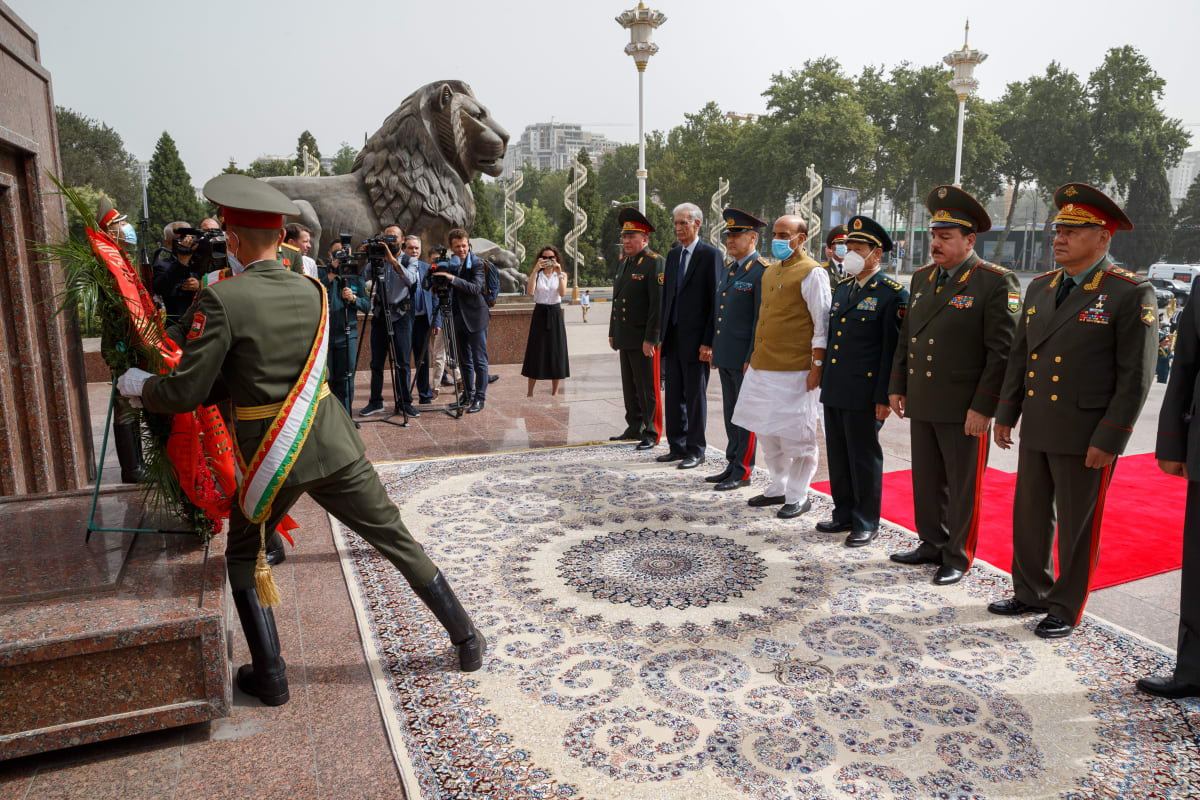
On June 18, 2024, Defence Minister Rajnath Singh met his Tajik counterpart Colonel General Sherali Mirzo at the President’s Palace in Dushanbe. The two leaders exchanged remarks on the evolving security architecture of Central Asia and signed a memorandum of understanding (MoU) that outlines a multi‑year cooperation framework.
Participants and Setting
- Rajnath Singh – Defence Minister of India, representing the Ministry of Defence and the Indian Army.
- Colonel General Sherali Mirzo – Minister of Defence, Tajikistan.
- Senior officials from the Indian External Affairs Ministry, the Tajik Ministry of Foreign Affairs, and representatives from the Joint Chiefs of Staff of both nations.
- Media coverage from India Today, The Quint Voices, and ABP Live.
Core Agreements
- Joint Military Exercises – Initiation of annual bilateral drills focusing on mountain warfare and counter‑terrorism.
- Defense Production Collaboration – Exploration of co‑development of unmanned aerial systems (UAS) and satellite communication kits.
- Intelligence Sharing – Creation of a secure channel for real‑time exchange on extremist networks operating across the Afghan‑Tajik border.
- Capacity Building – Scholarships for Tajik officers to attend Indian defence academies and training institutions.
"Our partnership with Tajikistan is rooted in shared democratic values and a common resolve to ensure stability in this volatile region," Rajnath Singh said during the press briefing.
Geopolitical Context: Why This Matters
India's Strategic Shift in Central Asia
For decades, India’s outreach to Central Asian republics has been limited by logistical challenges and the dominance of Russia and China. The Dushanbe meeting signals a calibrated shift:
- Balancing China’s Belt‑and‑Road Initiative (BRI) – Tajikistan is a key node in the BRI; India’s deeper engagement offers an alternative partnership.
- Counter‑terrorism – The Islamic State Khorasan Province (ISKP) and other militant outfits exploit porous borders; joint intelligence can blunt their operations.
- Energy and Trade Corridors – Tajikistan’s hydro‑power potential and its position as a transit hub for Afghan trade present economic opportunities for Indian firms.
Tajikistan's Security Landscape
Tajikistan faces a triple threat:
- Border insecurity with Afghanistan, where Taliban‑aligned groups occasionally spill over.
- Domestic radicalization fueled by unemployment and limited infrastructure.
- Great‑Power Competition – Moscow maintains a military base in Tajikistan, while Beijing invests heavily in infrastructure.
By diversifying its defence partners, Tajikistan aims to reduce over‑reliance on any single power and leverage India’s advanced but non‑aligned defence technology.
Reactions from Stakeholders
Indian Diplomatic Circles
- The Ministry of External Affairs hailed the MoU as “a milestone in Indo‑Central Asian cooperation.”
- Strategic analysts view the move as part of Prime Minister Narendra Modi’s broader “Act East, Connect Central Asia” policy.
Regional Powers
- Russia issued a neutral statement, emphasizing its long‑standing security partnership with Tajikistan but welcoming “any initiative that enhances regional stability.”
- The United States issued a brief note, noting that the agreement aligns with its own Afghan‑centric security framework.
- China has not publicly commented yet, but diplomatic cables suggest a watchful stance given the strategic overlap with its BRI projects.
Potential Outcomes and Challenges
Defence Cooperation Roadmap
- Phase‑1 (2024‑2025): Conduct the inaugural joint exercise “Mountain Shield” in the Pamir ranges, focusing on high‑altitude logistics.
- Phase‑2 (2025‑2027): Set up a joint R&D centre in Dushanbe for UAV prototypes, leveraging India’s DRDO expertise.
- Phase‑3 (2027 onward): Expand cooperation to maritime security via the Indian Ocean Region, using Tajikistan’s land‑locked status as a strategic conduit for over‑land trade.
Economic and Security Implications
- Trade Boost: Indian firms could tap into Tajikistan’s hydropower projects, potentially exporting Indian engineering services.
- Security Gains: Enhanced border surveillance may reduce cross‑border insurgent infiltration, benefitting both nations.
- Risk of Over‑extension: India must balance its commitments in the Indo‑Pacific with new Central Asian responsibilities.
Editorial Analysis & Future Outlook
The Dushanbe dialogue is more than a diplomatic courtesy; it is a strategic inflection point for India’s foreign‑defence policy. By cementing ties with Tajikistan, New Delhi is crafting a multi‑vector approach that simultaneously:
- Counters China’s BRI dominance in a region where Beijing has invested over $3 billion in infrastructure.
- Diversifies its security portfolio, reducing over‑reliance on traditional partners like the United States.
- Creates economic footholds that could translate into long‑term trade corridors linking Central Asia to Indian ports via the Chabahar‑Lahore‑Kabul axis.
However, the success of this partnership hinges on implementation fidelity. Joint exercises must move beyond symbolic gestures to operational interoperability, and defence production collaborations need clear IP safeguards. Moreover, India must navigate the sensitive geopolitical dance with Russia and China, ensuring its overtures are perceived as stabilizing rather than antagonistic.
Looking ahead, if the MoU translates into tangible outcomes, we could witness a new security architecture in Central Asia where India plays a pivotal, albeit non‑hegemonic, role. This could reshape regional trade flows, bolster counter‑terrorism capabilities, and ultimately contribute to a more balanced power equilibrium in the heart of Asia.
Original Reporting & Source: India Today Top Stories

Discussion (0)
Sign in to join the discussion.
No comments yet. Be the first to start the conversation!