Umang Sisodia • • 5 min read • 1 view
BJP Accelerates Uttar Pradesh 2027 Campaign: Modi, Amit Shah & Nitin Nabin Rally Workers
Key Takeaways
- The BJP has launched an unprecedented mobilisation drive for the 2027 Uttar Pradesh assembly elections, deploying Prime Minister Narendra Modi, party chief Amit Shah and senior leader Nitin Nabin across the state.
- A blend of high‑visibility rallies, digital outreach and grassroots door‑to‑door canvassing aims to cement the party’s dominance in India’s most populous state.
- Opposition parties are scrambling to counter the BJP’s war‑room tactics, but internal fractures and resource constraints may limit their impact.
- Long‑term, the 2027 push could reshape the national political calculus, influencing coalition dynamics and policy direction for the next decade.
The Political Landscape of Uttar Pradesh
Uttar Pradesh (UP) remains the single most decisive battleground in Indian politics. With 403 assembly seats and a voter base exceeding 120 million, the state contributes roughly 30 % of Lok Sabha seats. Historically, the BJP’s 2017 landslide was built on a combination of Hindutva messaging, welfare schemes like the Pradhan Mantri Awas Yojana and a robust cadre network. However, the 2022 results showed a dip—BJP fell short of a super‑majority, while the Samajwadi Party (SP) and Bahujan Samaj Party (BSP) made modest gains. This mixed verdict has prompted the party’s top brass to recalibrate for 2027.
Why 2027 Is a Critical Juncture
The 2027 assembly poll is not just another state election; it is a litmus test for the BJP’s post‑Modi narrative. By then, Narendra Modi will have completed two full terms as Prime Minister, and the party’s ability to sustain its national agenda hinges on a strong foothold in UP. Moreover, demographic shifts—rising youth population, urban migration, and changing caste equations—make the upcoming contest more complex than the binary Hindu‑Muslim polarization that dominated earlier cycles.
The BJP’s Mobilisation Strategy
The party’s current thrust can be broken down into three coordinated fronts:
- High‑Profile Leadership Tours – Over the past two weeks, Modi, Amit Shah and Nitin Nabin have criss‑crossed the state, delivering speeches in Lucknow, Varanasi, Agra and remote districts like Bahraich. Their presence is meant to energise the core cadre and signal to voters that the central leadership is personally invested.
- Digital & Data‑Driven Outreach – Leveraging the BJP’s sophisticated IT cell, the campaign is deploying AI‑enhanced voter segmentation, WhatsApp forward chains, and geo‑targeted ads to tailor messages for specific caste and religious groups.
- Grassroots Cadre Activation – Thousands of karyakartas (workers) are being mobilised for door‑to‑door canvassing, pamphlet distribution, and micro‑rallies in villages and urban colonies.
"Our mission is simple: to ensure that every household in Uttar Pradesh hears the promise of development, security and dignity," said Amit Shah during a press briefing in Lucknow.
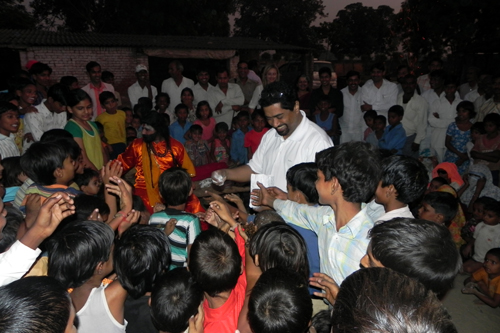 BJP workers distributing pamphlets rural Uttar Pradesh
Grassroots Machinery in Action
In the villages of eastern UP, volunteers are seen handing out colour‑coded pamphlets that highlight the BJP’s achievements in sanitation, electrification and agricultural subsidies. In the bustling streets of Kanpur, youth volunteers are organising flash mobs and selfie stations where supporters can capture themselves with the party’s symbols. This multi‑layered approach mirrors the party’s 2014‑2019 national campaigns, but with a sharper focus on local issues such as kisan loan waivers and Maa‑shakti schemes.
Opposition Response and Internal Fractures
The Samajwadi Party, led by Akhilesh Yadav, has attempted to rally a coalition of OBC and Muslim voters, but internal dissent over seat‑sharing has hampered a unified front. The BSP, under Mayawati, has signalled a willingness to align with the SP, yet the lack of a clear common agenda leaves voters uncertain. Meanwhile, the Congress, once a national heavyweight, remains marginal in UP, confined to a few urban pockets.
Implications for National Politics
If the BJP succeeds in delivering a decisive victory in the 2027 UP assembly, it will reinforce Narendra Modi’s vision of a “developmental Hindu nation” and likely embolden the party’s stance on contentious issues such as the Citizenship Amendment Act and agrarian reforms. Conversely, a setback could trigger a leadership re‑assessment, potentially accelerating the rise of younger faces within the party hierarchy.
The Role of Media and Public Perception
The surge in Google Trends for keywords like “BJP UP 2027 rally”, “Amit Shah mobilisation” and “Nitin Nabin campaign” reflects heightened public curiosity. Traditional media outlets are amplifying every rally, while social platforms are buzzing with memes, short‑form videos and live‑streamed speeches. This digital echo chamber not only fuels voter enthusiasm but also creates a feedback loop that pressures opposition parties to up their own media game.
Editorial Analysis & Future Outlook
The BJP’s current strategy is a textbook case of high‑stakes political engineering. By marrying top‑down leadership visibility with bottom‑up cadre activation, the party aims to lock in a generational mandate. However, the approach is not without risks. Over‑reliance on charismatic leaders can backfire if any misstep—be it a controversial statement or a policy blunder—spreads rapidly through the same digital channels the party uses for outreach.
Looking ahead, the 2027 Uttar Pradesh election will likely serve as a bellwether for the BJP’s national trajectory. A clean sweep could cement the party’s dominance for another decade, shaping fiscal policy, foreign relations and social legislation. On the other hand, a fragmented result may open space for a coalition government at the centre, compelling the BJP to negotiate with regional players and possibly temper its more polarising agendas.
In sum, the upcoming mobilisation drive is not merely a campaign sprint; it is a strategic marathon that will test the BJP’s organisational depth, its adaptability to evolving voter demographics, and its capacity to translate state‑level victories into sustained national governance.
This article is based on verified coverage from India Today Top Stories and incorporates independent analysis.
Original Reporting & Source: India Today Top Stories

Discussion (0)
Sign in to join the discussion.
No comments yet. Be the first to start the conversation!