Umang Sisodia • • 5 min read • 1 view
Starlink Restored in Ukraine Amid Musk‑Kyiv Clash Over Network Rules

Key Takeaways
- Starlink services in Ukraine have been declared fully operational after a brief disruption that raised security concerns.
- Elon Musk publicly accused Kyiv of breaching the satellite provider's usage policies, sparking a diplomatic tug‑of‑war.
- The episode underscores the growing strategic weight of private satellite constellations in modern warfare and the need for clear governance.
- Experts warn that future conflicts may see more friction between sovereign states and tech moguls over digital infrastructure.
Background
Since Russia’s full‑scale invasion in February 2022, Ukraine has leaned heavily on SpaceX’s Starlink constellation to keep its communications alive. The low‑earth‑orbit (LEO) network, with its ability to beam broadband internet to handheld terminals, became a lifeline for civilians, journalists, and the Ukrainian armed forces alike. By late 2023, more than 100,000 terminals were reportedly deployed across the country, turning the satellite mesh into a quasi‑national utility.
What Triggered the Recent Outage?
In early September 2024, Ukrainian officials reported a sudden dip in bandwidth and intermittent connectivity across several western regions. Initial statements suggested a technical glitch, but the timing—coinciding with a surge in Russian electronic‑warfare activity—prompted speculation about a deliberate jam.
SpaceX’s engineering team confirmed that a subset of the terminals had been throttled due to “policy violations,” a term that quickly morphed into a headline‑grabbing controversy. According to the company, the breaches involved the use of Starlink for “unapproved high‑throughput data transfers,” a vague clause that left analysts scrambling for meaning.
"We have clear usage guidelines for all customers, especially in conflict zones," Elon Musk said in a brief video address. "When those guidelines are ignored, we must act to protect the integrity of the network for everyone."
Rebuilding the Network
Within 48 hours, Ukrainian cyber‑units, in coordination with SpaceX engineers, rolled out a patch that restored the throttled terminals to full capacity. By September 5, the Ministry of Digital Transformation announced that Starlink service was “back to normal,” emphasizing that the temporary slowdown had not affected critical military communications.
The rapid response highlighted two key capabilities: the flexibility of software‑defined satellite constellations and the growing technical proficiency of Ukraine’s digital defense teams. It also demonstrated that private satellite operators can, under pressure, act swiftly to rectify service interruptions—provided there is a clear line of communication with the host nation.
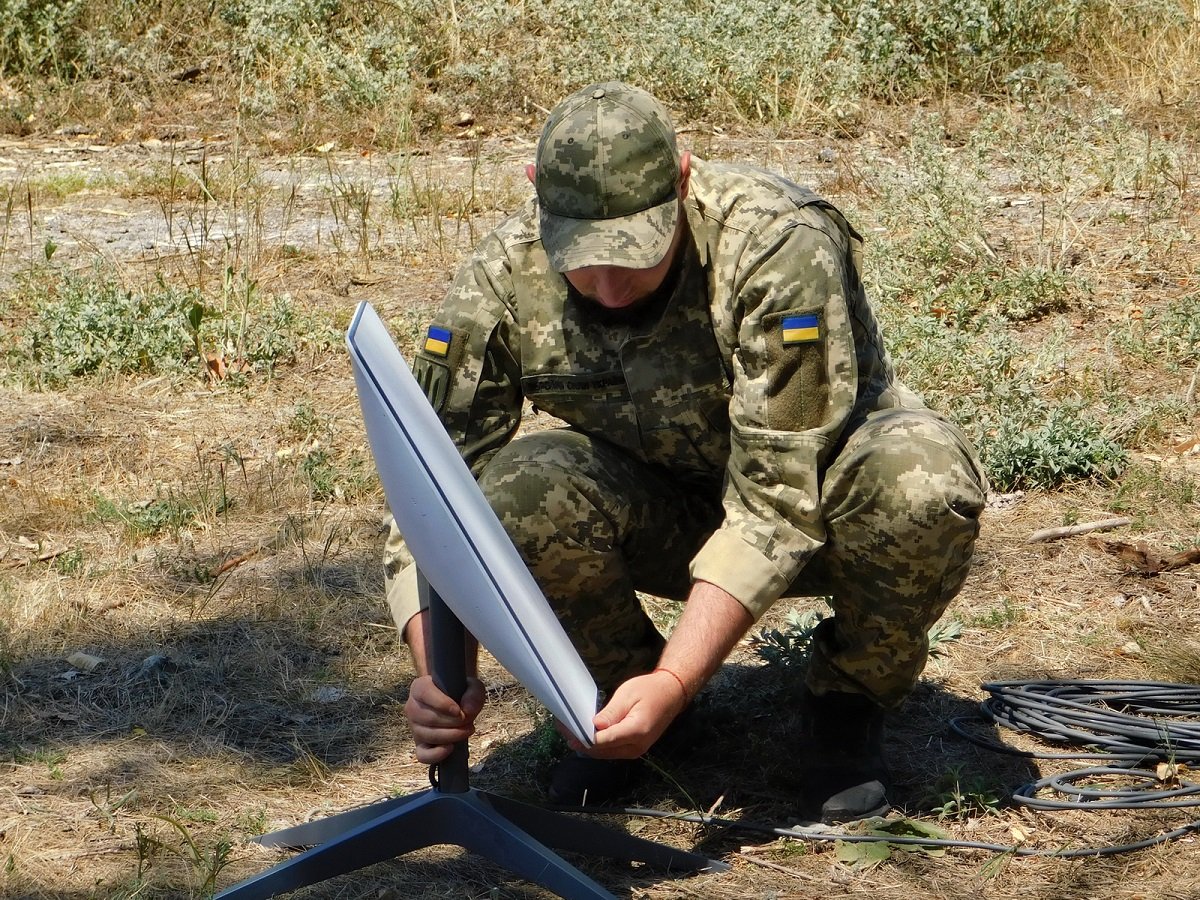 Ukrainian soldiers using Starlink
Musk’s Accusations and Kyiv’s Rebuttal
Musk’s public condemnation of Kyiv for “violating Starlink’s terms of service” ignited a diplomatic flare‑up. The Ukrainian government, through its spokesperson, dismissed the allegations as “mischaracterizations,” insisting that all data traffic was strictly for defense and humanitarian purposes.
The controversy resurfaced in Washington, where U.S. officials reminded both parties that the satellite service operates under a commercial contract, not a sovereign agreement. A senior State Department official noted, “We expect allies to respect contractual obligations, but we also recognize the extraordinary circumstances of an ongoing war.”
Geopolitical Ripple Effects
The incident reverberated beyond Kyiv’s borders. European allies, many of whom are also customers of Starlink for remote research stations, began reviewing their own contracts to ensure clarity around permissible usage during crises. Meanwhile, Russia leveraged the episode in its information campaign, alleging that Western tech firms were weaponizing civilian infrastructure.
Analysts argue that the episode may accelerate discussions at the United Nations on the regulation of private satellite constellations in conflict zones. The central question: Who governs the digital lifelines that become de‑facto public utilities during war?
The Broader Strategic Context
Starlink’s role in Ukraine is part of a larger trend where private tech giants are increasingly embedded in national security architectures. From Google’s AI tools assisting in disaster response to Amazon’s cloud services powering military logistics, the line between commercial and strategic assets is blurring.
In this environment, contractual language—often drafted in boardrooms far from battlefields—can become a flashpoint. The Ukrainian‑Musk dispute illustrates the need for pre‑emptive legal frameworks that balance commercial interests with the exigencies of war.
Lessons for Future Conflicts
- Clear Usage Policies: Nations must negotiate explicit terms that define permissible activities for satellite services in wartime.
- Rapid Incident Response: Joint cyber‑teams should be established to troubleshoot and remediate service disruptions within hours.
- Diplomatic Channels: Direct lines of communication between corporate leadership and government officials can prevent public spats that may jeopardize operational continuity.
Editorial Analysis & Future Outlook
The Starlink episode is a microcosm of the evolving battlefield where bits and bytes are as decisive as shells and missiles. As LEO constellations proliferate—SpaceX, OneWeb, Amazon’s Project Kuiper—their strategic importance will only deepen. This brings two converging trajectories:
- Regulatory Momentum: Expect a surge in multilateral talks aimed at codifying the responsibilities of private satellite operators during armed conflict. The International Telecommunication Union (ITU) may soon host working groups dedicated to “Conflict‑Era Satellite Governance.”
- Technological Arms Race: Nations will likely invest in anti‑jamming technologies and develop sovereign satellite constellations to mitigate dependence on commercial providers. Ukraine’s swift restoration of Starlink shows the value of technical agility, but also the vulnerability of relying on a single vendor.
In the medium term, the Musk‑Kyiv clash could serve as a case study in business‑state relations under fire. Companies will be pressed to embed war‑time contingencies into service level agreements, while governments will push for sovereign control over critical communications.
Ultimately, the resilience of Ukraine’s digital infrastructure will hinge on a delicate balance: leveraging private innovation without ceding strategic autonomy. The Starlink saga, now back to “normal,” may well be the first chapter in a longer story about how the private sector and nation‑states co‑author the rules of modern warfare.
Original Reporting & Source: Reuters

Discussion (0)
Sign in to join the discussion.
No comments yet. Be the first to start the conversation!