Umang Sisodia • • 6 min read • 1 view
Is the Paris Climate Accord Crumbling? An In‑Depth Look at the Global Climate Crisis
Key Takeaways
- The Paris Agreement faces unprecedented challenges from geopolitical shifts, financing gaps, and rising emissions.
- Major economies are renegotiating commitments, but climate‑friendly policies are still gaining traction at the sub‑national level.
- Upcoming COP28 and new carbon‑pricing mechanisms could revive momentum, though the road ahead remains fraught.
- Long‑term climate resilience hinges on aligning economic recovery plans with net‑zero targets.
Introduction
The phrase "Earth in danger zone" has resurfaced across headlines, social feeds, and policy briefings, prompting a fresh debate: Is the Paris Climate Agreement dead? While the accord remains legally binding for 196 parties, its effectiveness is under intense scrutiny. Recent data from the United Nations Framework Convention on Climate Change (UNFCCC) shows global greenhouse‑gas emissions are still on an upward trajectory, and the deadline to limit warming to 1.5 °C looms ever closer. This article unpacks why the Paris pact is under fire, examines the forces reshaping its future, and outlines what a post‑Paris world might look like.
The Genesis and Core Pillars of the Paris Deal
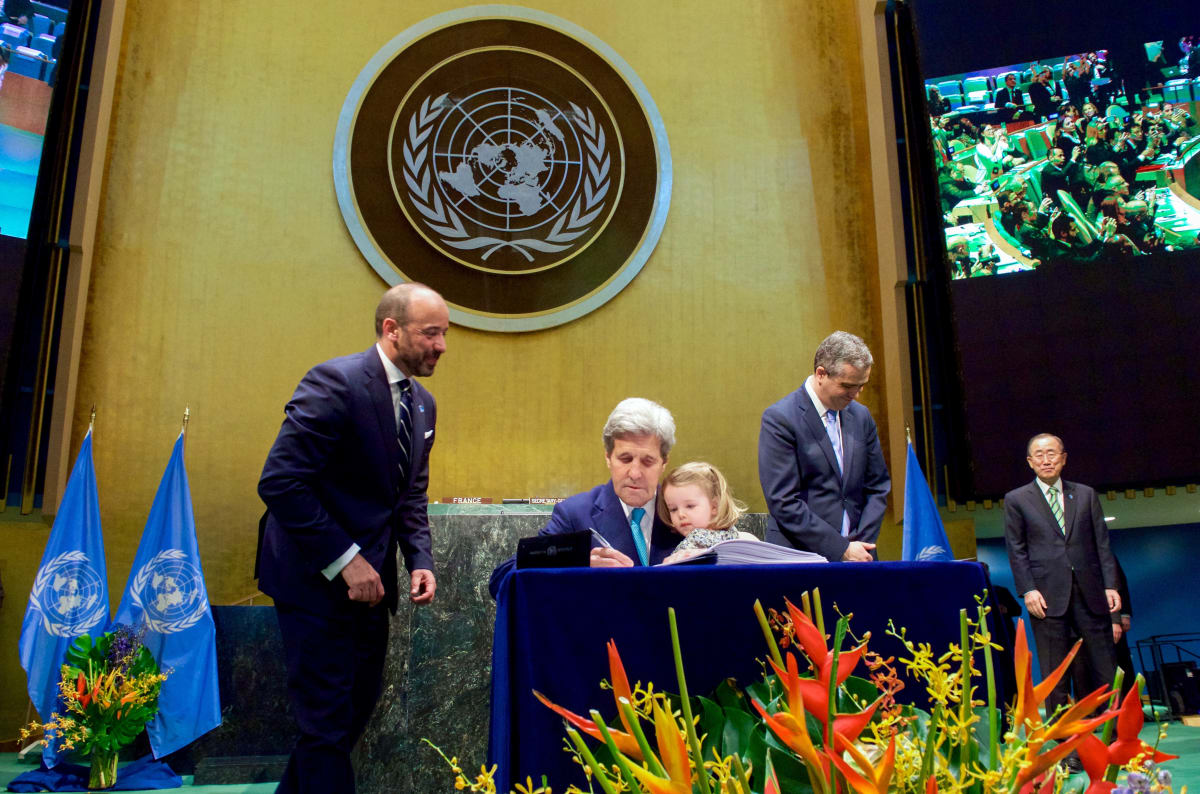
In December 2015, leaders gathered under the Eiffel Tower to sign a historic accord that shifted climate diplomacy from top‑down mandates to nationally determined contributions (NDCs). The agreement rests on three pillars:
- Mitigation – each country submits an NDC outlining emission‑reduction targets.
- Adaptation – nations commit to strengthening resilience against climate impacts.
- Finance – developed economies pledge $100 billion annually to support developing nations.
These pillars were designed to be dynamic: every five years, parties are expected to submit increasingly ambitious NDCs, creating a ratcheting mechanism toward net‑zero.
The Current State of the Agreement
Emission Gaps and NDC Shortfalls
A 2023 UNFCCC synthesis report revealed that current NDCs would only limit warming to about 2.7 °C by 2100—well above the 1.5 °C ceiling. Major emitters such as the United States, China, and the European Union have revised their targets, but the aggregate ambition remains insufficient.
"We are staring at a climate budget that is rapidly being exhausted," noted Dr. Fatih Birol, Executive Director of the International Energy Agency, in a recent briefing.
Financing Deficits
The promised $100 billion climate finance from developed nations has consistently fallen short. According to the OECD, only $83 billion was mobilized in 2022, leaving a $17 billion shortfall that fuels skepticism among vulnerable countries.
Institutional Strains
The UNFCCC secretariat is grappling with budget constraints, while the global stock‑take scheduled for 2023 highlighted divergent interpretations of accountability, further eroding trust.
Geopolitical Pressures Reshaping the Pact
U.S. Policy Oscillations
The United States’ brief withdrawal under the Trump administration (2020‑2021) sent shockwaves through the climate community. Although the Biden administration re‑joined and set a 2030 emissions reduction target of 50‑52% below 2005 levels, domestic political polarization makes long‑term policy continuity uncertain.
China’s Dual‑Track Strategy
China, the world’s largest emitter, has pledged carbon neutrality by 2060 and a peak in emissions before 2030. However, its continued reliance on coal—evident in the construction of new plants in 2024—raises doubts about the feasibility of these timelines.
Emerging Economies and Energy Security
Post‑COVID‑19 recovery plans in India, Brazil, and Indonesia prioritize affordable energy, often favoring fossil fuels. The tension between energy security and climate ambition is a recurring theme in negotiations.
Societal Momentum: From Streets to City Halls
While national governments wrestle with politics, sub‑national actors are forging ahead. Cities like Copenhagen, Melbourne, and Detroit have pledged to achieve net‑zero emissions ahead of national schedules, leveraging renewable energy projects, electric‑vehicle fleets, and green infrastructure.
Grassroots movements—most notably the Fridays for Future protests—continue to pressure leaders, ensuring climate discourse remains a top‑of‑mind issue for voters worldwide.
The Role of Technology and Market Mechanisms
Carbon Pricing Evolution
Carbon markets have expanded dramatically. The EU Emissions Trading System (ETS) now covers over 40% of the bloc’s emissions, and new schemes are emerging in China and North America. However, price volatility and concerns over “carbon leakage” persist.
Innovation as a Catalyst
Breakthroughs in green hydrogen, advanced battery storage, and direct air capture are reshaping the mitigation landscape. Private‑sector investments in clean tech reached a record $500 billion in 2023, indicating that market forces could supplement policy gaps.
Upcoming COP28: A Litmus Test for Paris
The United Nations Climate Change Conference (COP28) in Dubai is poised to be a decisive moment. Key agenda items include:
- Finalising the global stock‑take to assess collective progress.
- Negotiating a new loss‑and‑damage fund for vulnerable nations.
- Strengthening the transparency framework for NDC reporting.
Analysts argue that a robust, consensus‑driven outcome could reinvigorate the Paris framework, while a fragmented or weak agreement might accelerate discussions about a successor treaty.
Why the Paris Agreement Is Not Yet Dead
Despite the challenges, several factors keep the accord alive:
- Legal Binding Nature – The treaty’s universal ratification creates a diplomatic baseline that is hard to discard.
- Economic Integration – Global supply chains now incorporate climate risk assessments, making abrupt withdrawal costly.
- Public Expectation – Voter demand for climate action continues to rise, especially among younger demographics.
In essence, the Paris Agreement functions more as a living document, adapting to political, economic, and technological shifts rather than a static contract.
Editorial Analysis & Future Outlook
The Paris Climate Agreement stands at a crossroads. Its structural flexibility—the NDC‑driven approach—has enabled it to survive geopolitical turbulence, yet that same flexibility has also led to ambition gaps that threaten its core climate goals.
Looking ahead, the next decade will be defined by three interlocking dynamics:
- Policy Alignment – Nations must synchronize climate objectives with post‑pandemic recovery plans, embedding green stimulus into fiscal policies.
- Finance Mobilisation – Closing the climate‑finance gap will require innovative mechanisms, such as green bonds, climate‑linked loans, and public‑private partnerships.
- Technological Diffusion – Scaling low‑carbon technologies will lower the cost curve, making deeper emissions cuts economically viable.
If COP28 delivers a clear, enforceable roadmap—including a transparent compliance mechanism and a credible loss‑and‑damage fund—the Paris framework could experience a renaissance, positioning it as the backbone of global climate governance for the next 30 years.
Conversely, a lackluster outcome may embolden dissenting voices to champion a new treaty, potentially fracturing the consensus that the Paris Agreement has cultivated. In that scenario, we could witness a dual‑track system: a revamped Paris pact for willing parties and a separate coalition of climate‑leadership nations forging a more aggressive protocol.
Ultimately, the fate of the Paris Agreement will be decided not merely by diplomatic rhetoric but by tangible actions on the ground—from renewable‑energy deployments in rural India to carbon‑pricing reforms in Europe. The world’s climate future hinges on whether these actions coalesce into a coherent, accelerated pathway toward net‑zero.
The question is no longer if the Paris Agreement is dead, but how it will evolve to meet the existential challenge of a warming planet.
Original Reporting & Source: India Today Top Stories

Discussion (0)
Sign in to join the discussion.
No comments yet. Be the first to start the conversation!