Umang Sisodia • • 6 min read • 5 views

Punjab's First Women’s Open‑Air Jail: A Bold Reform Unveiled in Patiala
Listen to Article
Select a voice and press play
Punjab's First Women’s Open‑Air Jail: A Bold Reform Unveiled in Patiala

Key Takeaways

  • Punjab's jail minister inaugurates the state’s inaugural women’s open‑air jail in Patiala, marking a shift toward rehabilitative penal policies.
  • The facility aims to integrate vocational training, mental‑health support, and community engagement for low‑risk female inmates.
  • While officials hail it as a progressive step, human‑rights groups raise concerns about safety, oversight, and the adequacy of resources.
  • The inauguration has sparked broader debates on gender‑sensitive corrections, rural‑urban disparities, and the future of India’s prison reforms.

Setting the Stage: Punjab’s Penal Landscape

Punjab, a state often in the national spotlight for its agricultural bounty and vibrant culture, has grappled with a prison overcrowding crisis for decades. According to the National Crime Records Bureau, the state's prison occupancy rate hovered around 115 % in 2022, with women’s prisons especially strained. Traditional facilities—characterized by high walls, limited sunlight, and minimal rehabilitative programs—have been criticized for perpetuating cycles of recidivism, particularly among female offenders who often juggle caregiving responsibilities and limited economic opportunities.

In response, the Punjab government, under the leadership of **Jail Minister Sanjay Kumar Bains, announced a pilot project: a women’s open‑air jail in Patiala, a historic city known for its royal heritage and educational institutions. The concept, inspired by Scandinavian correctional models, envisions a low‑security campus where inmates can work, study, and interact with the community under supervised conditions.


The Inauguration Event: A New Chapter in Punjab's Penal Reform

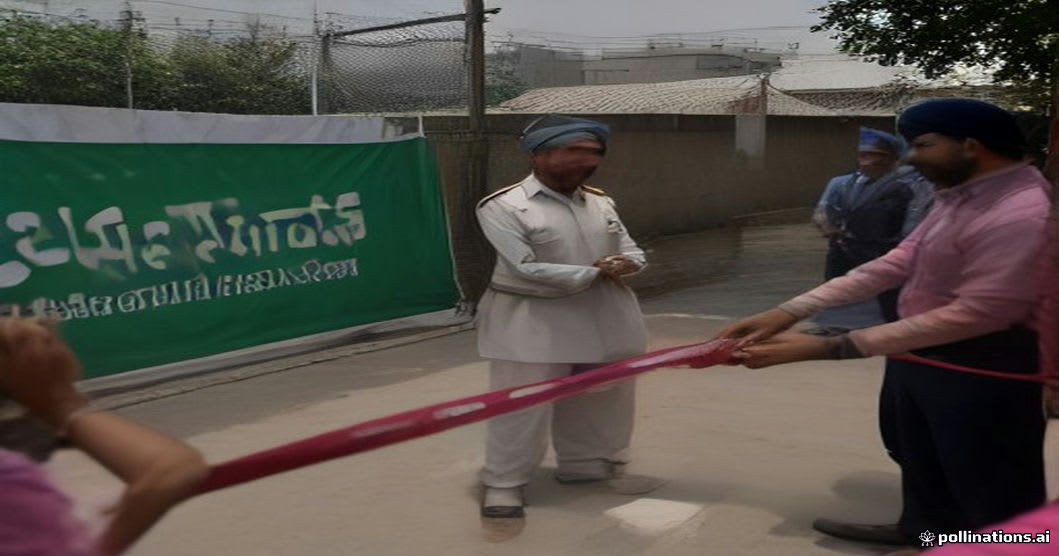
On October 24, 2026, the minister, accompanied by senior police officials, local dignitaries, and a handful of journalists, cut the ceremonial ribbon at the newly constructed complex on the outskirts of Patiala. The facility spans 12 acres, featuring cottage‑style dormitories, a vocational training center, a childcare nursery, and a modest garden where inmates cultivate vegetables.

"This is not merely a building; it is a promise that we will treat our women offenders with dignity, empower them with skills, and reintegrate them as productive members of society," the minister declared, his voice resonating across the assembled crowd.

The inauguration ceremony included a traditional Bhangra performance, symbolizing hope and renewal, and a moment of silence for victims of gender‑based violence—a poignant reminder of the delicate balance between compassion for inmates and justice for survivors.

Design Philosophy and Core Features

  • Open‑air architecture: High fences replaced by perimeter monitoring drones and electronic access points, allowing natural light and fresh air.
  • Vocational hubs: Tailored workshops in handloom weaving, organic farming, and digital literacy—skills aligned with local market demands.
  • Mental‑health suite: On‑site counselors provide group therapy, trauma-informed care, and addiction support.
  • Family integration zone: A childcare facility enables mothers to maintain bonds with their children, a critical factor in reducing post‑release relapse.

The minister emphasized that only low‑risk, non‑violent offenders would be admitted, based on a rigorous risk‑assessment matrix developed in collaboration with the National Institute of Criminology.


Socio‑Legal Implications and Community Reactions

The launch has ignited a multifaceted discourse across Punjab’s civil society. Pro‑reform advocates applaud the initiative as a progressive departure from punitive incarceration, arguing that open‑air prisons can dramatically cut recidivism rates. A recent study by the Punjab Policy Research Institute suggests that women who receive vocational training are 40 % less likely to reoffend.

Conversely, human‑rights organizations such as SAMPARK and Women’s Rights Watch caution that the model could expose vulnerable inmates to community stigma and potential abuse if oversight mechanisms are weak. Their statements call for:

  • Independent monitoring committees comprising NGOs, legal experts, and former inmates.
  • Transparent reporting of incidents, health outcomes, and reintegration metrics.
  • Adequate staffing—including trained female prison officers and mental‑health professionals.

Local residents of Patiala have expressed mixed feelings. While many welcome the economic boost—the facility employs 150 staff members and sources produce from nearby farms—some neighbors voice concerns over security and property values. The municipal council has pledged to conduct regular safety audits and engage in community outreach programs.

Gender‑Sensitive Corrections: A National Perspective

India’s prison system has historically overlooked gender‑specific needs. Women constitute ≈9 % of the total prison population, yet only 15 % of prisons have dedicated women’s wings. The Patiala open‑air jail could serve as a template for other states seeking to modernize their correctional infrastructure.

If successful, the model may influence the central government's upcoming Prison Reform Bill, which aims to incorporate gender‑responsive policies, alternative sentencing, and community‑based corrections.


Comparative Lens: Global Open‑Air Prisons

Scandinavian nations—Norway, Sweden, and Finland—have long championed open‑prison concepts that prioritize rehabilitation over isolation. Norway’s Bredtveit Prison, for instance, integrates education, work placements, and therapeutic programs, resulting in a recidivism rate of just 20 %, far below the global average of 50 %.

While cultural and socio‑economic contexts differ, Punjab’s pilot draws inspiration from these evidence‑based practices, adapting them to local realities such as rural agrarian economies and extended family structures.


Early Indicators and Metrics for Success

The Ministry of Home Affairs has outlined a five‑year evaluation framework:

  1. Occupancy rate – Targeting 80 % capacity to avoid overcrowding.
  2. Skill certification – At least 70 % of inmates to complete a vocational course.
  3. Post‑release employment – 60 % job placement within six months of release.
  4. Recidivism tracking – Monitoring re‑offense rates for three years.
  5. Well‑being index – Quarterly surveys measuring mental‑health outcomes.

Data transparency will be crucial. The government plans to publish annual dashboards on its portal, inviting academic scrutiny and public feedback.


Editorial Analysis & Future Outlook

The inauguration of Punjab’s women’s open‑air jail is a landmark experiment that could recalibrate the state’s penal philosophy. Its strength lies in marrying humane design with pragmatic skill‑building, potentially setting a new benchmark for gender‑responsive corrections in India.

However, success hinges on rigorous oversight, sustained funding, and community buy‑in. If the pilot demonstrates measurable reductions in recidivism and improved inmate well‑being, it could catalyze a cascade of similar facilities across the nation, influencing legislative reforms and reshaping public perception of incarceration.

In the long term, this initiative may bridge the gap between punishment and rehabilitation, fostering a more inclusive justice system that recognizes the unique challenges faced by women offenders. Yet, the journey from pilot to policy will require continuous dialogue among policymakers, civil society, and the incarcerated women themselves. Only through such collaborative stewardship can Punjab transform this bold vision into a lasting, equitable reality.


Original Reporting & Source: India Today Top Stories

Discussion (0)

Sign in to join the discussion.

No comments yet. Be the first to start the conversation!

| |

Punjab's First Women’s Open‑Air Jail: A Bold Reform Unveiled in Patiala

By Umang Sisodia • 6 min read • 5 views

Key Takeaways

  • Punjab's jail minister inaugurates the state’s inaugural women’s open‑air jail in Patiala, marking a shift toward rehabilitative penal policies.
  • The facility aims to integrate vocational training, mental‑health support, and community engagement for low‑risk female inmates.
  • While officials hail it as a progressive step, human‑rights groups raise concerns about safety, oversight, and the adequacy of resources.
  • The inauguration has sparked broader debates on gender‑sensitive corrections, rural‑urban disparities, and the future of India’s prison reforms.

Setting the Stage: Punjab’s Penal Landscape

Punjab, a state often in the national spotlight for its agricultural bounty and vibrant culture, has grappled with a prison overcrowding crisis for decades. According to the National Crime Records Bureau, the state's prison occupancy rate hovered around 115 % in 2022, with women’s prisons especially strained. Traditional facilities—characterized by high walls, limited sunlight, and minimal rehabilitative programs—have been criticized for perpetuating cycles of recidivism, particularly among female offenders who often juggle caregiving responsibilities and limited economic opportunities.

In response, the Punjab government, under the leadership of **Jail Minister Sanjay Kumar Bains, announced a pilot project: a women’s open‑air jail in Patiala, a historic city known for its royal heritage and educational institutions. The concept, inspired by Scandinavian correctional models, envisions a low‑security campus where inmates can work, study, and interact with the community under supervised conditions.


The Inauguration Event: A New Chapter in Punjab's Penal Reform

On October 24, 2026, the minister, accompanied by senior police officials, local dignitaries, and a handful of journalists, cut the ceremonial ribbon at the newly constructed complex on the outskirts of Patiala. The facility spans 12 acres, featuring cottage‑style dormitories, a vocational training center, a childcare nursery, and a modest garden where inmates cultivate vegetables.

"This is not merely a building; it is a promise that we will treat our women offenders with dignity, empower them with skills, and reintegrate them as productive members of society," the minister declared, his voice resonating across the assembled crowd.

The inauguration ceremony included a traditional Bhangra performance, symbolizing hope and renewal, and a moment of silence for victims of gender‑based violence—a poignant reminder of the delicate balance between compassion for inmates and justice for survivors.

Design Philosophy and Core Features

  • Open‑air architecture: High fences replaced by perimeter monitoring drones and electronic access points, allowing natural light and fresh air.
  • Vocational hubs: Tailored workshops in handloom weaving, organic farming, and digital literacy—skills aligned with local market demands.
  • Mental‑health suite: On‑site counselors provide group therapy, trauma-informed care, and addiction support.
  • Family integration zone: A childcare facility enables mothers to maintain bonds with their children, a critical factor in reducing post‑release relapse.

The minister emphasized that only low‑risk, non‑violent offenders would be admitted, based on a rigorous risk‑assessment matrix developed in collaboration with the National Institute of Criminology.


Socio‑Legal Implications and Community Reactions

The launch has ignited a multifaceted discourse across Punjab’s civil society. Pro‑reform advocates applaud the initiative as a progressive departure from punitive incarceration, arguing that open‑air prisons can dramatically cut recidivism rates. A recent study by the Punjab Policy Research Institute suggests that women who receive vocational training are 40 % less likely to reoffend.

Conversely, human‑rights organizations such as SAMPARK and Women’s Rights Watch caution that the model could expose vulnerable inmates to community stigma and potential abuse if oversight mechanisms are weak. Their statements call for:

  • Independent monitoring committees comprising NGOs, legal experts, and former inmates.
  • Transparent reporting of incidents, health outcomes, and reintegration metrics.
  • Adequate staffing—including trained female prison officers and mental‑health professionals.

Local residents of Patiala have expressed mixed feelings. While many welcome the economic boost—the facility employs 150 staff members and sources produce from nearby farms—some neighbors voice concerns over security and property values. The municipal council has pledged to conduct regular safety audits and engage in community outreach programs.

Gender‑Sensitive Corrections: A National Perspective

India’s prison system has historically overlooked gender‑specific needs. Women constitute ≈9 % of the total prison population, yet only 15 % of prisons have dedicated women’s wings. The Patiala open‑air jail could serve as a template for other states seeking to modernize their correctional infrastructure.

If successful, the model may influence the central government's upcoming Prison Reform Bill, which aims to incorporate gender‑responsive policies, alternative sentencing, and community‑based corrections.


Comparative Lens: Global Open‑Air Prisons

Scandinavian nations—Norway, Sweden, and Finland—have long championed open‑prison concepts that prioritize rehabilitation over isolation. Norway’s Bredtveit Prison, for instance, integrates education, work placements, and therapeutic programs, resulting in a recidivism rate of just 20 %, far below the global average of 50 %.

While cultural and socio‑economic contexts differ, Punjab’s pilot draws inspiration from these evidence‑based practices, adapting them to local realities such as rural agrarian economies and extended family structures.


Early Indicators and Metrics for Success

The Ministry of Home Affairs has outlined a five‑year evaluation framework:

  1. Occupancy rate – Targeting 80 % capacity to avoid overcrowding.
  2. Skill certification – At least 70 % of inmates to complete a vocational course.
  3. Post‑release employment – 60 % job placement within six months of release.
  4. Recidivism tracking – Monitoring re‑offense rates for three years.
  5. Well‑being index – Quarterly surveys measuring mental‑health outcomes.

Data transparency will be crucial. The government plans to publish annual dashboards on its portal, inviting academic scrutiny and public feedback.


Editorial Analysis & Future Outlook

The inauguration of Punjab’s women’s open‑air jail is a landmark experiment that could recalibrate the state’s penal philosophy. Its strength lies in marrying humane design with pragmatic skill‑building, potentially setting a new benchmark for gender‑responsive corrections in India.

However, success hinges on rigorous oversight, sustained funding, and community buy‑in. If the pilot demonstrates measurable reductions in recidivism and improved inmate well‑being, it could catalyze a cascade of similar facilities across the nation, influencing legislative reforms and reshaping public perception of incarceration.

In the long term, this initiative may bridge the gap between punishment and rehabilitation, fostering a more inclusive justice system that recognizes the unique challenges faced by women offenders. Yet, the journey from pilot to policy will require continuous dialogue among policymakers, civil society, and the incarcerated women themselves. Only through such collaborative stewardship can Punjab transform this bold vision into a lasting, equitable reality.


Original Reporting & Source: India Today Top Stories