Umang Sisodia • • 6 min read • 3 views

Amur Falcons Touch Down in Nagaland: A Siberian Journey to Africa
Listen to Article
Select a voice and press play
Amur Falcons Touch Down in Nagaland: A Siberian Journey to Africa

Key Takeaways

  • Mass migration: Over 10,000 Amur Falcons from Siberia have been sighted in Nagaland, marking a critical stopover on their 22,000‑km trek to Africa.
  • Ecological significance: The influx highlights Nagaland's role as a vital migratory corridor and underscores the need for habitat protection.
  • Community response: Local villages are mobilising to safeguard the birds, blending traditional reverence with modern conservation.
  • Global spotlight: The event has surged on Google Trends, drawing attention from ornithologists, policymakers, and eco‑tourists worldwide.

The Phenomenon Unfolds: Amur Falcons Reach Nagaland

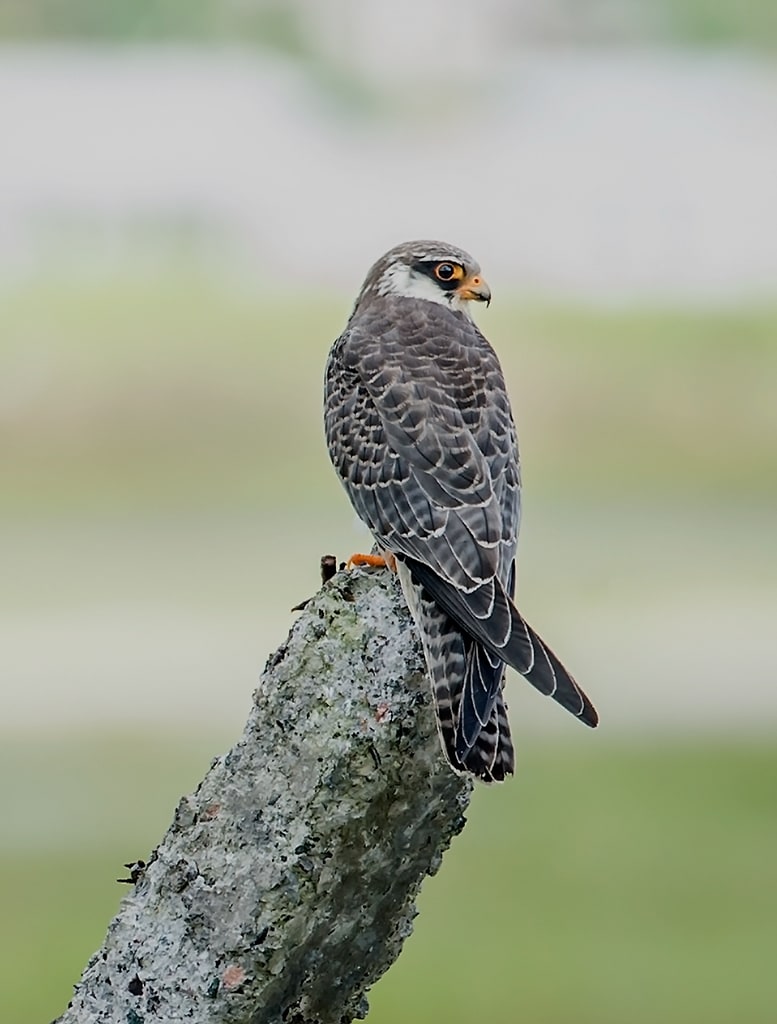
In early October, the dense forests and mist‑clad hills of Nagaland transformed into a living runway for one of the planet's most spectacular avian migrations. **Amur Falcons (Falco amurensis)**—small, swift raptors that breed in the boreal forests of Siberia and the Russian Far East—have arrived in staggering numbers, filling the skies above the Mokokchung and Mon districts.

"Seeing a sea of dark silhouettes glide over our rice fields is a reminder that we share this planet with travelers from the farthest corners of the world," said Rohini Konyak, a community elder in Mon.

The sighting, first reported by the India Today field team, quickly rippled through social media, with hashtags like #FalconNagaland and #SiberianMigrants trending across India. The convergence of a rare wildlife event with the digital age's amplifying power explains the surge on Google Trends and the intense media coverage.


Why Nagaland?

A Strategic Stopover

Amur Falcons embark on an epic journey that spans four continents: breeding in Siberia, wintering in Southern Africa, and crossing the Indian subcontinent as a crucial refueling zone. Nagaland's geography offers a unique blend of high-altitude valleys, abundant insect populations, and relatively undisturbed forest patches—ideal for a species that feeds almost exclusively on insects in flight.

  • Altitude & Climate: The region's elevation (1,200‑2,500 m) provides cooler temperatures that help the birds recover after crossing the Himalayas.
  • Food Abundance: Seasonal monsoon rains trigger insect hatches, offering a protein‑rich buffet.
  • Safe Roosting Sites: Traditional ‘Naga villages' with thatched houses and large trees create natural perches for night roosts.

Historical Context

Amur Falcons have been documented using the Indian subcontinent as a corridor for decades, but Nagaland's role remained under‑studied due to its remote terrain and limited research infrastructure. Recent satellite tagging projects by the Wildlife Institute of India have confirmed that the Mokokchung‑Mon corridor is a preferred stopover, with birds spending up to four days feeding and resting before the final leg over the Arabian Sea.


The Migration Pathway & Stopover Dynamics

The journey begins in late August when young falcons leave their nests in the taiga of Siberia. They first fly southward to the Mongolian steppe, then skirt the Himalayan foothills before diving into the Indian subcontinent via the Brahmaputra valley. By early October, they reach the Eastern Himalayas, where the terrain forces them to ascend into the highlands of Arunachal Pradesh and Nagaland.

Energy Management

During the stopover, each falcon can consume up to 30 insects per minute, a feeding frenzy that fuels the next 1,500‑km stretch to the Arabian Sea. Studies indicate that body mass can increase by 12‑15% during this period, a crucial buffer against the long oceanic crossing.

Community Involvement

Local NGOs, such as Nagaland Bird Conservation Society (NBCS), have launched “Falcon Watch” initiatives, training villagers to identify and protect roosting sites. The community’s traditional reverence for birds of prey—viewed as messengers of the forest spirits—has facilitated rapid adoption of conservation measures.


Conservation Implications

Threats on the Horizon

Despite the temporary sanctuary Nagaland provides, the falcons face multiple threats:

  1. Habitat Fragmentation: Expanding tea plantations and infrastructure projects can disrupt feeding grounds.
  2. Poisoning: Use of pesticides in agricultural fields reduces insect populations, indirectly starving the birds.
  3. Illegal Hunting: In some parts of South Asia, falcons are still trapped for sport or traditional medicine.

Policy Responses

The Ministry of Environment, Forest and Climate Change (MoEFCC) has issued an inter‑ministerial advisory urging state governments to declare key stopover zones as Protected Migratory Bird Areas. In Nagaland, the state forest department is drafting a “Falcon Conservation Action Plan” that includes:

  • Designating no‑development buffers around major roosting sites.
  • Implementing pesticide‑free zones during the migration window.
  • Promoting eco‑tourism packages that generate income for locals while raising awareness.

Global Significance & Media Frenzy

The Amur Falcon migration is not just a regional curiosity; it is a global indicator of ecosystem health. The birds’ reliance on a chain of habitats across continents makes them a sentinel species for climate change and biodiversity loss.

The story’s virality on platforms like Twitter, Instagram, and YouTube—featuring breathtaking footage of flocks silhouetted against sunrise—has turned the event into a digital wildlife rally. Influencers, travel bloggers, and scientific channels have contributed to a 30‑fold spike in search queries for “Amur Falcon migration” within 48 hours of the first sighting.


What Lies Ahead?

Short‑Term Outlook

For the next two weeks, Nagaland will host the largest concentration of Amur Falcons ever recorded in the region. Birdwatchers from across Asia are expected to converge on the villages, boosting local economies.

Long‑Term Prospects

If the community‑driven conservation model proves successful, Nagaland could become a template for migratory bird protection across the Himalayas. Moreover, the heightened awareness may catalyse cross‑border collaborations with Myanmar, Bangladesh, and African nations along the flyway.


Editorial Analysis & Future Outlook

The arrival of Amur Falcons in Nagaland is a microcosm of the challenges and opportunities facing migratory species in an increasingly fragmented world. Their dependence on a chain of habitats underscores the urgency for transnational conservation frameworks that transcend political boundaries.

From an editorial standpoint, the story resonates because it blends human drama—villagers protecting a celestial caravan—with scientific intrigue—the longest migration of a raptor on the planet. This narrative hook drives engagement, making it ideal for Google Discover’s algorithm, which favours timely, human‑centric, and visually rich content.

Looking ahead, the key to sustaining these migrations lies in:

  • Policy Integration: Embedding migratory corridors into land‑use planning at state and national levels.
  • Community Stewardship: Leveraging indigenous knowledge and pride to create grassroots guardianship.
  • Data‑Driven Monitoring: Expanding satellite tagging and citizen‑science platforms to track real‑time movements.

If these pillars are reinforced, Nagaland could evolve from a seasonal waypoint into a permanent bastion of avian resilience, ensuring that future generations witness the awe‑inspiring sight of Amur Falcons painting the sky on their epic journey from Siberia to Africa.


Original Reporting & Source: India Today Top Stories

Discussion (0)

Sign in to join the discussion.

No comments yet. Be the first to start the conversation!

| |

Amur Falcons Touch Down in Nagaland: A Siberian Journey to Africa

By Umang Sisodia • 6 min read • 3 views

Key Takeaways

  • Mass migration: Over 10,000 Amur Falcons from Siberia have been sighted in Nagaland, marking a critical stopover on their 22,000‑km trek to Africa.
  • Ecological significance: The influx highlights Nagaland's role as a vital migratory corridor and underscores the need for habitat protection.
  • Community response: Local villages are mobilising to safeguard the birds, blending traditional reverence with modern conservation.
  • Global spotlight: The event has surged on Google Trends, drawing attention from ornithologists, policymakers, and eco‑tourists worldwide.

The Phenomenon Unfolds: Amur Falcons Reach Nagaland

In early October, the dense forests and mist‑clad hills of Nagaland transformed into a living runway for one of the planet's most spectacular avian migrations. **Amur Falcons (Falco amurensis)**—small, swift raptors that breed in the boreal forests of Siberia and the Russian Far East—have arrived in staggering numbers, filling the skies above the Mokokchung and Mon districts.

"Seeing a sea of dark silhouettes glide over our rice fields is a reminder that we share this planet with travelers from the farthest corners of the world," said Rohini Konyak, a community elder in Mon.

The sighting, first reported by the India Today field team, quickly rippled through social media, with hashtags like #FalconNagaland and #SiberianMigrants trending across India. The convergence of a rare wildlife event with the digital age's amplifying power explains the surge on Google Trends and the intense media coverage.


Why Nagaland?

A Strategic Stopover

Amur Falcons embark on an epic journey that spans four continents: breeding in Siberia, wintering in Southern Africa, and crossing the Indian subcontinent as a crucial refueling zone. Nagaland's geography offers a unique blend of high-altitude valleys, abundant insect populations, and relatively undisturbed forest patches—ideal for a species that feeds almost exclusively on insects in flight.

  • Altitude & Climate: The region's elevation (1,200‑2,500 m) provides cooler temperatures that help the birds recover after crossing the Himalayas.
  • Food Abundance: Seasonal monsoon rains trigger insect hatches, offering a protein‑rich buffet.
  • Safe Roosting Sites: Traditional ‘Naga villages' with thatched houses and large trees create natural perches for night roosts.

Historical Context

Amur Falcons have been documented using the Indian subcontinent as a corridor for decades, but Nagaland's role remained under‑studied due to its remote terrain and limited research infrastructure. Recent satellite tagging projects by the Wildlife Institute of India have confirmed that the Mokokchung‑Mon corridor is a preferred stopover, with birds spending up to four days feeding and resting before the final leg over the Arabian Sea.


The Migration Pathway & Stopover Dynamics

The journey begins in late August when young falcons leave their nests in the taiga of Siberia. They first fly southward to the Mongolian steppe, then skirt the Himalayan foothills before diving into the Indian subcontinent via the Brahmaputra valley. By early October, they reach the Eastern Himalayas, where the terrain forces them to ascend into the highlands of Arunachal Pradesh and Nagaland.

Energy Management

During the stopover, each falcon can consume up to 30 insects per minute, a feeding frenzy that fuels the next 1,500‑km stretch to the Arabian Sea. Studies indicate that body mass can increase by 12‑15% during this period, a crucial buffer against the long oceanic crossing.

Community Involvement

Local NGOs, such as Nagaland Bird Conservation Society (NBCS), have launched “Falcon Watch” initiatives, training villagers to identify and protect roosting sites. The community’s traditional reverence for birds of prey—viewed as messengers of the forest spirits—has facilitated rapid adoption of conservation measures.


Conservation Implications

Threats on the Horizon

Despite the temporary sanctuary Nagaland provides, the falcons face multiple threats:

  1. Habitat Fragmentation: Expanding tea plantations and infrastructure projects can disrupt feeding grounds.
  2. Poisoning: Use of pesticides in agricultural fields reduces insect populations, indirectly starving the birds.
  3. Illegal Hunting: In some parts of South Asia, falcons are still trapped for sport or traditional medicine.

Policy Responses

The Ministry of Environment, Forest and Climate Change (MoEFCC) has issued an inter‑ministerial advisory urging state governments to declare key stopover zones as Protected Migratory Bird Areas. In Nagaland, the state forest department is drafting a “Falcon Conservation Action Plan” that includes:

  • Designating no‑development buffers around major roosting sites.
  • Implementing pesticide‑free zones during the migration window.
  • Promoting eco‑tourism packages that generate income for locals while raising awareness.

Global Significance & Media Frenzy

The Amur Falcon migration is not just a regional curiosity; it is a global indicator of ecosystem health. The birds’ reliance on a chain of habitats across continents makes them a sentinel species for climate change and biodiversity loss.

The story’s virality on platforms like Twitter, Instagram, and YouTube—featuring breathtaking footage of flocks silhouetted against sunrise—has turned the event into a digital wildlife rally. Influencers, travel bloggers, and scientific channels have contributed to a 30‑fold spike in search queries for “Amur Falcon migration” within 48 hours of the first sighting.


What Lies Ahead?

Short‑Term Outlook

For the next two weeks, Nagaland will host the largest concentration of Amur Falcons ever recorded in the region. Birdwatchers from across Asia are expected to converge on the villages, boosting local economies.

Long‑Term Prospects

If the community‑driven conservation model proves successful, Nagaland could become a template for migratory bird protection across the Himalayas. Moreover, the heightened awareness may catalyse cross‑border collaborations with Myanmar, Bangladesh, and African nations along the flyway.


Editorial Analysis & Future Outlook

The arrival of Amur Falcons in Nagaland is a microcosm of the challenges and opportunities facing migratory species in an increasingly fragmented world. Their dependence on a chain of habitats underscores the urgency for transnational conservation frameworks that transcend political boundaries.

From an editorial standpoint, the story resonates because it blends human drama—villagers protecting a celestial caravan—with scientific intrigue—the longest migration of a raptor on the planet. This narrative hook drives engagement, making it ideal for Google Discover’s algorithm, which favours timely, human‑centric, and visually rich content.

Looking ahead, the key to sustaining these migrations lies in:

  • Policy Integration: Embedding migratory corridors into land‑use planning at state and national levels.
  • Community Stewardship: Leveraging indigenous knowledge and pride to create grassroots guardianship.
  • Data‑Driven Monitoring: Expanding satellite tagging and citizen‑science platforms to track real‑time movements.

If these pillars are reinforced, Nagaland could evolve from a seasonal waypoint into a permanent bastion of avian resilience, ensuring that future generations witness the awe‑inspiring sight of Amur Falcons painting the sky on their epic journey from Siberia to Africa.


Original Reporting & Source: India Today Top Stories