Umang Sisodia • • 5 min read • 2 views

Delhi’s AQI Plummets to ‘Very Poor’ on Diwali Eve: Health Risks, Policy Gaps, and What Lies Ahead

Listen to Article
Select a voice and press play
Delhi’s AQI Plummets to ‘Very Poor’ on Diwali Eve: Health Risks, Policy Gaps, and What Lies Ahead

Key Takeaways

  • Delhi’s AQI hit ‘Very Poor’ levels on Diwali Eve, crossing 300 in several monitoring stations, posing acute health hazards.
  • Firecrackers, stagnant winter weather, and pre‑existing pollution combined to create a perfect smog storm.
  • Government mitigation measures remain fragmented, with limited real‑time enforcement and public awareness.
  • Long‑term solutions require stricter firecracker bans, robust monitoring, and community‑driven clean‑air initiatives.

The Day’s Air Quality Snapshot

On the evening of 13 November 2023, Delhi’s real‑time Air Quality Index (AQI) surged to the ‘Very Poor’ category across the National Capital Region (NCR). The Central Pollution Control Board (CPCB) recorded an average AQI of 312, with hotspots in areas like Patparganj, Rohini, and South Delhi touching 350+. For context, an AQI above 300 is classified as hazardous, meaning even healthy individuals may experience severe respiratory distress.

"The numbers we are seeing are not just statistics; they are a public health emergency," said Dr. Ritu Sharma, senior pulmonologist at AIIMS, in a press briefing on Diwali Eve.

Why the AQI Spikes on Diwali?

  1. Firecracker Emissions – Traditional crackers release a cocktail of pollutants: sulfur dioxide (SO₂), nitrogen oxides (NOₓ), particulate matter (PM₂.₅ & PM₁₀), and heavy metals like lead and mercury.
  2. Winter Inversion Layers – Delhi’s winter climate creates temperature inversions that trap pollutants close to the ground, preventing dispersion.
  3. Pre‑Existing Smog – The city entered Diwali already battling high baseline levels of PM₂.₅ from vehicular traffic, construction dust, and industrial output.
  4. Reduced Wind Speed – Meteorological data showed wind speeds dropping below 1 km/h, further limiting the natural cleansing of the atmosphere.

Government Response and Public Alerts

The Delhi Pollution Control Committee (DPCC) issued an ‘Alert Level 3’ advisory at 4 pm, urging citizens to:

  • Stay indoors and keep windows shut.
  • Use N‑95 masks or higher filtration respirators.
  • Limit outdoor physical activities, especially for children, the elderly, and those with chronic illnesses.

The municipal corporation also activated temporary traffic restrictions on major arteries like the Outer Ring Road and Ring Road, allowing only emergency and public transport vehicles. However, enforcement was uneven, with many private vehicles still on the road.
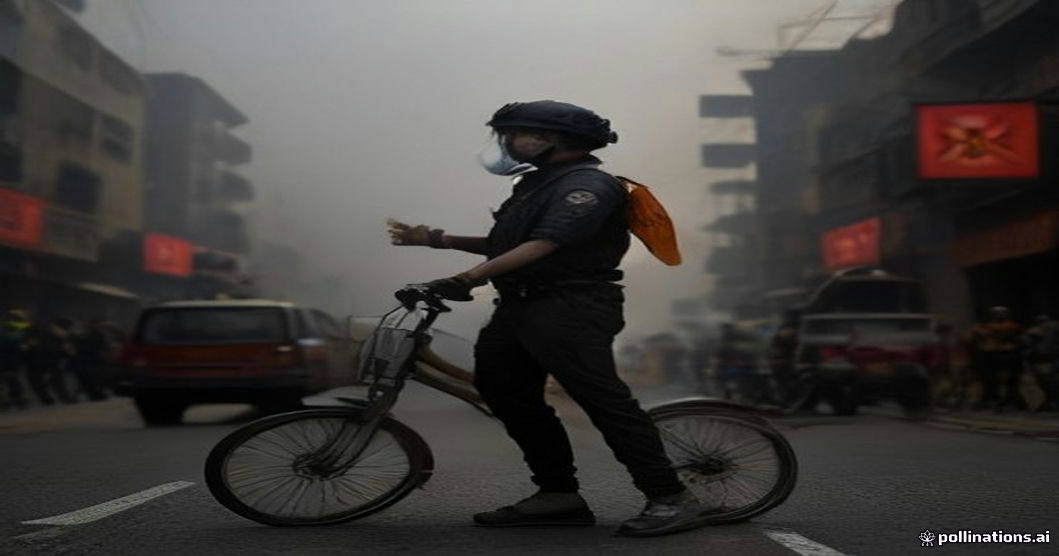
Delhi firecracker ban enforcement Delhi firecracker ban enforcement

Health Impact: From Short‑Term Irritation to Long‑Term Burden

Exposure to AQI levels above 300 can trigger:

  • Acute bronchitis and asthma attacks.
  • Cardiovascular strain, increasing the risk of heart attacks.
  • Eye and throat irritation due to high concentrations of SO₂ and NOₓ.

A study by the Indian Council of Medical Research (ICMR) estimates that each day of ‘Very Poor’ air quality can add 0.5% to annual mortality rates in vulnerable populations. In Delhi, this translates to potentially hundreds of excess deaths during the Diwali period alone.

Public Sentiment and Social Media Pulse

Twitter, Instagram, and regional forums lit up with hashtags like #DiwaliSmog, #BreatheDelhi, and #NoFirecrackers. While many users expressed frustration over the government's lax enforcement, a notable segment advocated for eco‑friendly fireworks made from biodegradable materials.

Policy Landscape: Existing Rules vs. Ground Reality

  • The 2017 Supreme Court ban on firecrackers in Delhi is still in effect, but exemptions for “cultural” celebrations create loopholes.
  • The National Clean Air Programme (NCAP), launched in 2019, set a target to reduce PM₂.₅ by 20‑30% by 2024, yet progress remains sluggish.
  • State‑level ordinances introduced in 2022 mandated a ‘no‑firecracker’ zone within a 10‑km radius of the Delhi‑Gurgaon border, but compliance monitoring is limited.

Gaps Highlighted by the Diwali Spike

  1. Inadequate Real‑Time Enforcement – CCTV and drone surveillance have been piloted, but scaling remains a challenge.
  2. Lack of Public Awareness Campaigns – Many citizens are unaware of the health thresholds for AQI categories.
  3. Insufficient Alternatives – Eco‑firecrackers are pricier and less available, discouraging widespread adoption.

Comparative Lens: How Other Cities Handle Festival Pollution

Cities like Beijing and Bangkok have introduced mandatory “silent fireworks” zones and strict fines for violators during major festivals. Their success hinges on robust monitoring networks and community outreach, offering a roadmap for Delhi.

Editorial Analysis & Future Outlook

The Diwali‑night AQI crisis underscores a structural disconnect between policy intent and on‑ground execution. While the legal framework to curb firecracker emissions exists, enforcement is hampered by cultural inertia, limited resources, and fragmented jurisdiction between Delhi and neighboring states.

Short‑Term Outlook: Expect a repeat of hazardous AQI levels for the next 2‑3 days as the smoke settles and winter inversion persists. Health services will likely see a surge in respiratory complaints, stretching emergency departments.

Mid‑Term Outlook (6‑12 months): The growing public outcry may push the Delhi government to tighten firecracker bans, introduce real‑time penalty systems via mobile apps, and scale up low‑cost air‑purifying units in schools and hospitals.

Long‑Term Outlook (2‑5 years): Sustainable change will depend on:

  • Integrating air‑quality data into smart‑city platforms for predictive alerts.
  • Promoting green alternatives through subsidies and mass‑media campaigns.
  • Embedding climate‑resilient urban planning that expands green belts and reduces vehicular congestion.

If Delhi can convert this crisis into a catalyst for holistic, data‑driven clean‑air governance, the city could set a precedent for other Indian metros grappling with seasonal smog. Until then, each Diwali will remain a stark reminder that celebration and health must coexist, not clash.


The author is a senior chief editor and photojournalist with extensive experience covering environmental health crises across South Asia.


Original Reporting & Source: The Quint

Discussion (0)

Sign in to join the discussion.

No comments yet. Be the first to start the conversation!

| |

Delhi’s AQI Plummets to ‘Very Poor’ on Diwali Eve: Health Risks, Policy Gaps, and What Lies Ahead

By Umang Sisodia • 5 min read • 2 views

Key Takeaways

  • Delhi’s AQI hit ‘Very Poor’ levels on Diwali Eve, crossing 300 in several monitoring stations, posing acute health hazards.
  • Firecrackers, stagnant winter weather, and pre‑existing pollution combined to create a perfect smog storm.
  • Government mitigation measures remain fragmented, with limited real‑time enforcement and public awareness.
  • Long‑term solutions require stricter firecracker bans, robust monitoring, and community‑driven clean‑air initiatives.

The Day’s Air Quality Snapshot

On the evening of 13 November 2023, Delhi’s real‑time Air Quality Index (AQI) surged to the ‘Very Poor’ category across the National Capital Region (NCR). The Central Pollution Control Board (CPCB) recorded an average AQI of 312, with hotspots in areas like Patparganj, Rohini, and South Delhi touching 350+. For context, an AQI above 300 is classified as hazardous, meaning even healthy individuals may experience severe respiratory distress.

"The numbers we are seeing are not just statistics; they are a public health emergency," said Dr. Ritu Sharma, senior pulmonologist at AIIMS, in a press briefing on Diwali Eve.

Why the AQI Spikes on Diwali?

  1. Firecracker Emissions – Traditional crackers release a cocktail of pollutants: sulfur dioxide (SO₂), nitrogen oxides (NOₓ), particulate matter (PM₂.₅ & PM₁₀), and heavy metals like lead and mercury.
  2. Winter Inversion Layers – Delhi’s winter climate creates temperature inversions that trap pollutants close to the ground, preventing dispersion.
  3. Pre‑Existing Smog – The city entered Diwali already battling high baseline levels of PM₂.₅ from vehicular traffic, construction dust, and industrial output.
  4. Reduced Wind Speed – Meteorological data showed wind speeds dropping below 1 km/h, further limiting the natural cleansing of the atmosphere.

Government Response and Public Alerts

The Delhi Pollution Control Committee (DPCC) issued an ‘Alert Level 3’ advisory at 4 pm, urging citizens to:

  • Stay indoors and keep windows shut.
  • Use N‑95 masks or higher filtration respirators.
  • Limit outdoor physical activities, especially for children, the elderly, and those with chronic illnesses.

The municipal corporation also activated temporary traffic restrictions on major arteries like the Outer Ring Road and Ring Road, allowing only emergency and public transport vehicles. However, enforcement was uneven, with many private vehicles still on the road.

Delhi firecracker ban enforcement Delhi firecracker ban enforcement

Health Impact: From Short‑Term Irritation to Long‑Term Burden

Exposure to AQI levels above 300 can trigger:

  • Acute bronchitis and asthma attacks.
  • Cardiovascular strain, increasing the risk of heart attacks.
  • Eye and throat irritation due to high concentrations of SO₂ and NOₓ.

A study by the Indian Council of Medical Research (ICMR) estimates that each day of ‘Very Poor’ air quality can add 0.5% to annual mortality rates in vulnerable populations. In Delhi, this translates to potentially hundreds of excess deaths during the Diwali period alone.

Public Sentiment and Social Media Pulse

Twitter, Instagram, and regional forums lit up with hashtags like #DiwaliSmog, #BreatheDelhi, and #NoFirecrackers. While many users expressed frustration over the government's lax enforcement, a notable segment advocated for eco‑friendly fireworks made from biodegradable materials.

Policy Landscape: Existing Rules vs. Ground Reality

  • The 2017 Supreme Court ban on firecrackers in Delhi is still in effect, but exemptions for “cultural” celebrations create loopholes.
  • The National Clean Air Programme (NCAP), launched in 2019, set a target to reduce PM₂.₅ by 20‑30% by 2024, yet progress remains sluggish.
  • State‑level ordinances introduced in 2022 mandated a ‘no‑firecracker’ zone within a 10‑km radius of the Delhi‑Gurgaon border, but compliance monitoring is limited.

Gaps Highlighted by the Diwali Spike

  1. Inadequate Real‑Time Enforcement – CCTV and drone surveillance have been piloted, but scaling remains a challenge.
  2. Lack of Public Awareness Campaigns – Many citizens are unaware of the health thresholds for AQI categories.
  3. Insufficient Alternatives – Eco‑firecrackers are pricier and less available, discouraging widespread adoption.

Comparative Lens: How Other Cities Handle Festival Pollution

Cities like Beijing and Bangkok have introduced mandatory “silent fireworks” zones and strict fines for violators during major festivals. Their success hinges on robust monitoring networks and community outreach, offering a roadmap for Delhi.

Editorial Analysis & Future Outlook

The Diwali‑night AQI crisis underscores a structural disconnect between policy intent and on‑ground execution. While the legal framework to curb firecracker emissions exists, enforcement is hampered by cultural inertia, limited resources, and fragmented jurisdiction between Delhi and neighboring states.

Short‑Term Outlook: Expect a repeat of hazardous AQI levels for the next 2‑3 days as the smoke settles and winter inversion persists. Health services will likely see a surge in respiratory complaints, stretching emergency departments.

Mid‑Term Outlook (6‑12 months): The growing public outcry may push the Delhi government to tighten firecracker bans, introduce real‑time penalty systems via mobile apps, and scale up low‑cost air‑purifying units in schools and hospitals.

Long‑Term Outlook (2‑5 years): Sustainable change will depend on:

  • Integrating air‑quality data into smart‑city platforms for predictive alerts.
  • Promoting green alternatives through subsidies and mass‑media campaigns.
  • Embedding climate‑resilient urban planning that expands green belts and reduces vehicular congestion.

If Delhi can convert this crisis into a catalyst for holistic, data‑driven clean‑air governance, the city could set a precedent for other Indian metros grappling with seasonal smog. Until then, each Diwali will remain a stark reminder that celebration and health must coexist, not clash.


The author is a senior chief editor and photojournalist with extensive experience covering environmental health crises across South Asia.


Original Reporting & Source: The Quint