Umang Sisodia • • 6 min read • 1 view
Netanyahu’s India Pivot: A Hedge Against a Potentially Hostile US Administration
Key Takeaways
- Israeli Prime Minister Benjamin Netanyahu is actively deepening ties with India to diversify strategic options amid uncertainties in U.S. politics.
- The move is driven by concerns over a possible future U.S. administration less sympathetic to Israel’s security agenda.
- India‑Israel cooperation is expanding beyond defense to technology, agriculture, and renewable energy, reflecting a broader convergence of interests.
- Long‑term implications could reshape regional power dynamics, influencing U.S., China, and Middle‑East calculations.
The Immediate Context: Netanyahu’s Strategic Pivot
In a series of high‑profile statements and diplomatic overtures over the past week, Israeli Prime Minister Benjamin Netanyahu has signaled a clear intent to strengthen Israel’s partnership with India. The narrative, first reported by India Today and amplified across global news wires, frames the outreach as a hedge against the prospect of a future U.S. president whose policies might be “hostile” or, at the very least, less aligned with Israel’s security imperatives.
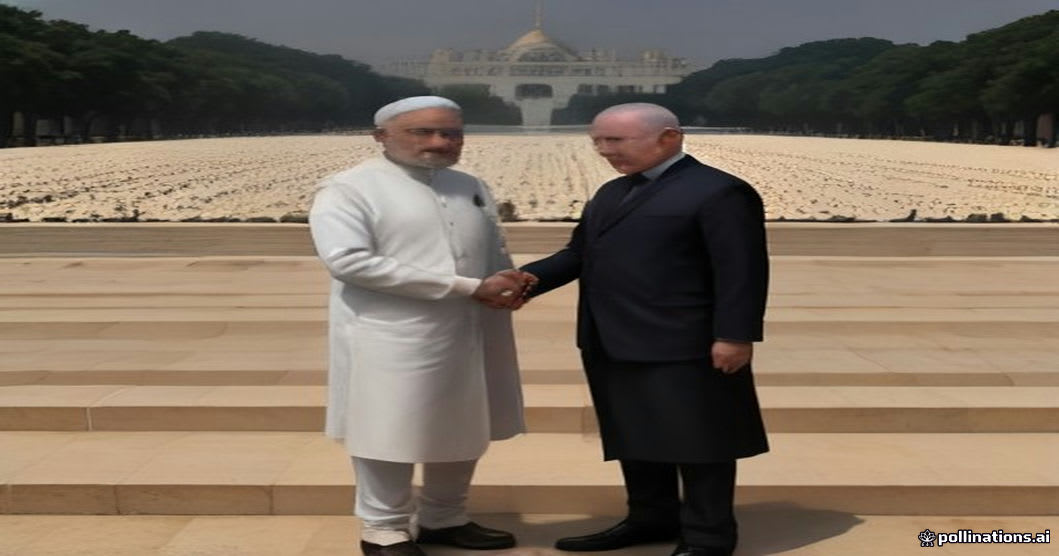
Netanyahu’s remarks came during a press conference in New Delhi, where he met with Indian officials, including Prime Minister Narendra Modi and External Affairs Minister Dr. S. Jaishankar. The Israeli leader emphasized shared democratic values, mutual concerns over terrorism, and the need for “strategic depth” in an increasingly multipolar world. While the overture is not a sudden departure from a long‑standing Israel‑India relationship, the tone underscores a heightened urgency.
"We must ensure that Israel has reliable partners on the global stage, irrespective of political winds in Washington," Netanyahu asserted, echoing a sentiment that resonates with Israel’s broader diplomatic recalibration.
Why the Story is Trending on Google and News Wires
The headline has surged on Google Trends for several reasons:
- U.S. Election Cycle – With the 2024 U.S. presidential election looming, analysts and pundits are speculating about the foreign‑policy outlook of potential candidates. Any indication that Israel is preparing for a less favorable U.S. stance naturally captures public attention.
- Geopolitical Realignment – India’s ascent as a strategic partner for both Washington and Beijing makes its engagement with Israel a focal point for discussions on the emerging “triangular” power balance in Asia.
- Defense and Technology Deals – Recent announcements of joint ventures in defense manufacturing, cybersecurity, and agricultural technology have added commercial weight to the diplomatic narrative.
- Social Media Amplification – Influential political commentators and think‑tank experts have been dissecting the move on platforms like Twitter and LinkedIn, driving organic search traffic.
These factors combine to create a perfect storm for virality, prompting search engines to surface the story prominently.
Historical Backdrop of India‑Israel Relations
India and Israel established full diplomatic relations in 1992, after decades of covert cooperation. Since then, the partnership has evolved through several phases:
- 1990s–2000s: Focus on agricultural technology and limited defense sales.
- 2010s: A decisive shift under Prime Minister Modi, with landmark defense contracts, including the procurement of Israeli drones, missiles, and radar systems.
- 2020‑2022: Joint initiatives in water management, renewable energy, and a high‑profile visit by Israeli Defense Minister Yoav Gallant to New Delhi.
The current pivot builds on this foundation, but it is distinguished by its explicit framing as a strategic hedge against U.S. policy volatility.
Geopolitical Calculus: US Politics, China, and the Middle East
Netanyahu’s outreach cannot be examined in isolation; it sits at the intersection of three major geopolitical vectors:
1. US Political Uncertainty
A potential U.S. administration that prioritises a different Middle‑East agenda—perhaps focusing more on Iran diplomacy or scaling back military aid—could leave Israel vulnerable. By deepening ties with India, Israel seeks an alternative security anchor.
2. China’s Growing Influence
India’s delicate balancing act between the U.S. and China adds another layer. While New Delhi remains wary of Beijing’s Belt‑and‑Road initiatives, it also values economic engagement. Israel’s expertise in high‑tech and defense can serve as a counter‑weight to Chinese offerings, giving India a diversified portfolio of partners.
3. Regional Dynamics
The Middle East is witnessing a realignment, with the Abraham Accords normalising ties between Israel and several Gulf states. India’s growing energy imports from the Gulf, coupled with its strategic interest in maritime security, make Israel’s naval and cyber capabilities especially attractive.
Economic & Defense Dimensions
The diplomatic overture is underpinned by concrete economic and defense projects:
- Defense Collaboration: Recent MoUs cover joint development of unmanned aerial systems (UAS), anti‑missile technology, and cyber‑defense training modules. Israel’s Iron Dome technology is being explored for adaptation in Indian coastal defense.
- Agricultural Innovation: Israeli drip‑irrigation and desert‑farming solutions are being piloted in the arid regions of Rajasthan and Gujarat, promising water‑security gains.
- Technology Transfer: Start‑up exchanges and joint research labs in AI, fintech, and quantum computing are slated for launch under the “Indo‑Israeli Innovation Hub” announced during the New Delhi meeting.
- Energy Cooperation: Discussions on renewable‑energy joint ventures, especially solar‑panel manufacturing and grid‑storage solutions, signal a forward‑looking agenda beyond immediate security concerns.
These initiatives reflect a multifaceted partnership that extends far beyond the traditional defense‑first narrative.
Editorial Analysis & Future Outlook
Netanyahu’s India pivot is emblematic of a broader shift in Israeli foreign policy: moving from a U.S.-centric paradigm to a multilateral one. This strategic diversification is likely to have several long‑term repercussions:
- Rebalancing of Alliances – As Israel cultivates deeper ties with India, it may gain leverage in negotiations with Washington, signaling that Israel has viable alternatives.
- Impact on US‑India Relations – Washington, keen on maintaining India as a cornerstone of its Indo‑Pacific strategy, may view Israel’s overtures as complementary rather than competitive, potentially fostering a tri‑partite cooperation model.
- Regional Stability – A stronger Israel‑India axis could act as a stabilising factor in the Indian Ocean, especially concerning maritime security against piracy and potential Chinese naval expansion.
- Domestic Political Calculus – For Netanyahu, showcasing proactive diplomacy reinforces his domestic standing ahead of upcoming Israeli elections, portraying him as a leader who secures Israel’s future irrespective of external uncertainties.
In conclusion, the Netanyahu‑India dialogue is more than a diplomatic courtesy; it is a calculated move to insulate Israel from the unpredictable currents of U.S. politics while simultaneously offering India a high‑tech partner that can complement its own strategic ambitions. The trajectory of this relationship will likely be a bellwether for how smaller states navigate great‑power competition in the 2020s.
Original Reporting & Source: India Today Top Stories

Discussion (0)
Sign in to join the discussion.
No comments yet. Be the first to start the conversation!