Umang Sisodia • • 6 min read • 1 view

Japan’s MMX Mission: Mars’ Moon Dust Heading to Earth – What It Means for Science

Listen to Article
Select a voice and press play
Japan’s MMX Mission: Mars’ Moon Dust Heading to Earth – What It Means for Science

Key Takeaways

  • Japan’s MMX (Mars Moons eXploration) mission aims to retrieve samples from Phobos, Mars’ larger moon, and bring them back to Earth by 2029.
  • The mission is the first ever to attempt a sample‑return from a Martian satellite, offering clues about the origin of the moons and the early Solar System.
  • International collaboration is intensifying, with NASA, ESA and Indian agencies eyeing data sharing and joint research opportunities.
  • Successful return could revolutionize planetary protection protocols and spark a new era of commercial deep‑space ventures.

In the past week, searches for “Mars के चांद से धरती पर आएगी मिट्टी” have spiked across India, driven by India Today’s coverage of Japan’s ambitious MMX (Mars Moons eXploration) mission. Unlike the high‑profile Mars rovers that land on the red planet itself, MMX targets Phobos, one of Mars’ two tiny moons. The prospect of extraterrestrial soil landing on Earth has captured the public imagination, blending scientific curiosity with a dash of sci‑fi drama.

The buzz is also fueled by a broader narrative: humanity’s next giant leap may not be a manned landing on Mars, but a sample‑return from its moons. This subtle shift has analysts re‑evaluating space‑policy priorities, budget allocations, and the role of emerging space nations like India and the United Arab Emirates.


Mission Overview: From Launch to Lunar Capture

On July 7, 2024, a sleek JAXA‑built spacecraft lifted off from the Tanegashima Space Center atop an H‑III rocket. The launch was livestreamed globally, with a packed press hall in Tokyo and a virtual audience of millions. MMX carries a dual‑probe system:

  • MASCOT (Mars‑Phobos Sample‑Collecting Orbiter) – the main spacecraft that will orbit Mars, map Phobos, and deploy a lander.
  • MUSES‑C (Mars‑Phobos Sample‑Collecting Lander) – a compact lander equipped with a robotic arm and a drill to collect regolith up to 10 cm deep.

After a 7‑month cruise, MMX will perform a Mars orbit insertion maneuver, followed by a series of Phobos fly‑bys to refine its trajectory. The mission’s timeline is tight: land on Phobos by 2025, collect at least 10 grams of material, and launch back to Earth in 2026, with a targeted return in 2029.
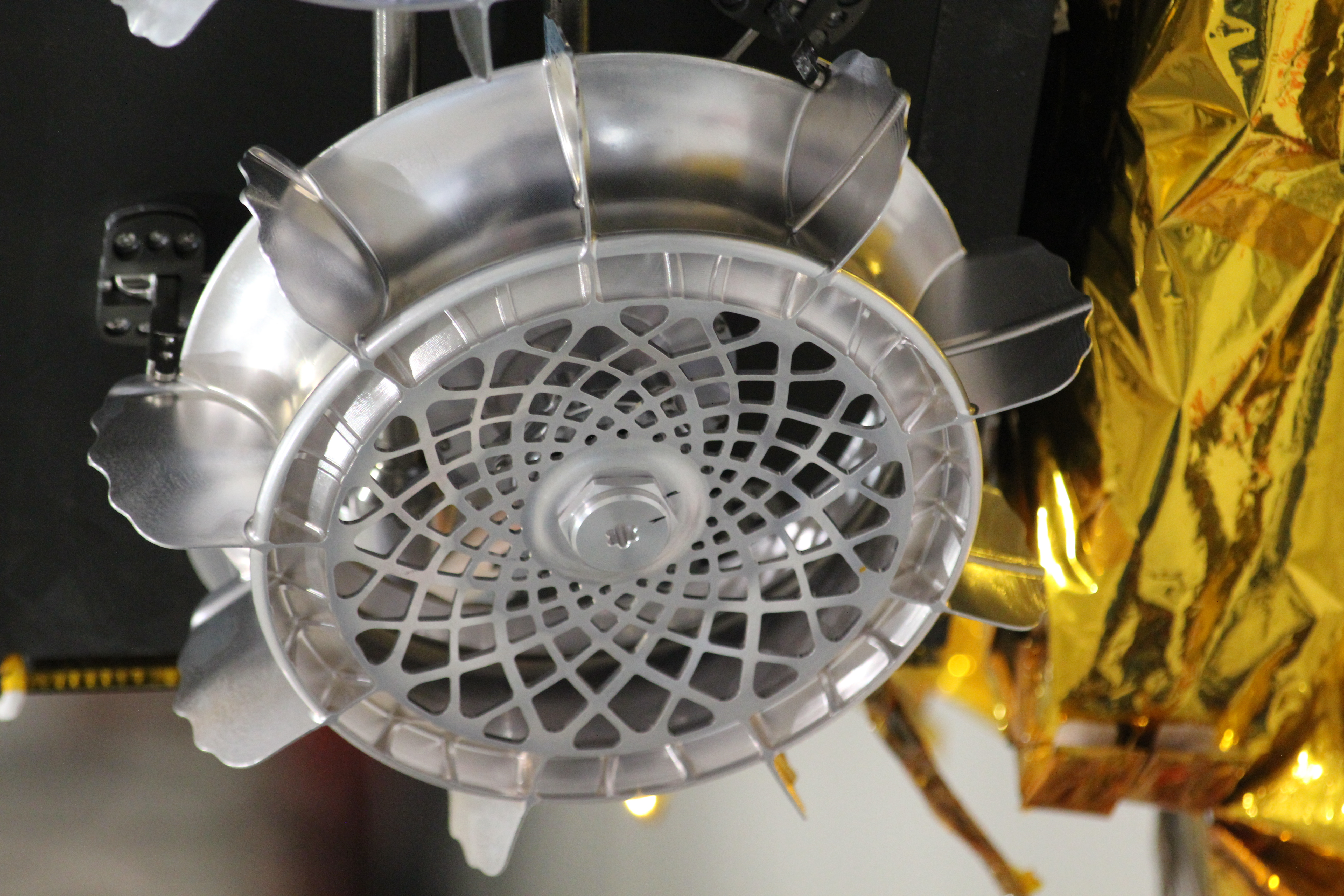
Phobos surface close-up Phobos surface close-up


Scientific Objectives: Unraveling the Mystery of Phobos

Phobos is a puzzling body. Its irregular shape, low density, and cratered surface have led scientists to propose two main formation theories:

  1. Captured Asteroid Hypothesis – Phobos could be a relic from the early asteroid belt, snared by Mars’ gravity.
  2. Impact‑Ejecta Hypothesis – The moon may have formed from debris ejected when a massive object struck Mars.

By analyzing isotopic ratios, mineralogy, and organic compounds in the returned samples, researchers hope to discriminate between these scenarios. Moreover, Phobos’ surface may preserve solar wind particles and interstellar dust that have accumulated over billions of years, offering a pristine record of the Solar System’s environment.

Potential Earth‑Impact Benefits

  • Planetary Defense: Understanding the composition of small bodies helps refine impact‑mitigation strategies.
  • Resource Utilization: Phobos’ regolith could contain water‑bearing minerals useful for future in‑situ resource utilization (ISRU).
  • Astrobiology: Detecting complex organics could inform the likelihood of life‑building chemistry beyond Earth.

International Collaboration and Competition

While Japan leads the mission, it has signed data‑sharing agreements with NASA, ESA, and ISRO. NASA’s OSIRIS‑REx and ESA’s Hayabusa‑2 experience in sample return will be invaluable for MMX’s sample‑containment protocols. India’s ISRO is closely monitoring the mission, seeing it as a benchmark for its own Mars Orbiter Mission‑2 (MOM‑2) plans.

At the same time, China’s Tianwen‑3 sample‑return mission, slated for a 2027 launch, adds a competitive edge. The race to bring back extraterrestrial material is becoming a tri‑national scientific marathon, with each agency hoping to publish groundbreaking papers first.


Public Engagement: From TikTok to Academic Journals

The MMX mission has sparked a wave of digital storytelling. Indian creators are producing short videos explaining “Phobos kya hai?” while Japanese news outlets run interactive maps of the spacecraft’s trajectory. Universities have organized hackathons to develop AI models that could help analyze the upcoming sample data.

Such outreach amplifies the mission’s visibility, translating complex orbital mechanics into relatable narratives—like the idea of “Mars ke chand se dharti par mitti aayegi,” which resonates deeply with a public eager for tangible connections to space.


Risks and Challenges: The Thin Line Between Success and Setback

Sample‑return missions are inherently risky. Key challenges include:

  • Landing on a Low‑Gravity Body: Phobos’ surface gravity is just 0.005 m/s², making anchoring the lander a technical nightmare.
  • Contamination Control: Ensuring Earth‑bound samples remain pristine requires ultra‑clean containment systems.
  • Re‑Entry Heat Shield: The return capsule must survive re‑entry at speeds exceeding 12 km/s while protecting delicate regolith.

Past setbacks—NASA’s OSIRIS‑REx sample‑acquisition failure in 2023—serve as cautionary tales, prompting JAXA to incorporate redundant systems and extensive ground‑testing.


Editorial Analysis & Future Outlook

The MMX mission marks a paradigm shift in planetary exploration. By targeting a Martian moon rather than the planet itself, Japan is expanding the scientific frontier while mitigating some of the logistical complexities of a full Mars surface mission. If successful, MMX will:

  1. Validate Sample‑Return Techniques for Small Bodies – Paving the way for commercial asteroid mining ventures and deeper lunar outpost logistics.
  2. Catalyze Global Scientific Collaboration – Shared datasets will likely result in joint publications, standardizing analytical methods across agencies.
  3. Influence Space Policy – Nations may prioritize moon‑orbiting bodies in their next decade’s roadmaps, recognizing the high scientific return on relatively lower investment.

In the long term, the knowledge gained from Phobos could inform human habitats around Mars, where the moon’s low‑gravity environment might serve as a staging point for future crewed missions. Moreover, the public’s fascination with “soil from another world” could translate into increased funding for STEM education and inspire the next generation of engineers.

As the launch window approaches, the world watches with bated breath. Whether the dust from Phobos settles gently on Earth’s laboratories or sparks a new era of interplanetary commerce, Japan’s MMX mission is undeniably a milestone in humanity’s quest to touch the cosmos.


Stay tuned for live updates as MMX embarks on its historic journey.


Original Reporting & Source: India Today Top Stories

Discussion (0)

Sign in to join the discussion.

No comments yet. Be the first to start the conversation!

| |

Japan’s MMX Mission: Mars’ Moon Dust Heading to Earth – What It Means for Science

By Umang Sisodia • 6 min read • 1 view

Key Takeaways

  • Japan’s MMX (Mars Moons eXploration) mission aims to retrieve samples from Phobos, Mars’ larger moon, and bring them back to Earth by 2029.
  • The mission is the first ever to attempt a sample‑return from a Martian satellite, offering clues about the origin of the moons and the early Solar System.
  • International collaboration is intensifying, with NASA, ESA and Indian agencies eyeing data sharing and joint research opportunities.
  • Successful return could revolutionize planetary protection protocols and spark a new era of commercial deep‑space ventures.

In the past week, searches for “Mars के चांद से धरती पर आएगी मिट्टी” have spiked across India, driven by India Today’s coverage of Japan’s ambitious MMX (Mars Moons eXploration) mission. Unlike the high‑profile Mars rovers that land on the red planet itself, MMX targets Phobos, one of Mars’ two tiny moons. The prospect of extraterrestrial soil landing on Earth has captured the public imagination, blending scientific curiosity with a dash of sci‑fi drama.

The buzz is also fueled by a broader narrative: humanity’s next giant leap may not be a manned landing on Mars, but a sample‑return from its moons. This subtle shift has analysts re‑evaluating space‑policy priorities, budget allocations, and the role of emerging space nations like India and the United Arab Emirates.


Mission Overview: From Launch to Lunar Capture

On July 7, 2024, a sleek JAXA‑built spacecraft lifted off from the Tanegashima Space Center atop an H‑III rocket. The launch was livestreamed globally, with a packed press hall in Tokyo and a virtual audience of millions. MMX carries a dual‑probe system:

  • MASCOT (Mars‑Phobos Sample‑Collecting Orbiter) – the main spacecraft that will orbit Mars, map Phobos, and deploy a lander.
  • MUSES‑C (Mars‑Phobos Sample‑Collecting Lander) – a compact lander equipped with a robotic arm and a drill to collect regolith up to 10 cm deep.

After a 7‑month cruise, MMX will perform a Mars orbit insertion maneuver, followed by a series of Phobos fly‑bys to refine its trajectory. The mission’s timeline is tight: land on Phobos by 2025, collect at least 10 grams of material, and launch back to Earth in 2026, with a targeted return in 2029.

Phobos surface close-up Phobos surface close-up


Scientific Objectives: Unraveling the Mystery of Phobos

Phobos is a puzzling body. Its irregular shape, low density, and cratered surface have led scientists to propose two main formation theories:

  1. Captured Asteroid Hypothesis – Phobos could be a relic from the early asteroid belt, snared by Mars’ gravity.
  2. Impact‑Ejecta Hypothesis – The moon may have formed from debris ejected when a massive object struck Mars.

By analyzing isotopic ratios, mineralogy, and organic compounds in the returned samples, researchers hope to discriminate between these scenarios. Moreover, Phobos’ surface may preserve solar wind particles and interstellar dust that have accumulated over billions of years, offering a pristine record of the Solar System’s environment.

Potential Earth‑Impact Benefits

  • Planetary Defense: Understanding the composition of small bodies helps refine impact‑mitigation strategies.
  • Resource Utilization: Phobos’ regolith could contain water‑bearing minerals useful for future in‑situ resource utilization (ISRU).
  • Astrobiology: Detecting complex organics could inform the likelihood of life‑building chemistry beyond Earth.

International Collaboration and Competition

While Japan leads the mission, it has signed data‑sharing agreements with NASA, ESA, and ISRO. NASA’s OSIRIS‑REx and ESA’s Hayabusa‑2 experience in sample return will be invaluable for MMX’s sample‑containment protocols. India’s ISRO is closely monitoring the mission, seeing it as a benchmark for its own Mars Orbiter Mission‑2 (MOM‑2) plans.

At the same time, China’s Tianwen‑3 sample‑return mission, slated for a 2027 launch, adds a competitive edge. The race to bring back extraterrestrial material is becoming a tri‑national scientific marathon, with each agency hoping to publish groundbreaking papers first.


Public Engagement: From TikTok to Academic Journals

The MMX mission has sparked a wave of digital storytelling. Indian creators are producing short videos explaining “Phobos kya hai?” while Japanese news outlets run interactive maps of the spacecraft’s trajectory. Universities have organized hackathons to develop AI models that could help analyze the upcoming sample data.

Such outreach amplifies the mission’s visibility, translating complex orbital mechanics into relatable narratives—like the idea of “Mars ke chand se dharti par mitti aayegi,” which resonates deeply with a public eager for tangible connections to space.


Risks and Challenges: The Thin Line Between Success and Setback

Sample‑return missions are inherently risky. Key challenges include:

  • Landing on a Low‑Gravity Body: Phobos’ surface gravity is just 0.005 m/s², making anchoring the lander a technical nightmare.
  • Contamination Control: Ensuring Earth‑bound samples remain pristine requires ultra‑clean containment systems.
  • Re‑Entry Heat Shield: The return capsule must survive re‑entry at speeds exceeding 12 km/s while protecting delicate regolith.

Past setbacks—NASA’s OSIRIS‑REx sample‑acquisition failure in 2023—serve as cautionary tales, prompting JAXA to incorporate redundant systems and extensive ground‑testing.


Editorial Analysis & Future Outlook

The MMX mission marks a paradigm shift in planetary exploration. By targeting a Martian moon rather than the planet itself, Japan is expanding the scientific frontier while mitigating some of the logistical complexities of a full Mars surface mission. If successful, MMX will:

  1. Validate Sample‑Return Techniques for Small Bodies – Paving the way for commercial asteroid mining ventures and deeper lunar outpost logistics.
  2. Catalyze Global Scientific Collaboration – Shared datasets will likely result in joint publications, standardizing analytical methods across agencies.
  3. Influence Space Policy – Nations may prioritize moon‑orbiting bodies in their next decade’s roadmaps, recognizing the high scientific return on relatively lower investment.

In the long term, the knowledge gained from Phobos could inform human habitats around Mars, where the moon’s low‑gravity environment might serve as a staging point for future crewed missions. Moreover, the public’s fascination with “soil from another world” could translate into increased funding for STEM education and inspire the next generation of engineers.

As the launch window approaches, the world watches with bated breath. Whether the dust from Phobos settles gently on Earth’s laboratories or sparks a new era of interplanetary commerce, Japan’s MMX mission is undeniably a milestone in humanity’s quest to touch the cosmos.


Stay tuned for live updates as MMX embarks on its historic journey.


Original Reporting & Source: India Today Top Stories