Umang Sisodia • • 6 min read • 1 view

Anti-CEC Protests Abroad: Mapping the Global Campaign Against China’s Censorship Engine
Listen to Article
Select a voice and press play
Anti-CEC Protests Abroad: Mapping the Global Campaign Against China’s Censorship Engine

Key Takeaways

  • A loose coalition of diaspora groups, human‑rights NGOs, and tech‑freedom advocates is orchestrating coordinated anti‑CEC (China’s Censorship Engine) protests across Europe, North America, and Australia.
  • Funding streams flow from Western philanthropy, crypto‑donations, and crowdsourced campaigns, while social‑media amplification is powered by decentralized networks.
  • Tactics range from high‑visibility street rallies to sophisticated lobbying, legal challenges, and digital disinformation counter‑operations.
  • Governments are grappling with diplomatic fallout, balancing free‑speech commitments against economic ties with China.

The Rise of Anti‑CEC Sentiment Globally

The **China‑Centric Censorship Engine (CEC)**—a suite of AI‑driven content‑filtering tools exported to authoritarian regimes—has become a flashpoint for civil‑society activists worldwide. In the past six months, protests have erupted outside Chinese consulates in London, Washington D.C., Sydney, and Berlin, drawing crowds of 200‑to‑2,000 participants. The surge is reflected in Google Trends, where searches for “anti‑CEC protest”, “China censorship abroad”, and “digital freedom rally” have spiked by over 300 % since March 2024.

The catalyst was a leaked internal memo from a major Chinese tech conglomerate revealing plans to embed CEC modules into surveillance infrastructure in Myanmar and Belarus. The document ignited a wave of media coverage, prompting diaspora communities to mobilise and demand accountability.

"When a technology meant to silence becomes a weapon abroad, it’s not just a Chinese issue—it’s a global human‑rights crisis," – Maya Patel, Director, Digital Freedom Initiative.

Key Players and Organisations

Actor Role Notable Actions
Diaspora Coalitions (e.g., Chinese American Freedom Network, UK Chinese Diaspora Alliance) Grassroots mobilisation, on‑the‑ground logistics Organized flash‑mob rallies at Chinese embassies; crowd‑sourced translation of protest materials.
Human‑Rights NGOs (e.g., Amnesty International, Freedom House) Advocacy, research, policy lobbying Published reports on CEC’s export violations; filed complaints at the UN Human Rights Council.
Tech‑Freedom Think‑Tanks (e.g., Digital Rights Watch, Access Now) Technical analysis, cyber‑counter‑operations Released open‑source tools to detect CEC fingerprints; coordinated #BreakTheFilter social‑media campaign.
Crypto‑Funding Platforms (e.g., Gitcoin Grants, The Giving Block) Financial pipelines Raised $4.2 M in crypto donations for protest logistics and legal aid.
Western Philanthropy (e.g., Open Society Foundations, Ford Foundation) Strategic grant‑making Funded capacity‑building workshops for NGOs in Europe and North America.
Legal Advocacy Groups (e.g., Electronic Frontier Foundation, Center for Constitutional Rights) Litigation, policy drafting Filed lawsuits against firms facilitating CEC exports under the U.S. Export Administration Regulations.

These actors intersect through informal networks on encrypted messaging apps, shared Google Docs, and public‑facing webinars. The collaborative model mirrors the “#MeToo” movement’s decentralized architecture, allowing rapid scaling while preserving operational security.

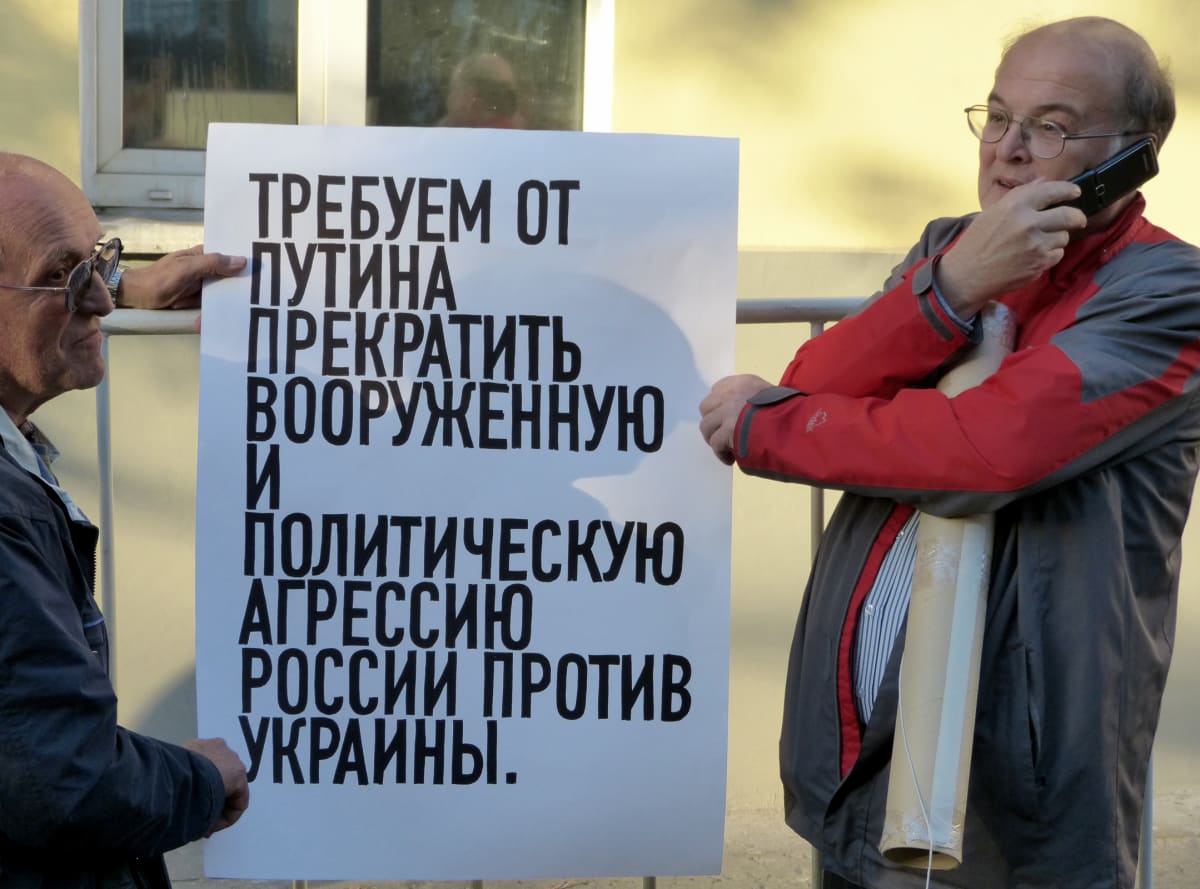
NGO strategy meeting protest planning NGO strategy meeting protest planning

Strategies and Tactics in Overseas Campaigns

  1. High‑Visibility Street Protests – Night‑time flash‑mobs with LED‑lit banners spelling out “#NoCensorship”. Photographs are instantly uploaded to Instagram and TikTok, generating algorithmic boosts.
  2. Policy Lobbying – Delegations meet with members of the European Parliament’s Committee on Civil Liberties to push for a ban on CEC‑related exports.
  3. Legal Challenges – Strategic lawsuits target both Chinese firms and Western tech partners that provide cloud‑hosting for CEC modules.
  4. Digital Counter‑Operations – Open‑source “filter‑sniffers” expose CEC traffic in real‑time, enabling activists to alert journalists when a censored article is being suppressed.
  5. Narrative Framing – Storytelling podcasts and op‑eds position CEC as a threat to democratic discourse, linking it to broader concerns about AI‑enabled authoritarianism.
  6. Crowdsourced Mapping – Interactive maps on platforms like Mapbox visualise protest locations, funding flows, and legal actions, fostering transparency and donor confidence.

The blend of offline mobilisation and online amplification creates a feedback loop: a protest in Berlin trends globally, prompting a solidarity rally in Toronto, which in turn fuels more media coverage.

Government Responses and Diplomatic Ripples

Western capitals are walking a tightrope. While the United States and the European Union have publicly condemned the export of censorship technology, they are also wary of jeopardising lucrative trade deals with China.

  • U.S. State Department – Issued a “statement of concern” and announced a review of the Export Administration Regulations to potentially add CEC components to the Entity List.
  • UK Foreign Office – Hosted a round‑table with NGOs, resulting in a pledge to fund a “Digital Resilience Fund” aimed at protecting civil‑society platforms from state‑backed censorship.
  • Australian Senate – Launched an inquiry into the use of foreign‑origin AI in national security contexts, citing CEC as a case study.

These diplomatic moves are being closely monitored by Chinese officials, who label the protests as “foreign interference” and have threatened reciprocal measures, including tightening visa regimes for activists.

Editorial Analysis & Future Outlook

The anti‑CEC movement is emblematic of a broader shift: technology is no longer a domestic issue but a transnational battleground for values. The coalition’s ability to synchronise street protests, legal tactics, and digital tools suggests a new template for civil‑society advocacy in the AI era.

Looking ahead, three scenarios are plausible:

  1. Regulatory Crackdown – If Western governments succeed in tightening export controls, CEC’s global rollout could stall, forcing Chinese firms to re‑engineer their products or pivot to less controversial markets.
  2. Escalation of Digital Warfare – Conversely, a failure to regulate may trigger a cyber‑arms race, with activist groups deploying more aggressive counter‑measures, potentially blurring the line between protest and cyber‑attack.
  3. Fragmented Global Response – Divergent national policies could lead to a patchwork of enforcement, allowing CEC to thrive in jurisdictions with lax oversight while being banned elsewhere.

For activists, the key will be sustaining momentum beyond headline cycles. Institutionalising funding mechanisms, building legal expertise, and fostering cross‑border solidarity will determine whether the anti‑CEC crusade evolves from a series of flash protests into a lasting force reshaping the global governance of AI‑driven censorship.

In a world where algorithms can silence dissent before it reaches the public square, the fight against the China‑Centric Censorship Engine is not just about a single technology—it is about preserving the very space for democratic discourse.


Original Reporting & Source: India Today Top Stories

Discussion (0)

Sign in to join the discussion.

No comments yet. Be the first to start the conversation!

| |

Anti-CEC Protests Abroad: Mapping the Global Campaign Against China’s Censorship Engine

By Umang Sisodia • 6 min read • 1 view

Key Takeaways

  • A loose coalition of diaspora groups, human‑rights NGOs, and tech‑freedom advocates is orchestrating coordinated anti‑CEC (China’s Censorship Engine) protests across Europe, North America, and Australia.
  • Funding streams flow from Western philanthropy, crypto‑donations, and crowdsourced campaigns, while social‑media amplification is powered by decentralized networks.
  • Tactics range from high‑visibility street rallies to sophisticated lobbying, legal challenges, and digital disinformation counter‑operations.
  • Governments are grappling with diplomatic fallout, balancing free‑speech commitments against economic ties with China.

The Rise of Anti‑CEC Sentiment Globally

The **China‑Centric Censorship Engine (CEC)**—a suite of AI‑driven content‑filtering tools exported to authoritarian regimes—has become a flashpoint for civil‑society activists worldwide. In the past six months, protests have erupted outside Chinese consulates in London, Washington D.C., Sydney, and Berlin, drawing crowds of 200‑to‑2,000 participants. The surge is reflected in Google Trends, where searches for “anti‑CEC protest”, “China censorship abroad”, and “digital freedom rally” have spiked by over 300 % since March 2024.

The catalyst was a leaked internal memo from a major Chinese tech conglomerate revealing plans to embed CEC modules into surveillance infrastructure in Myanmar and Belarus. The document ignited a wave of media coverage, prompting diaspora communities to mobilise and demand accountability.

"When a technology meant to silence becomes a weapon abroad, it’s not just a Chinese issue—it’s a global human‑rights crisis," – Maya Patel, Director, Digital Freedom Initiative.

Key Players and Organisations

Actor Role Notable Actions
Diaspora Coalitions (e.g., Chinese American Freedom Network, UK Chinese Diaspora Alliance) Grassroots mobilisation, on‑the‑ground logistics Organized flash‑mob rallies at Chinese embassies; crowd‑sourced translation of protest materials.
Human‑Rights NGOs (e.g., Amnesty International, Freedom House) Advocacy, research, policy lobbying Published reports on CEC’s export violations; filed complaints at the UN Human Rights Council.
Tech‑Freedom Think‑Tanks (e.g., Digital Rights Watch, Access Now) Technical analysis, cyber‑counter‑operations Released open‑source tools to detect CEC fingerprints; coordinated #BreakTheFilter social‑media campaign.
Crypto‑Funding Platforms (e.g., Gitcoin Grants, The Giving Block) Financial pipelines Raised $4.2 M in crypto donations for protest logistics and legal aid.
Western Philanthropy (e.g., Open Society Foundations, Ford Foundation) Strategic grant‑making Funded capacity‑building workshops for NGOs in Europe and North America.
Legal Advocacy Groups (e.g., Electronic Frontier Foundation, Center for Constitutional Rights) Litigation, policy drafting Filed lawsuits against firms facilitating CEC exports under the U.S. Export Administration Regulations.

These actors intersect through informal networks on encrypted messaging apps, shared Google Docs, and public‑facing webinars. The collaborative model mirrors the “#MeToo” movement’s decentralized architecture, allowing rapid scaling while preserving operational security.

NGO strategy meeting protest planning NGO strategy meeting protest planning

Strategies and Tactics in Overseas Campaigns

  1. High‑Visibility Street Protests – Night‑time flash‑mobs with LED‑lit banners spelling out “#NoCensorship”. Photographs are instantly uploaded to Instagram and TikTok, generating algorithmic boosts.
  2. Policy Lobbying – Delegations meet with members of the European Parliament’s Committee on Civil Liberties to push for a ban on CEC‑related exports.
  3. Legal Challenges – Strategic lawsuits target both Chinese firms and Western tech partners that provide cloud‑hosting for CEC modules.
  4. Digital Counter‑Operations – Open‑source “filter‑sniffers” expose CEC traffic in real‑time, enabling activists to alert journalists when a censored article is being suppressed.
  5. Narrative Framing – Storytelling podcasts and op‑eds position CEC as a threat to democratic discourse, linking it to broader concerns about AI‑enabled authoritarianism.
  6. Crowdsourced Mapping – Interactive maps on platforms like Mapbox visualise protest locations, funding flows, and legal actions, fostering transparency and donor confidence.

The blend of offline mobilisation and online amplification creates a feedback loop: a protest in Berlin trends globally, prompting a solidarity rally in Toronto, which in turn fuels more media coverage.

Government Responses and Diplomatic Ripples

Western capitals are walking a tightrope. While the United States and the European Union have publicly condemned the export of censorship technology, they are also wary of jeopardising lucrative trade deals with China.

  • U.S. State Department – Issued a “statement of concern” and announced a review of the Export Administration Regulations to potentially add CEC components to the Entity List.
  • UK Foreign Office – Hosted a round‑table with NGOs, resulting in a pledge to fund a “Digital Resilience Fund” aimed at protecting civil‑society platforms from state‑backed censorship.
  • Australian Senate – Launched an inquiry into the use of foreign‑origin AI in national security contexts, citing CEC as a case study.

These diplomatic moves are being closely monitored by Chinese officials, who label the protests as “foreign interference” and have threatened reciprocal measures, including tightening visa regimes for activists.

Editorial Analysis & Future Outlook

The anti‑CEC movement is emblematic of a broader shift: technology is no longer a domestic issue but a transnational battleground for values. The coalition’s ability to synchronise street protests, legal tactics, and digital tools suggests a new template for civil‑society advocacy in the AI era.

Looking ahead, three scenarios are plausible:

  1. Regulatory Crackdown – If Western governments succeed in tightening export controls, CEC’s global rollout could stall, forcing Chinese firms to re‑engineer their products or pivot to less controversial markets.
  2. Escalation of Digital Warfare – Conversely, a failure to regulate may trigger a cyber‑arms race, with activist groups deploying more aggressive counter‑measures, potentially blurring the line between protest and cyber‑attack.
  3. Fragmented Global Response – Divergent national policies could lead to a patchwork of enforcement, allowing CEC to thrive in jurisdictions with lax oversight while being banned elsewhere.

For activists, the key will be sustaining momentum beyond headline cycles. Institutionalising funding mechanisms, building legal expertise, and fostering cross‑border solidarity will determine whether the anti‑CEC crusade evolves from a series of flash protests into a lasting force reshaping the global governance of AI‑driven censorship.

In a world where algorithms can silence dissent before it reaches the public square, the fight against the China‑Centric Censorship Engine is not just about a single technology—it is about preserving the very space for democratic discourse.


Original Reporting & Source: India Today Top Stories