Umang Sisodia • • 6 min read • 1 view
Trump Threatens New Iran Strike Over Gulf Cable Threats – Implications for Global Security
Key Takeaways
- Trump warns of a fresh military strike on Iran after Tehran announced plans to disrupt Gulf undersea internet cables.
- The cable threat escalates an already volatile US‑Iran standoff, risking broader regional conflict.
- Economic and security fallout could affect global finance, energy markets, and the digital infrastructure of millions.
- Diplomatic channels are scrambling to de‑escalate, but political posturing on both sides may limit room for compromise.
The Immediate Trigger: Tehran’s Cable Threat
In a startling development that sent shockwaves through diplomatic circles, Iran’s Revolutionary Guard announced its intention to target undersea internet cables that traverse the Persian Gulf and the Gulf of Oman. These cables are the backbone of global data traffic, carrying an estimated 10‑15% of worldwide internet communications. By threatening to sever them, Tehran aims to leverage a high‑impact, low‑cost asymmetric weapon against both regional adversaries and the global digital economy.
The announcement came amid a series of Iranian statements condemning what it calls “unjust US sanctions and hostile military posturing.” Iranian officials framed the cable threat as a defensive measure, warning that any further US aggression would trigger “a proportional response.”
"We will not allow the United States to continue its economic warfare against Iran," said a senior IRGC commander at a televised briefing. "If they persist, we will act against their critical infrastructure, including undersea cables that serve the Gulf region."
Trump’s Response and Domestic Politics
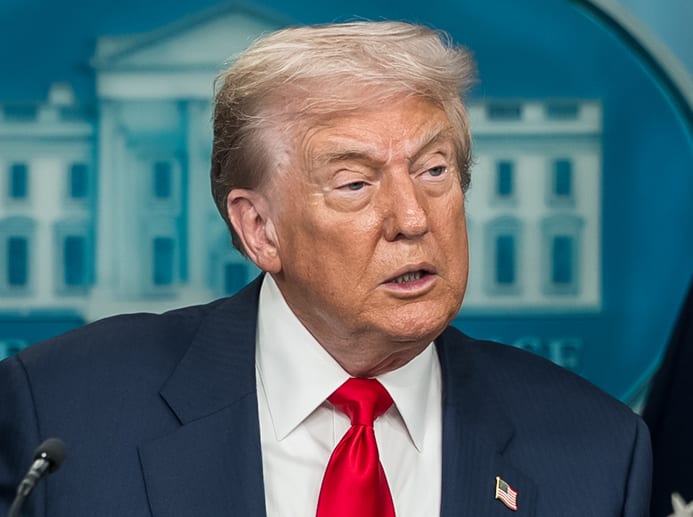
Former President Donald Trump, who continues to wield considerable influence over the Republican base and the GOP’s foreign‑policy agenda, seized on the news with a forceful statement: “Iran will face a fresh strike if they try to cut our cables. We will protect America’s interests and keep the world’s internet running.” The remark was delivered at a press conference in Mar-a-Lago, where Trump was surrounded by senior advisers and a contingent of former military officials.
Trump’s warning serves multiple domestic purposes:
- Re‑energizing his hard‑line foreign‑policy image ahead of the 2028 presidential cycle.
- Pressuring the current administration to adopt a tougher stance on Iran, thereby positioning himself as the defender of national security.
- Appealing to tech‑industry stakeholders who are alarmed by potential disruptions to the digital economy.
The former president’s rhetoric also reflects a broader trend in U.S. politics where “strategic competition” narratives are used to rally voter bases around perceived external threats.
Regional Power Play: Why the Gulf Cables Matter
The Gulf undersea cables are not merely technical assets; they are strategic lifelines for the economies of Saudi Arabia, the United Arab Emirates, Qatar, and Oman. A disruption could:
- Paralyze financial transactions, causing spikes in forex volatility.
- Hinder oil‑price data feeds, potentially amplifying market turbulence in an already fragile energy sector.
- Compromise military communications, affecting coalition forces stationed in the region.
Iran’s move can be interpreted as an attempt to force a diplomatic concession without resorting to conventional warfare. By targeting something that would instantly affect global commerce, Tehran hopes to compel the United States and its allies to re‑evaluate sanctions and engage in back‑channel talks.
International Reactions and Diplomatic Tightrope
The reaction from the international community has been swift:
- European Union: Issued a joint statement condemning any attacks on civilian infrastructure and called for an immediate diplomatic dialogue.
- United Nations: The Secretary‑General urged restraint, emphasizing that undersea cables are protected under international law as civilian assets.
- China and Russia: Both nations expressed “concern over escalating tensions” while quietly offering mediation to protect their own economic interests in the region.
U.S. Secretary of State Antony Blinken, speaking from Washington, warned that “any deliberate attack on global communications infrastructure will be met with a decisive response,” echoing the language used by Trump but from an official diplomatic standpoint.
 Gulf of Oman undersea cable infrastructure
Historical Context of US‑Iran Confrontations
The United States and Iran have a decades‑long history of proxy confrontations, sanctions, and occasional direct military strikes. Notable flashpoints include:
- 1996 Operation Desert Thunder: A failed U.S. attempt to disable Iranian air defenses.
- 2012 Operation Ocean Shield: Targeted Iranian Revolutionary Guard Navy vessels in the Gulf.
- 2020 Drone Strike on General Qasem Soleimani: Triggered a near‑war scenario that was defused through diplomatic back‑channels.
These incidents illustrate a pattern where Iran leverages asymmetric tactics (e.g., cyber‑attacks, proxy militias) while the United States relies on precision strikes and economic pressure. The current cable threat fits neatly into this historical playbook.
Potential Scenarios and Risks
Analysts outline three plausible pathways:
- Escalation to Kinetic Conflict: A U.S. strike on Iranian missile sites could provoke retaliatory attacks on the cables, leading to a broader Gulf war.
- Cyber‑Only Engagement: Both sides could engage in a cyber‑warfare duel, targeting each other's critical infrastructure without crossing the kinetic threshold.
- Negotiated De‑Escalation: Through UN‑mediated talks, Iran might withdraw its threat in exchange for sanctions relief or a diplomatic concession.
Each scenario carries distinct risks for global supply chains, energy markets, and the stability of the internet—a reminder that modern conflicts are no longer confined to traditional battlefields.
Editorial Analysis & Future Outlook
The convergence of geopolitical brinkmanship and digital infrastructure vulnerability marks a new era of strategic competition. Trump’s public warning, while rhetorically potent, underscores a political calculus that blends domestic posturing with genuine security concerns.
If Tehran follows through, the immediate fallout will be disruption of data flows, prompting businesses to activate contingency routing and governments to mobilize cyber‑defense units. In the longer term, the episode could accelerate global efforts to diversify undersea cable routes, invest in satellite‑based internet alternatives, and re‑define norms around the protection of civilian digital infrastructure.
For policymakers, the key lesson is that strategic deterrence now must account for non‑kinetic assets. The United States will likely bolster its maritime domain awareness in the Gulf, expand joint patrols with Gulf allies, and deepen cyber‑defense collaborations with private sector players.
Ultimately, the trajectory will hinge on diplomatic agility. A calibrated response that signals resolve without provoking open warfare could set a precedent for managing future disputes over critical digital arteries. The world will be watching closely, as any misstep could reverberate far beyond the Persian Gulf, reshaping the architecture of global connectivity.
Original Reporting & Source: India Today Top Stories

Discussion (0)
Sign in to join the discussion.
No comments yet. Be the first to start the conversation!