Umang Sisodia • • 6 min read • 3 views

Trump Signals End to $4 Billion US Aid to Israel After 2026 – What It Means for Global Politics
Listen to Article
Select a voice and press play
Trump Signals End to $4 Billion US Aid to Israel After 2026 – What It Means for Global Politics

Key Takeaways

  • Donald Trump announced the cessation of the $4 billion annual U.S. aid package to Israel effective after 2026, sparking intense debate in Washington and Jerusalem.
  • The move is framed as a push for “fairer burden‑sharing” and reflects Trump’s broader strategy to reshape U.S. foreign aid priorities amid domestic political pressures.
  • Allies and adversaries alike are recalibrating their diplomatic playbooks, with potential ripple effects on Middle‑East security, U.S. defense contracts, and the upcoming 2028 election.
  • Analysts warn that the decision could accelerate Israel’s pivot toward alternative partners, while also igniting fierce congressional battles over national security funding.

Background: Decades of U.S. Aid to Israel

Since the 1970s, the United States has provided Israel with over $3 billion a year in military assistance, making it the single largest recipient of U.S. foreign aid. This support has been justified on multiple fronts:

  • Strategic stability in the volatile Middle East.
  • Technological synergy, with Israel acting as a testing ground for U.S. defense innovations.
  • Political goodwill, cemented by a strong pro‑Israel lobby in Congress.

Over the years, the aid package has been periodically renewed, most recently under the 2016 Memorandum of Understanding (MOU) guaranteeing $38 billion over ten years. However, the political climate has shifted. Rising concerns over budget deficits, growing calls for domestic infrastructure spending, and an increasingly polarized electorate have set the stage for a dramatic policy reversal.


The Announcement and Immediate Reactions

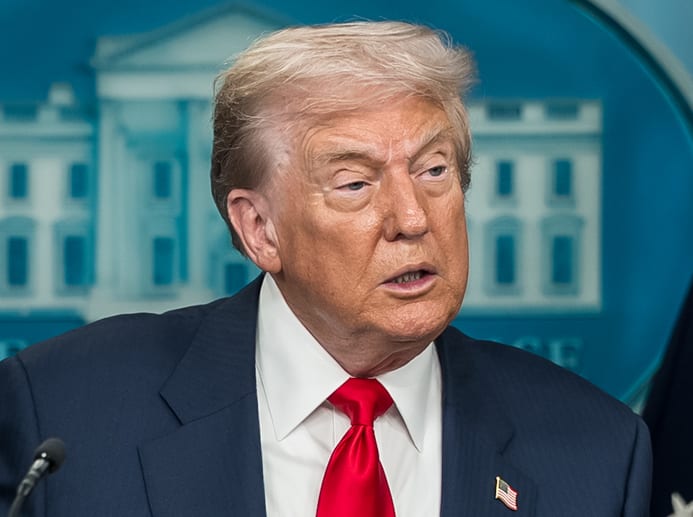
On October 30, 2026, during a press conference at the White House, former President Donald Trump declared:

"America will no longer fund foreign wars that do not directly protect our people. Starting in 2027, the $4 billion annual aid to Israel will end. We expect our allies to contribute more to their own security."

The announcement was accompanied by a signed executive memorandum citing “budgetary prudence” and “strategic realignment” as primary motives. The reaction was swift:

  • Republican lawmakers praised the move as a bold stand against “eternal foreign entanglements.”
  • Democratic leaders warned of destabilizing an already fragile region and called for a Congressional review.
  • Israeli Prime Minister expressed “deep disappointment,” emphasizing Israel’s reliance on U.S. technology and intelligence.
  • International allies like the United Kingdom and Germany issued cautious statements, urging a coordinated approach to regional security.
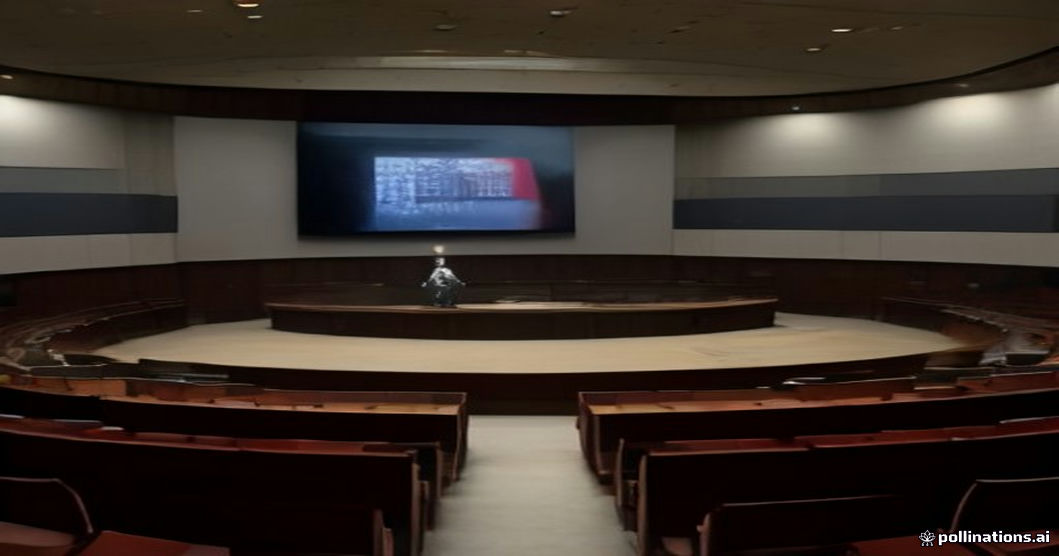
Israeli Knesset debate on foreign aid Israeli Knesset debate on foreign aid


Geopolitical Ramifications

The cessation of aid is more than a budget line item; it reshapes the strategic calculus of the Middle East:

  1. Security Vacuum – Israel may need to reallocate its own defense budget or seek alternative suppliers, potentially turning to European or Asian arms manufacturers.
  2. Regional Power Shifts – Nations such as Saudi Arabia and the UAE could see an opening to deepen security ties with Israel, leveraging their own burgeoning defense capabilities.
  3. Iranian Calculus – Tehran may interpret the move as a weakening of the U.S. resolve, emboldening its proxy networks in Lebanon, Syria, and Gaza.
  4. U.S. Influence – Washington risks losing a key diplomatic lever that has traditionally facilitated peace negotiations, including the Abraham Accords.

Domestic Political Calculus

Trump’s decision aligns with several domestic imperatives:

  • Fiscal Conservatism – With the 2026 federal deficit projected at $2.1 trillion, cutting foreign aid offers a politically palatable way to showcase fiscal responsibility.
  • Election Strategy – By positioning himself as a “America‑First” defender, Trump aims to consolidate his base ahead of the 2028 presidential primaries.
  • Congressional Leverage – The move forces senators and representatives to confront the aid package, potentially reshaping the 2027 appropriations battle.

Critics argue that the timing is politically opportunistic, noting that the aid cut could be reversed if public sentiment swings toward heightened security concerns.


International Responses

Beyond Washington and Jerusalem, the announcement reverberated globally:

  • European Union – The EU’s Foreign Affairs Council called for a multilateral dialogue to ensure that regional stability is not compromised.
  • China – Beijing’s state media highlighted the decision as evidence of U.S. retreat, subtly positioning China as a potential mediator in Middle‑East affairs.
  • United Nations – The UN Security Council convened an emergency session, urging all parties to maintain de‑escalation channels.

These reactions underscore a broader realignment in which the U.S. may no longer be the sole guarantor of security in the region.


What This Means for US‑Israel Relations

While the aid cut is significant, the overall bilateral relationship is unlikely to dissolve overnight:

  • Intelligence Sharing – The U.S.–Israel intelligence partnership is deeply entrenched and expected to continue.
  • Joint R&D Projects – Collaborative programs like the Iron Dome and David’s Sling may persist under separate funding mechanisms.
  • Diplomatic Channels – High‑level diplomatic engagement will remain, albeit with a more transactional tone.

However, Israel’s strategic autonomy will increase, prompting a reassessment of its defense procurement and possibly accelerating indigenous weapons development.


Editorial Analysis & Future Outlook

The termination of $4 billion in annual aid marks a pivotal inflection point in U.S. foreign policy. From an editorial standpoint, three intertwined trajectories emerge:

  1. Fiscal Realignment vs. Strategic Commitment – The U.S. faces a classic dilemma: balancing domestic budget constraints with the imperative to maintain global influence. If the aid cut proves unsustainable, Congress may reinstate funding, but only after a rigorous cost‑benefit debate.
  2. Israel’s Strategic Diversification – Expect Israel to broaden its supplier base, deepening ties with European defense firms (e.g., Rheinmetall, BAE Systems) and exploring Asian partnerships (e.g., South Korea’s Hanwha). This could reshape the global arms market and dilute U.S. leverage.
  3. Regional Power Rebalancing – A weakened U.S. presence may encourage regional actors to pursue independent security architectures, potentially leading to new alliances or, conversely, heightened rivalry.

In the medium term, the decision will likely fuel intense congressional hearings, with bipartisan panels scrutinizing the national security implications. The 2028 election cycle will amplify these debates, as candidates leverage the issue to appeal to either hard‑line hawks or fiscal conservatives.

Long‑term, the United States may need to reimagine its aid paradigm, shifting from unconditional cash transfers to performance‑based partnerships that align more closely with strategic outcomes. For Israel, the challenge will be to maintain qualitative military edge while navigating a more multipolar defense ecosystem.

Ultimately, the Trump‑initiated aid cessation is a test case for how the United States can recalibrate its global commitments without compromising regional stability. The world will be watching how Washington, Jerusalem, and their allies negotiate this delicate balance.


Original Reporting & Source: India Today Top Stories

Discussion (0)

Sign in to join the discussion.

No comments yet. Be the first to start the conversation!

| |

Trump Signals End to $4 Billion US Aid to Israel After 2026 – What It Means for Global Politics

By Umang Sisodia • 6 min read • 3 views

Key Takeaways

  • Donald Trump announced the cessation of the $4 billion annual U.S. aid package to Israel effective after 2026, sparking intense debate in Washington and Jerusalem.
  • The move is framed as a push for “fairer burden‑sharing” and reflects Trump’s broader strategy to reshape U.S. foreign aid priorities amid domestic political pressures.
  • Allies and adversaries alike are recalibrating their diplomatic playbooks, with potential ripple effects on Middle‑East security, U.S. defense contracts, and the upcoming 2028 election.
  • Analysts warn that the decision could accelerate Israel’s pivot toward alternative partners, while also igniting fierce congressional battles over national security funding.

Background: Decades of U.S. Aid to Israel

Since the 1970s, the United States has provided Israel with over $3 billion a year in military assistance, making it the single largest recipient of U.S. foreign aid. This support has been justified on multiple fronts:

  • Strategic stability in the volatile Middle East.
  • Technological synergy, with Israel acting as a testing ground for U.S. defense innovations.
  • Political goodwill, cemented by a strong pro‑Israel lobby in Congress.

Over the years, the aid package has been periodically renewed, most recently under the 2016 Memorandum of Understanding (MOU) guaranteeing $38 billion over ten years. However, the political climate has shifted. Rising concerns over budget deficits, growing calls for domestic infrastructure spending, and an increasingly polarized electorate have set the stage for a dramatic policy reversal.


The Announcement and Immediate Reactions

On October 30, 2026, during a press conference at the White House, former President Donald Trump declared:

"America will no longer fund foreign wars that do not directly protect our people. Starting in 2027, the $4 billion annual aid to Israel will end. We expect our allies to contribute more to their own security."

The announcement was accompanied by a signed executive memorandum citing “budgetary prudence” and “strategic realignment” as primary motives. The reaction was swift:

  • Republican lawmakers praised the move as a bold stand against “eternal foreign entanglements.”
  • Democratic leaders warned of destabilizing an already fragile region and called for a Congressional review.
  • Israeli Prime Minister expressed “deep disappointment,” emphasizing Israel’s reliance on U.S. technology and intelligence.
  • International allies like the United Kingdom and Germany issued cautious statements, urging a coordinated approach to regional security.

Israeli Knesset debate on foreign aid Israeli Knesset debate on foreign aid


Geopolitical Ramifications

The cessation of aid is more than a budget line item; it reshapes the strategic calculus of the Middle East:

  1. Security Vacuum – Israel may need to reallocate its own defense budget or seek alternative suppliers, potentially turning to European or Asian arms manufacturers.
  2. Regional Power Shifts – Nations such as Saudi Arabia and the UAE could see an opening to deepen security ties with Israel, leveraging their own burgeoning defense capabilities.
  3. Iranian Calculus – Tehran may interpret the move as a weakening of the U.S. resolve, emboldening its proxy networks in Lebanon, Syria, and Gaza.
  4. U.S. Influence – Washington risks losing a key diplomatic lever that has traditionally facilitated peace negotiations, including the Abraham Accords.

Domestic Political Calculus

Trump’s decision aligns with several domestic imperatives:

  • Fiscal Conservatism – With the 2026 federal deficit projected at $2.1 trillion, cutting foreign aid offers a politically palatable way to showcase fiscal responsibility.
  • Election Strategy – By positioning himself as a “America‑First” defender, Trump aims to consolidate his base ahead of the 2028 presidential primaries.
  • Congressional Leverage – The move forces senators and representatives to confront the aid package, potentially reshaping the 2027 appropriations battle.

Critics argue that the timing is politically opportunistic, noting that the aid cut could be reversed if public sentiment swings toward heightened security concerns.


International Responses

Beyond Washington and Jerusalem, the announcement reverberated globally:

  • European Union – The EU’s Foreign Affairs Council called for a multilateral dialogue to ensure that regional stability is not compromised.
  • China – Beijing’s state media highlighted the decision as evidence of U.S. retreat, subtly positioning China as a potential mediator in Middle‑East affairs.
  • United Nations – The UN Security Council convened an emergency session, urging all parties to maintain de‑escalation channels.

These reactions underscore a broader realignment in which the U.S. may no longer be the sole guarantor of security in the region.


What This Means for US‑Israel Relations

While the aid cut is significant, the overall bilateral relationship is unlikely to dissolve overnight:

  • Intelligence Sharing – The U.S.–Israel intelligence partnership is deeply entrenched and expected to continue.
  • Joint R&D Projects – Collaborative programs like the Iron Dome and David’s Sling may persist under separate funding mechanisms.
  • Diplomatic Channels – High‑level diplomatic engagement will remain, albeit with a more transactional tone.

However, Israel’s strategic autonomy will increase, prompting a reassessment of its defense procurement and possibly accelerating indigenous weapons development.


Editorial Analysis & Future Outlook

The termination of $4 billion in annual aid marks a pivotal inflection point in U.S. foreign policy. From an editorial standpoint, three intertwined trajectories emerge:

  1. Fiscal Realignment vs. Strategic Commitment – The U.S. faces a classic dilemma: balancing domestic budget constraints with the imperative to maintain global influence. If the aid cut proves unsustainable, Congress may reinstate funding, but only after a rigorous cost‑benefit debate.
  2. Israel’s Strategic Diversification – Expect Israel to broaden its supplier base, deepening ties with European defense firms (e.g., Rheinmetall, BAE Systems) and exploring Asian partnerships (e.g., South Korea’s Hanwha). This could reshape the global arms market and dilute U.S. leverage.
  3. Regional Power Rebalancing – A weakened U.S. presence may encourage regional actors to pursue independent security architectures, potentially leading to new alliances or, conversely, heightened rivalry.

In the medium term, the decision will likely fuel intense congressional hearings, with bipartisan panels scrutinizing the national security implications. The 2028 election cycle will amplify these debates, as candidates leverage the issue to appeal to either hard‑line hawks or fiscal conservatives.

Long‑term, the United States may need to reimagine its aid paradigm, shifting from unconditional cash transfers to performance‑based partnerships that align more closely with strategic outcomes. For Israel, the challenge will be to maintain qualitative military edge while navigating a more multipolar defense ecosystem.

Ultimately, the Trump‑initiated aid cessation is a test case for how the United States can recalibrate its global commitments without compromising regional stability. The world will be watching how Washington, Jerusalem, and their allies negotiate this delicate balance.


Original Reporting & Source: India Today Top Stories