Umang Sisodia • • 6 min read • 1 view
Can Gadi Eisenkot Stitch Together Israel’s Fractured Coalition?

Key Takeaways
- Gadi Eisenkot has been tasked by President Isaac Herzog to form a new coalition after the inconclusive April 2024 elections.
- Israel’s fragmented Knesset, with no clear majority, forces Eisenkot to negotiate with both right‑wing and centrist parties, while contending with a resurgent left.
- The outcome will hinge on three pivotal issues: the judicial reform backlash, the war‑time budget, and the Palestinian cease‑fire talks.
- International partners are watching closely, as the coalition’s composition will affect Israel’s diplomatic posture toward the U.S., EU, and regional actors.
The Political Landscape Post‑Election
The 2024 Israeli parliamentary election delivered a classic dead‑heat. The right‑leaning bloc, led by former Prime Minister Benjamin Netanyahu, secured 31 seats, while the centrist alliance headed by Benny Gantz captured 30 seats. A newly formed left‑wing coalition, bolstered by Arab parties, holds 15 seats, and smaller religious and nationalist factions occupy the remaining 4 seats. No single faction can claim the 61‑seat majority required to form a government.
President Isaac Herzog, exercising his constitutional prerogative, appointed Gadi Eisenkot, the former chief of the Israeli Defence Forces, as the “senior‑most” figure tasked with coalition‑building. Eisenkot, a former rival of Netanyahu and a veteran of the 2023 Gaza conflict, is seen as a moderate who might appeal to both security‑hardliners and the centrist electorate.
"Israel stands at a crossroads. The next government must reconcile security imperatives with democratic norms," – Isaac Herzog, President of Israel.
The stakes are high. The country is still grappling with the fallout of the judicial reform protests that rocked Tel‑Aviv last year, while the war‑time budget for the Gaza front remains a contentious line item. Moreover, U.S. Secretary of State Antony Blinken has signalled that American aid could be conditioned on a stable, moderate coalition.
Why This Story Is Trending
Google Trends shows a sharp spike in searches for “Eisenkot government” and “Israel coalition 2024” as news wires from Al Jazeera, BBC, The New York Times, The Hindu, and The Jerusalem Post rolled out simultaneous coverage. The convergence of three factors fuels the surge:
- Electoral uncertainty – Israel’s first election in two years without a clear winner.
- Security concerns – Ongoing hostilities along the Gaza‑Israel border.
- Domestic unrest – Massive street protests against judicial reforms that threatened the rule of law.
The combination of political drama, security stakes, and international scrutiny creates a perfect recipe for viral news consumption.
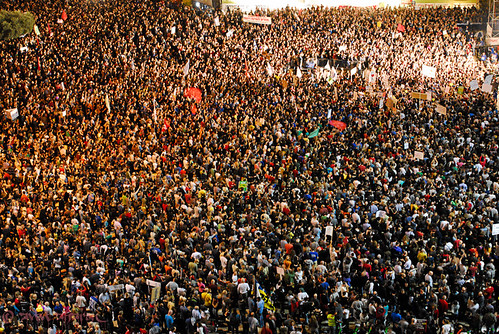 Tel Aviv Rabin Square protests
Coalition Calculus: Who Can Eisenkot Bring to the Table?
Eisenkot’s negotiating table will likely feature three major clusters:
- Right‑Wing Nationalists – Likely the Religious Zionist Party (6 seats) and Otzma Yehudit (4 seats). Their red‑line demands include a hard‑line stance on settlements and a rollback of the controversial judicial overhaul.
- Centrist Moderates – Yesh Atid (7 seats) and Blue and White (8 seats). These parties prioritize a two‑state solution, civil‑rights protections, and a balanced budget.
- Left‑Wing & Arab Parties – Labor, Meretz, and the Joint List (total 15 seats). While unlikely to join a right‑leaning coalition, they could become king‑makers if Eisenkot leans toward a centrist compromise.
The arithmetic suggests that a center‑right coalition of Yesh Atid, Blue and White, Religious Zionist Party, and a few smaller religious factions could scrape together the required 61 seats. However, the judicial reform issue remains a deal‑breaker; centrist parties have publicly refused to support any legislation that undermines judicial independence.
The “Grand Bargain” Scenario
Analysts speculate a grand bargain where Eisenkot offers:
- Security concessions (maintaining a strong IDF presence in Gaza) to the right‑wing.
- Economic incentives (tax breaks for tech firms) to the centrists.
- Limited judicial compromises (a review committee rather than a full repeal) to appease protestors.
If such a package holds, Eisenkot could present a stable, multi‑party government within 30‑45 days – the constitutional deadline for forming a coalition.
Public Sentiment and Street Protests
Since the election, Tel‑Aviv’s Rabin Square has been a focal point for demonstrations. Protesters chant “No to authoritarianism” and carry signs demanding the preservation of judicial independence. Polls from Israel Democracy Institute indicate that 62% of Israelis view the formation of a coalition as more important than the identity of the prime minister, provided democratic norms are respected.
The youth demographic (ages 18‑30) is particularly vocal, leveraging TikTok and Instagram to amplify their concerns. This digital activism has pressured centrist parties to adopt a hard‑line stance against any further judicial curtailment, limiting Eisenkot’s bargaining space.
International Reactions
The United States, European Union, and neighboring Arab states have all issued statements emphasizing the need for a stable Israeli government to advance peace talks and regional security.
- U.S.: Secretary of State Antony Blinken warned that military aid packages could be delayed if Israel fails to form a government by the end of June.
- EU: European Commission President Ursula von der Leyen called for a “government that respects human rights and the rule of law.”
- Arab League: While refraining from direct commentary, several member states signalled openness to back‑channel negotiations if a moderate coalition emerges.
These external pressures add another layer to Eisenkot’s negotiations, as any perceived tilt toward the far‑right could jeopardize critical foreign aid.
The Timeline Ahead
| Milestone | Expected Date |
|---|---|
| Formal coalition talks begin | Early May 2024 |
| First round of agreements (security & budget) | Mid‑May 2024 |
| Draft coalition agreement circulated | Late May 2024 |
| Knesset vote on the new government | Early June 2024 |
If Eisenkot fails to secure a majority by June 15, the President may appoint another figure—potentially Benny Gantz—or call for a fresh election, plunging Israel into another political deadlock.
Editorial Analysis & Future Outlook
Eisenkot’s attempt to forge a coalition is more than a procedural exercise; it is a litmus test for Israel’s democratic resilience. A successful, centrist‑leaning government could:
- Re‑anchor Israel’s international standing, reassuring allies that democratic checks remain intact.
- Stabilize the security apparatus, allowing the IDF to transition from a wartime footing to a longer‑term deterrence posture.
- Create fiscal breathing room, enabling investment in the high‑tech sector that drives the Israeli economy.
Conversely, a right‑wing‑dominated coalition that pushes through sweeping judicial changes could deepen internal divisions, provoke further street protests, and risk sanctions or aid freezes from key partners. The ripple effects would extend to the peace process with the Palestinians, potentially derailing any momentum toward a cease‑fire or two‑state solution.
In the long run, Eisenkot’s political acumen will be judged by his ability to balance security imperatives with democratic safeguards. The world is watching, and Israel’s next few months will shape not only its domestic trajectory but also its role in a volatile Middle‑East.
Bottom line: The coalition talks are a high‑stakes chess game where each move reverberates through the streets of Tel‑Aviv, the corridors of the Knesset, and the diplomatic halls of Washington and Brussels. Whether Eisenkot can assemble enough pieces to check‑mate the deadlock will define Israel’s political narrative for the next five years.
Original Reporting & Source: Al Jazeera

Discussion (0)
Sign in to join the discussion.
No comments yet. Be the first to start the conversation!