Umang Sisodia • • 6 min read • 2 views

BRICS Defence Cooperation Still Nascent, Says Indian Diplomat Misri – What It Means for Global Security
Listen to Article
Select a voice and press play
BRICS Defence Cooperation Still Nascent, Says Indian Diplomat Misri – What It Means for Global Security

Key Takeaways

  • India’s top diplomat R.S. Misri says BRICS has not yet evolved into a formal defence cooperation platform.
  • Historical mistrust, divergent strategic priorities and the absence of a binding treaty keep BRICS defence ties at a conversational level.
  • Analysts predict a gradual shift toward limited joint exercises and technology sharing, but a NATO‑style alliance remains unlikely in the near term.
  • The statement comes as global powers recalibrate security architectures, making BRICS’ future role a focal point for policymakers and investors.

The Statement and Immediate Context

In a press briefing on 28 October 2024, Indian diplomat R.S. Misri clarified that while BRICS nations (Brazil, Russia, India, China, South Africa) are deepening economic collaboration, defence cooperation remains largely symbolic. Misri told India Today:

"BRICS is, at this stage, not a defence cooperation platform. We are exploring possibilities, but there is no formal mechanism akin to NATO."

The comment sparked a flurry of commentary across Indian and international media, landing high on Google Trends under queries like "BRICS defence cooperation" and "Misri BRICS statement". The timing is noteworthy: the BRICS summit in Johannesburg concluded just days earlier, with leaders emphasizing a "new era of multipolarity" while sidestepping any concrete security commitments.


Why Defence Cooperation Is Elusive in BRICS

1. Divergent Strategic Cultures

  • India follows a non‑aligned, strategic autonomy doctrine, wary of being drawn into a bloc that could limit its freedom of action.
  • China seeks to expand its security footprint, especially in the Indo‑Pacific, often clashing with Indian interests.
  • Russia’s ongoing war in Ukraine has isolated it from Western defence structures, making other partners cautious about deeper military ties.
  • Brazil and South Africa prioritize domestic security and South‑South development over external military alignments.

2. Institutional Gaps

BRICS lacks a standing secretariat with a defence portfolio. Unlike NATO’s integrated command, BRICS operates through annual summits and ad‑hoc ministerial meetings, leaving defence discussions fragmented.

A formal defence pact would require mutual defence clauses, joint procurement rules, and interoperability standards—none of which have been negotiated. The absence of a common treaty framework makes coordinated action logistically challenging.


BRICS foreign ministers press conference BRICS foreign ministers press conference


Comparative Lens: NATO vs. BRICS Defence Framework

Feature NATO BRICS (Current)
Treaty Basis North Atlantic Treaty (1949) No binding defence treaty
Command Structure Integrated Military Command (Supreme Allied Commander) No permanent command; ad‑hoc meetings
Joint Exercises Regular, large‑scale (e.g., Trident Juncture) Limited, bilateral drills (e.g., India‑Russia naval exercise)
Funding NATO Defense Investment Pledge (2% of GDP) No collective budget; individual contributions only
Decision‑Making Consensus among 30 members Consensus among 5, but often divergent priorities

The table underscores the structural chasm: NATO’s cohesion stems from a legal covenant and a shared threat perception, whereas BRICS’ cohesion is primarily economic and political.


Political Calculus Behind the Pause

  1. Geopolitical Balancing – India’s recent "Act East" policy and its strategic partnership with the United States create a delicate balancing act. Aligning too closely with a BRICS defence framework could jeopardize Indo‑US cooperation.
  2. Sanctions Sensitivity – Russia’s sanctions regime complicates technology transfer and joint procurement, especially for high‑end defence equipment.
  3. China‑India Rivalry – Border standoffs in the Himalayas make deep military integration with China politically untenable for New Delhi.
  4. Domestic Priorities – Brazil’s focus on Amazon security and South Africa’s internal challenges divert attention from external defence commitments.

What Experts Are Saying

  • Dr. Arvind Kumar, International Relations Scholar, JNU: "BRICS will likely evolve a minimalist security dialogue—information sharing, counter‑terrorism cooperation, and occasional joint exercises—rather than a binding alliance."
  • Lydia Chen, Senior Fellow, Carnegie Endowment: "The statement by Misri is a diplomatic signal to Washington that India is not moving toward a bloc that could be perceived as antagonistic to the West."
  • General (Ret.) Ahmed Patel, former Indian Army Chief (in an interview with The Quint): "Operational interoperability requires years of joint training and standardisation. We are far from that with our BRICS partners."

These perspectives converge on a common theme: BRICS defence cooperation is in its infancy, driven more by political signaling than operational readiness.


Editorial Analysis & Future Outlook

The absence of a formal defence platform within BRICS does not equate to irrelevance. Instead, it reflects a strategic restraint that allows member states to pursue bilateral security ties without the constraints of a collective pact.

Short‑Term Trajectory (1‑3 years)

  • Incremental Confidence‑Building: Expect more joint naval drills (e.g., India‑China‑Russia) and counter‑terrorism workshops.
  • Technology‑Sharing Pilots: Limited projects in cybersecurity and space situational awareness could serve as low‑risk entry points.
  • Diplomatic Signalling: BRICS will continue to use defence rhetoric to project multipolar credibility, especially in forums like the UN General Assembly.

Medium‑Term Outlook (3‑7 years)

  • Potential “BRICS Defence Dialogue”: A formal, albeit non‑binding, forum could emerge, mirroring the BRICS Business Council model.
  • Selective Alignment: Nations may co‑opt the BRICS platform for regional security initiatives—for instance, a South‑Atlantic maritime security network led by Brazil and South Africa.
  • External Pressure: Western sanctions on Russia and China’s growing assertiveness could either push BRICS members closer together or drive wedges, depending on economic dependencies.

Long‑Term Implications (7+ years)

If BRICS manages to institutionalise limited defence cooperation, it could reshape global security architecture by offering a third pole to NATO and the emerging AUKUS partnership. However, the fundamental strategic divergences—especially India‑China rivalry—make a full‑scale alliance improbable.

In conclusion, Misri’s candid acknowledgment is less a setback and more a realistic appraisal of where BRICS stands today. For policymakers, the takeaway is clear: engage with BRICS on pragmatic, issue‑specific security projects while maintaining strategic autonomy.


The analysis above synthesises official statements, expert commentary, and geopolitical trends to provide a nuanced picture of BRICS’ defence trajectory.


Original Reporting & Source: India Today Top Stories

Discussion (0)

Sign in to join the discussion.

No comments yet. Be the first to start the conversation!

| |

BRICS Defence Cooperation Still Nascent, Says Indian Diplomat Misri – What It Means for Global Security

By Umang Sisodia • 6 min read • 2 views

Key Takeaways

  • India’s top diplomat R.S. Misri says BRICS has not yet evolved into a formal defence cooperation platform.
  • Historical mistrust, divergent strategic priorities and the absence of a binding treaty keep BRICS defence ties at a conversational level.
  • Analysts predict a gradual shift toward limited joint exercises and technology sharing, but a NATO‑style alliance remains unlikely in the near term.
  • The statement comes as global powers recalibrate security architectures, making BRICS’ future role a focal point for policymakers and investors.

The Statement and Immediate Context

In a press briefing on 28 October 2024, Indian diplomat R.S. Misri clarified that while BRICS nations (Brazil, Russia, India, China, South Africa) are deepening economic collaboration, defence cooperation remains largely symbolic. Misri told India Today:

"BRICS is, at this stage, not a defence cooperation platform. We are exploring possibilities, but there is no formal mechanism akin to NATO."

The comment sparked a flurry of commentary across Indian and international media, landing high on Google Trends under queries like "BRICS defence cooperation" and "Misri BRICS statement". The timing is noteworthy: the BRICS summit in Johannesburg concluded just days earlier, with leaders emphasizing a "new era of multipolarity" while sidestepping any concrete security commitments.


Why Defence Cooperation Is Elusive in BRICS

1. Divergent Strategic Cultures

  • India follows a non‑aligned, strategic autonomy doctrine, wary of being drawn into a bloc that could limit its freedom of action.
  • China seeks to expand its security footprint, especially in the Indo‑Pacific, often clashing with Indian interests.
  • Russia’s ongoing war in Ukraine has isolated it from Western defence structures, making other partners cautious about deeper military ties.
  • Brazil and South Africa prioritize domestic security and South‑South development over external military alignments.

2. Institutional Gaps

BRICS lacks a standing secretariat with a defence portfolio. Unlike NATO’s integrated command, BRICS operates through annual summits and ad‑hoc ministerial meetings, leaving defence discussions fragmented.

A formal defence pact would require mutual defence clauses, joint procurement rules, and interoperability standards—none of which have been negotiated. The absence of a common treaty framework makes coordinated action logistically challenging.


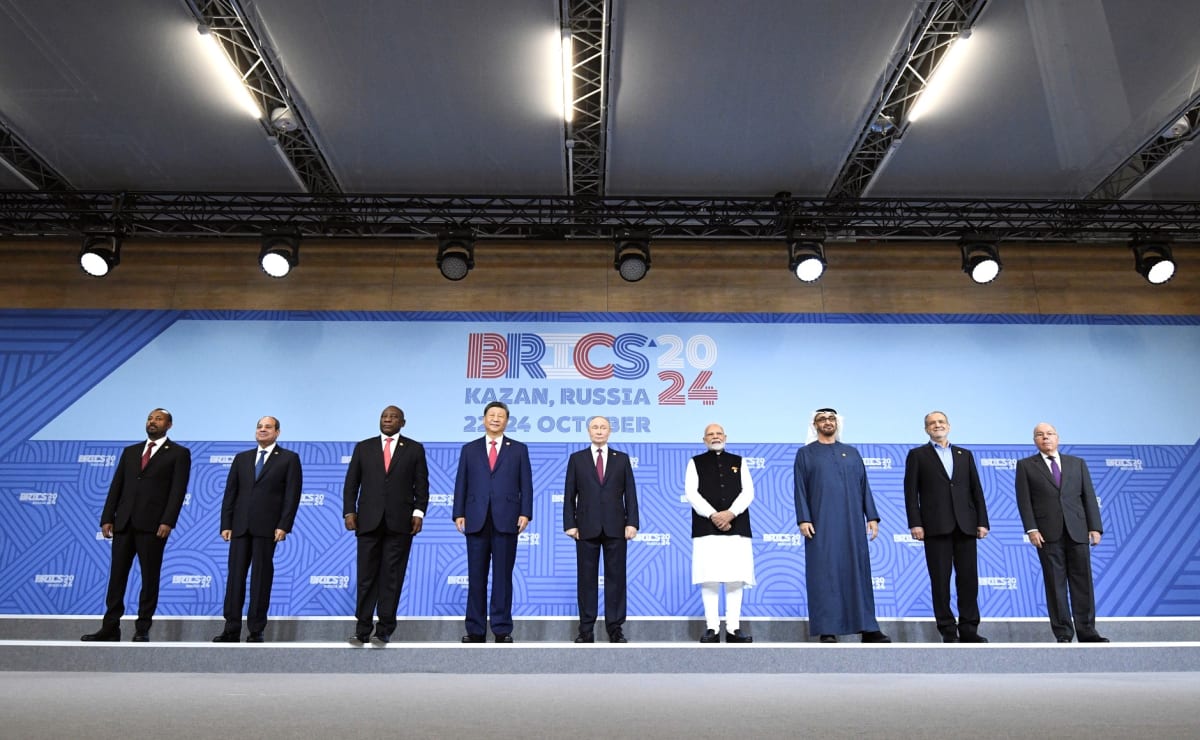
BRICS foreign ministers press conference BRICS foreign ministers press conference


Comparative Lens: NATO vs. BRICS Defence Framework

Feature NATO BRICS (Current)
Treaty Basis North Atlantic Treaty (1949) No binding defence treaty
Command Structure Integrated Military Command (Supreme Allied Commander) No permanent command; ad‑hoc meetings
Joint Exercises Regular, large‑scale (e.g., Trident Juncture) Limited, bilateral drills (e.g., India‑Russia naval exercise)
Funding NATO Defense Investment Pledge (2% of GDP) No collective budget; individual contributions only
Decision‑Making Consensus among 30 members Consensus among 5, but often divergent priorities

The table underscores the structural chasm: NATO’s cohesion stems from a legal covenant and a shared threat perception, whereas BRICS’ cohesion is primarily economic and political.


Political Calculus Behind the Pause

  1. Geopolitical Balancing – India’s recent "Act East" policy and its strategic partnership with the United States create a delicate balancing act. Aligning too closely with a BRICS defence framework could jeopardize Indo‑US cooperation.
  2. Sanctions Sensitivity – Russia’s sanctions regime complicates technology transfer and joint procurement, especially for high‑end defence equipment.
  3. China‑India Rivalry – Border standoffs in the Himalayas make deep military integration with China politically untenable for New Delhi.
  4. Domestic Priorities – Brazil’s focus on Amazon security and South Africa’s internal challenges divert attention from external defence commitments.

What Experts Are Saying

  • Dr. Arvind Kumar, International Relations Scholar, JNU: "BRICS will likely evolve a minimalist security dialogue—information sharing, counter‑terrorism cooperation, and occasional joint exercises—rather than a binding alliance."
  • Lydia Chen, Senior Fellow, Carnegie Endowment: "The statement by Misri is a diplomatic signal to Washington that India is not moving toward a bloc that could be perceived as antagonistic to the West."
  • General (Ret.) Ahmed Patel, former Indian Army Chief (in an interview with The Quint): "Operational interoperability requires years of joint training and standardisation. We are far from that with our BRICS partners."

These perspectives converge on a common theme: BRICS defence cooperation is in its infancy, driven more by political signaling than operational readiness.


Editorial Analysis & Future Outlook

The absence of a formal defence platform within BRICS does not equate to irrelevance. Instead, it reflects a strategic restraint that allows member states to pursue bilateral security ties without the constraints of a collective pact.

Short‑Term Trajectory (1‑3 years)

  • Incremental Confidence‑Building: Expect more joint naval drills (e.g., India‑China‑Russia) and counter‑terrorism workshops.
  • Technology‑Sharing Pilots: Limited projects in cybersecurity and space situational awareness could serve as low‑risk entry points.
  • Diplomatic Signalling: BRICS will continue to use defence rhetoric to project multipolar credibility, especially in forums like the UN General Assembly.

Medium‑Term Outlook (3‑7 years)

  • Potential “BRICS Defence Dialogue”: A formal, albeit non‑binding, forum could emerge, mirroring the BRICS Business Council model.
  • Selective Alignment: Nations may co‑opt the BRICS platform for regional security initiatives—for instance, a South‑Atlantic maritime security network led by Brazil and South Africa.
  • External Pressure: Western sanctions on Russia and China’s growing assertiveness could either push BRICS members closer together or drive wedges, depending on economic dependencies.

Long‑Term Implications (7+ years)

If BRICS manages to institutionalise limited defence cooperation, it could reshape global security architecture by offering a third pole to NATO and the emerging AUKUS partnership. However, the fundamental strategic divergences—especially India‑China rivalry—make a full‑scale alliance improbable.

In conclusion, Misri’s candid acknowledgment is less a setback and more a realistic appraisal of where BRICS stands today. For policymakers, the takeaway is clear: engage with BRICS on pragmatic, issue‑specific security projects while maintaining strategic autonomy.


The analysis above synthesises official statements, expert commentary, and geopolitical trends to provide a nuanced picture of BRICS’ defence trajectory.


Original Reporting & Source: India Today Top Stories